
Mastering the Art of Winter Wonderland Decor
The desire to evoke a sense of enchantment during the colder months is a deeply rooted psychological response; we seek environments that offer sanctuary and visual escape from the everyday. Creating a true winter wonderland aesthetic moves beyond simply piling up snow; it involves manipulating light, texture, and color theory to simulate an icy, ethereal landscape within the confines of our living spaces. We observe that successful transformations rely on strategic deployment of specific elements rather than superficial application.
The Mechanics of Light: Harnessing Fairy Lights for Ambiance
Fairy lights are not merely decorative strings; they function as programmable light sources that manipulate spatial perception. When deployed correctly, warm white or cool blue tones interact with reflective surfaces to create an atmospheric depth that mimics the diffused glow of winter moonlight filtering through frosted glass. The intensity and placement dictate the mood more than the sheer quantity of lights used.
We see a clear mechanism at play when introducing these strands. They introduce high-frequency visual interest, breaking up large, monolithic surfaces into myriad points of light. This technique works by engaging the peripheral vision, drawing the eye across the room in a gentle, hypnotic sweep. Experimenting with string density is crucial. Denser placements generate an immersive, cocooning effect, suitable for intimate nooks, whereas sparser placement allows the light to act as delicate, scattered stars against darker backgrounds. Consider the principle discussed in our guide on [Beginner’s Guide to Layered Lighting for Cozy Homes](https://decorandliving.com/beginners-guide-layered-lighting/); layering light sources ensures that shadows are soft and depth is achieved naturally across the architectural features of your room.
Texture as the Foundation: Implementing White Textiles
The choice of textiles acts as the primary medium through which the ethereal quality of the winter theme is realized. White, in this context, serves a specific functional role: it maximizes light reflection, amplifying the effect of the installed fairy lights and creating an expansive, snow-like visual field. The texture itself introduces tactile softness that counters the hard, angular lines often found in modern interiors.
We find that using varied textiles enhances the illusion of an immersive environment. Think about layering materials: chunky knit throws juxtaposed against sheer, flowing fabrics creates dynamic textural contrast. A heavy, faux-fur rug anchors the space, while delicate linen curtains allow light to diffuse softly across the window plane. This interplay between matte and reflective surfaces manipulates how ambient light behaves throughout the day, making the space feel less static and more alive with gentle luminescence. For example, draping sheer white fabric over existing furniture introduces an immediate sense of airy lightness.
Curating the Palette: Beyond Pure White
While white provides the necessary canvas for snow imagery, a successful winter wonderland requires nuanced tonal adjustments to avoid appearing sterile or overly clinical. We must introduce complementary cool tones—icy blues, silvery grays, and crisp whites—to deepen the wintry feeling without sacrificing warmth. The strategic introduction of metallic accents, such as brushed silver or pale gold, adds the necessary glimmer that mimics frost catching the light.
The color palette should be deliberately restrained. Overloading the space with competing colors disrupts the serene, dreamlike quality we aim to achieve. We observe that restraint forces the viewer’s attention onto the interplay of texture and light, allowing the overall effect to carry the thematic weight. This careful modulation ensures that the decor supports the mood rather than dominating it.
Integrating Natural Elements for Depth
To bridge the gap between purely artificial light and natural seasonality, incorporating organic textures introduces essential depth and grounding. Bringing in elements suggestive of frozen nature—silvery branches, frosted greenery, or touches of crystalline materials—connects the interior space to the exterior winter landscape. This process grounds the ethereal lights and soft textiles, preventing the decor from feeling weightless.
Consider how natural materials interact with the theme. Placing elements like bleached driftwood or matte white ceramics alongside the soft fabrics creates a juxtaposition that is visually stimulating yet harmoniously themed. This contrast between the organic roughness and the manufactured softness enhances the sensory experience of the room. If you are seeking to apply this textural layering to areas requiring a more rustic feel, exploring options like [Rustic Bathroom Decor: Natural Wood & Stone Accents](https://decorandliving.com/rustic-bathroom-wood-stone-decor/) provides an excellent framework for incorporating these grounded textures into your design scheme.
Spatial Planning for Maximum Impact
The effectiveness of the winter wonderland decor hinges on spatial awareness. We must analyze how light and texture interact with room geometry. Large, unbroken expanses of white surface maximize the reflective potential of the fairy lights, creating that desired sense of vast, icy space. Conversely, using textiles to define specific zones—a cozy reading nook versus a bright entryway—allows for differentiated atmospheric experiences within the same room.
This spatial strategy demands careful placement. Avoid scattering elements randomly; instead, establish focal points where the light and texture converge. For instance, framing a window with sheer white drapes illuminated by delicate lights creates an immediate focal point of magic. This deliberate arrangement guides the viewer through the intended visual journey. Understanding how objects occupy space allows us to engineer an immersive experience, turning simple decorations into architectural illusions.
Practical Application: Building Your Dream Scene
When implementing this aesthetic, focus on scalable solutions. Fairy lights offer immediate, high-impact illumination with minimal installation effort. White textiles provide broad coverage and instant textural transformation. These are the foundational components. The next layer involves introducing subtle accents—perhaps a few strategically placed white candles or crystal objects that catch the light. This layering process builds complexity without sacrificing the core simplicity of the winter theme.
We see that achieving this highly stylized look requires patience in execution. Allow the lights to settle and the textiles to drape naturally. Resist the urge to over-decorate; let the interplay between the soft glow, the crisp white surfaces, and the subtle textures define the magical atmosphere. The result is an environment that feels intentionally crafted, transporting occupants into a serene, enchanting winter dreamscape.
Tags: winter wonderland decor, fairy lights, white decor, cozy home, winter decorating, seasonal decor, home aesthetic
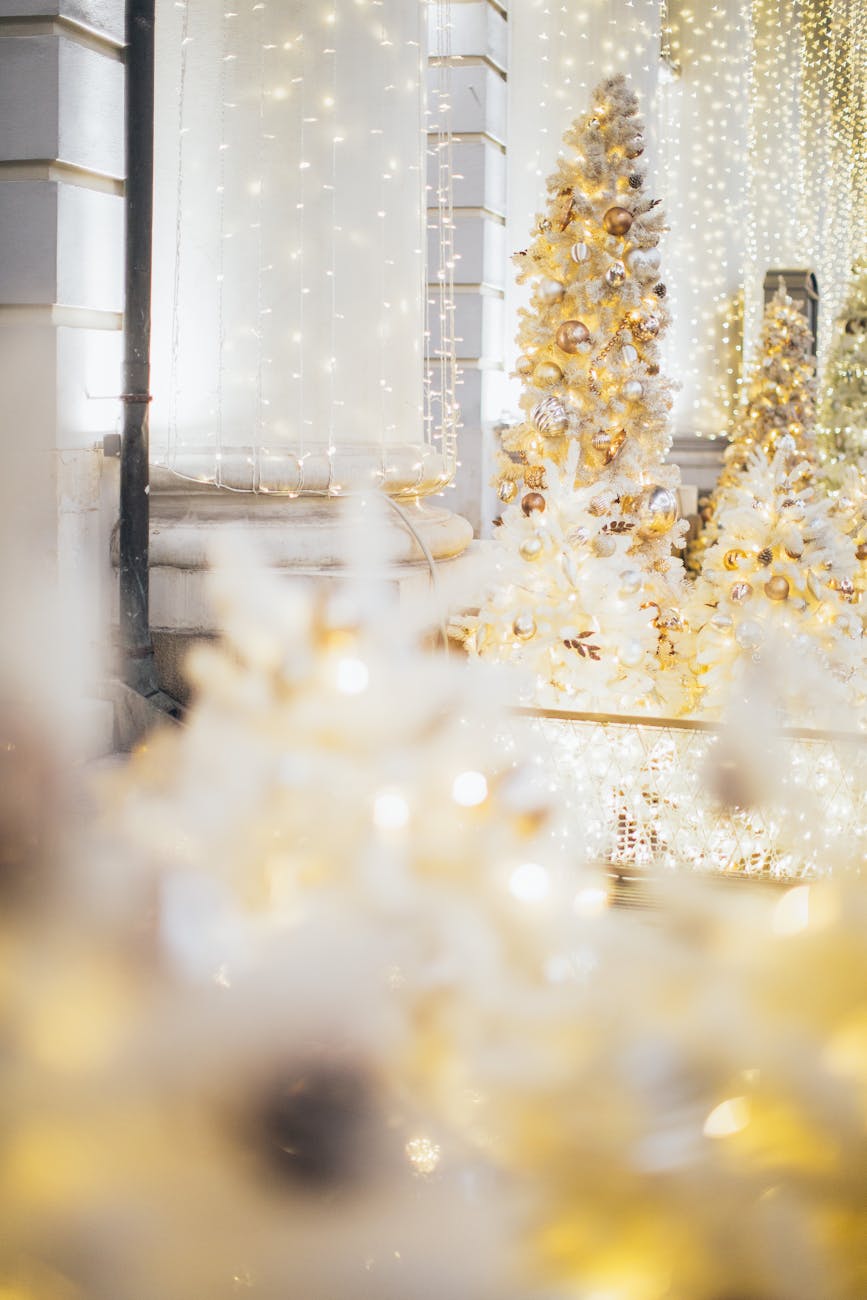
Featured Image by Elina Fairytale on Pexels.