
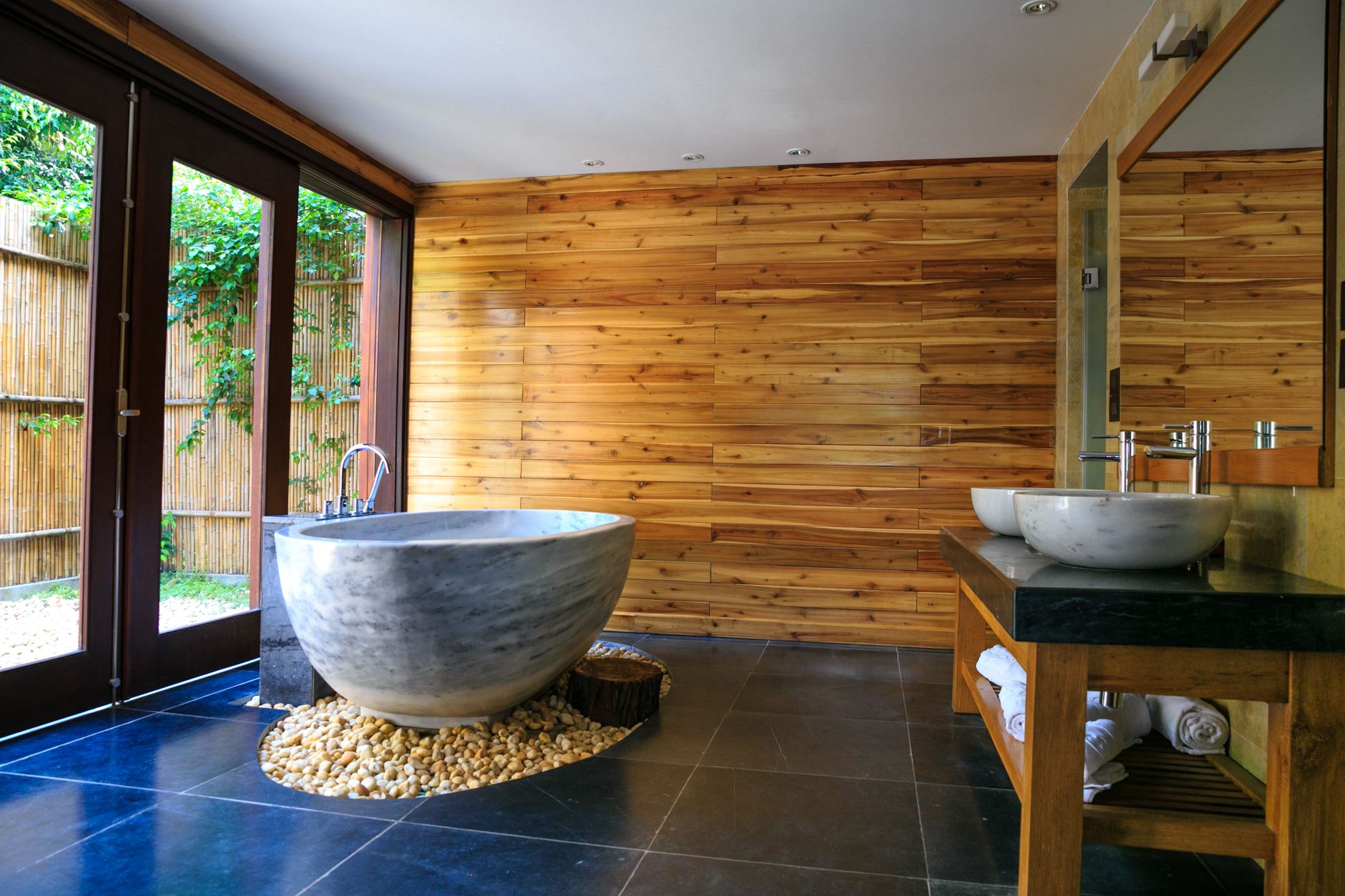
Crafting Serenity: The Mechanics of Natural Stone Bathroom Decor
When designing a bathroom space intended to function as a personal sanctuary, the selection of materials moves beyond mere aesthetics; it becomes an exercise in sensory engineering. We are not simply placing tiles and fixtures; we are manipulating light reflection, thermal transfer, and tactile experience. This is where the integration of natural stone and wood achieves its profound effect on occupant well-being. Observing how these organic elements interact with the functional demands of a bathroom reveals a deep connection between material science and psychological comfort.
The goal in elevating a standard bathroom to a spa-like environment involves manipulating the perceived scale and texture within the room. Large-format stone slabs, for example, alter the visual plane significantly. When installed across a substantial area, they reduce grout lines, minimizing visual interruptions and creating an unbroken field of rich, earthy tone. This effect directly contributes to a sense of spaciousness, which is critical in smaller bathroom footprints. We observe that expansive surfaces allow the eye to rest, fostering a calmer state.
The Thermal and Tactile Response of Stone Surfaces
Natural stone inherently possesses thermal mass, meaning it absorbs and releases heat at a slower rate than synthetic materials. In practice, this property contributes to a wonderfully grounding sensation when you touch it. A cool marble or granite surface offers immediate tactile relief, especially in warmer environments, simulating the cooling effect of natural elements found outdoors. This contrast between the coolness of the stone and the warmth introduced by complementary wood tones creates a dynamic textural interplay.
The mechanism at play here is proprioception—the sense of body position and movement informed by touch. When surfaces feel authentic and substantial, the brain processes this as an environment that supports relaxation rather than one that demands constant visual attention. We see this principle applied across design disciplines; it’s about providing sensory feedback that aligns with natural expectations.
Integrating Wood for Organic Warmth
Wood introduces a crucial counterpoint to the inherent coolness of stone. The introduction of warm wood tones, whether through reclaimed wood vanity tops or accent shelving, injects necessary organic warmth into the space. This juxtaposition prevents the bathroom from feeling sterile or overtly cold, achieving a balance that many associate with the concept of *hygge*. Understanding this duality is key to successful integration.
The grain patterns in wood provide visual complexity that stone often lacks, engaging the visual system in a richer, more nuanced way. Furthermore, the subtle variations in tone across a wooden surface mimic the irregularities found in nature, which our sensory systems are naturally attuned to process as non-threatening and inviting. Think about how the natural lines of a tree compare to the precise geometry of a cut stone; both possess inherent, organic beauty when appreciated correctly.
Material Selection: The Science Behind Natural Stone Bathroom Decor
Selecting the appropriate stone for bathroom applications requires an analytical approach focused on durability, moisture resistance, and aesthetic alignment. We must consider the specific function of each area within the room before committing to a material choice.
Durability and Moisture Management
Bathrooms present unique environmental challenges due to high humidity levels and constant exposure to water. Therefore, the geological composition and porosity of the stone dictate its long-term viability. Quartzite and certain types of granite exhibit superior resistance to chemical etching and moisture penetration compared to highly porous materials. Our research indicates that selecting stones with lower porosity minimizes the risk of water absorption leading to discoloration or material degradation over time.
The installation process itself matters immensely. Proper sealing techniques and grout selection are not optional; they are necessary processes for ensuring structural integrity against constant dampness. We analyze how surface treatments interact with the stone’s natural properties, ensuring that the decorative intent does not compromise the functional reality of the space.
Color Palettes and Visual Flow
The color palette selected for **natural stone bathroom decor** fundamentally sets the mood. Deep charcoal or slate tones establish a sophisticated, moody atmosphere, excellent for creating an enveloping sanctuary effect. Conversely, lighter beige or cream marbles open up the visual plane, maximizing perceived light reflection. The strategic deployment of these colors dictates how light travels across the room, influencing shadows and highlights throughout the day.
When pairing stone with wood accents, we look at chromatic harmony. Earth tones—deep browns, warm tans, and muted greys—create an inherently cohesive scheme. This synergy allows the materials to speak to each other rather than clash. The visual flow becomes seamless; the eye moves effortlessly from the cool solidity of the stone to the inviting warmth of the wood grain.
Designing for Compact Spaces with Smart Storage
In environments where space is at a premium, maximizing utility without sacrificing the desired aesthetic requires intelligent spatial planning. Utilizing vertical space effectively proves crucial when dealing with limited floor area. Incorporating custom-built shelving or slim, tall storage units allows functional items to be tucked away while maintaining an uncluttered visual field. This strategy directly supports the creation of open, airy spaces. For instance, implementing smart storage solutions can free up floor space, allowing larger decorative elements, like substantial stone slabs, to make a more impactful statement without feeling cramped. Consider how maximizing vertical dimensions influences the overall perceived spaciousness in a small area.
Achieving the Sanctuary Effect: Layering Textures for Ultimate Comfort
The final step in transforming a functional room into an immersive sanctuary involves layering textures. This process engages all the sensory inputs simultaneously, moving the experience from merely functional to deeply restorative. We are moving beyond surface decoration toward environmental design.
The Role of Textiles and Accents
Soft textiles introduce necessary tactile softness that balances the hard, cool surfaces of stone. Plush bath mats made of organic cotton or linen invite interaction with the space immediately upon entry. Thick, woven towels add a layer of comforting density against the skin. These soft elements absorb sound, reducing harsh echoes and contributing to an overall sense of muffled tranquility.
When incorporating these textiles alongside the stone and wood, we reinforce the theme established by the materials themselves. A rough-hewn wood shelf paired with a soft, hand-knotted rug creates an intentional tension between raw nature and refined comfort. This layering technique allows occupants to customize their level of sensory engagement; one can choose to feel the coolness of the stone or sink into the softness of the linen, depending on their immediate need for relaxation.
Illumination as the Final Sculptor
Light is perhaps the most potent tool in sculpting the mood within a stone and wood environment. Natural light, when allowed to penetrate the space unobstructed by heavy drapery, interacts dynamically with the polished surfaces of the stone, revealing its subtle veining and depth. Strategic placement of ambient lighting allows us to emphasize these natural textures. Using warm-toned bulbs—in the 2700K to 3000K range—enhances the inherent warmth of the wood tones while preventing the cool grey tones of the stone from feeling stark.
By controlling the light spectrum, we modulate the emotional response triggered by the materials. Dimmer switches allow users to transition smoothly between a bright, functional space and a deeply intimate, softly illuminated sanctuary, demonstrating control over the environment’s psychological impact. This conscious manipulation of light and material results in an experience that feels intentional, deeply cozy, and profoundly spa-like.
Tags: bathroom design, spa bathroom, natural stone, wood accents, bathroom decor, luxury bathroom, home spa
Featured Image by Quang Nguyen Vinh on Pexels.