
The Science of Sanctuary: Engineering Your Spa Bathroom Decor
When we consider designing a bathroom, we are not simply selecting aesthetics; we are engineering an environment designed to modulate physiological responses. The goal shifts from mere utility to creating a sensory sanctuary where stress reduction and relaxation become intrinsic components of the daily routine. Achieving this requires a deliberate manipulation of visual, tactile, and atmospheric elements, which is precisely what defines effective **spa bathroom decor**. We observe that certain material choices and spatial arrangements trigger specific neurological pathways associated with calm.
Curating Textural Layers for Tactile Comfort
The interaction between skin and surroundings plays a profound role in perceived comfort. Hard, cold surfaces generate tension; soft, organic textures invite repose. Therefore, integrating varied tactile elements is a fundamental mechanism for elevating the bathroom experience. We move away from monolithic tile surfaces toward layering textures that engage the sense of touch immediately upon entry.
We see significant effect when introducing natural fibers. Linen, organic cotton, and thick, nubby bath mats offer a palpable softness that contrasts sharply with slick porcelain or glass. This textural juxtaposition prevents the space from feeling sterile or clinical. Think about the materiality of wooden bath accessories or woven rattan shelving; these introduce an organic warmth that counters the typical coolness associated with bathroom environments. For those seeking a more bohemian textural infusion, exploring handcrafted elements like DIY Macrame Wall Hangings: Boho Texture for Cozy Walls can provide the necessary visual texture while maintaining tactile softness throughout the space.
Implementing Biophilic Design Principles
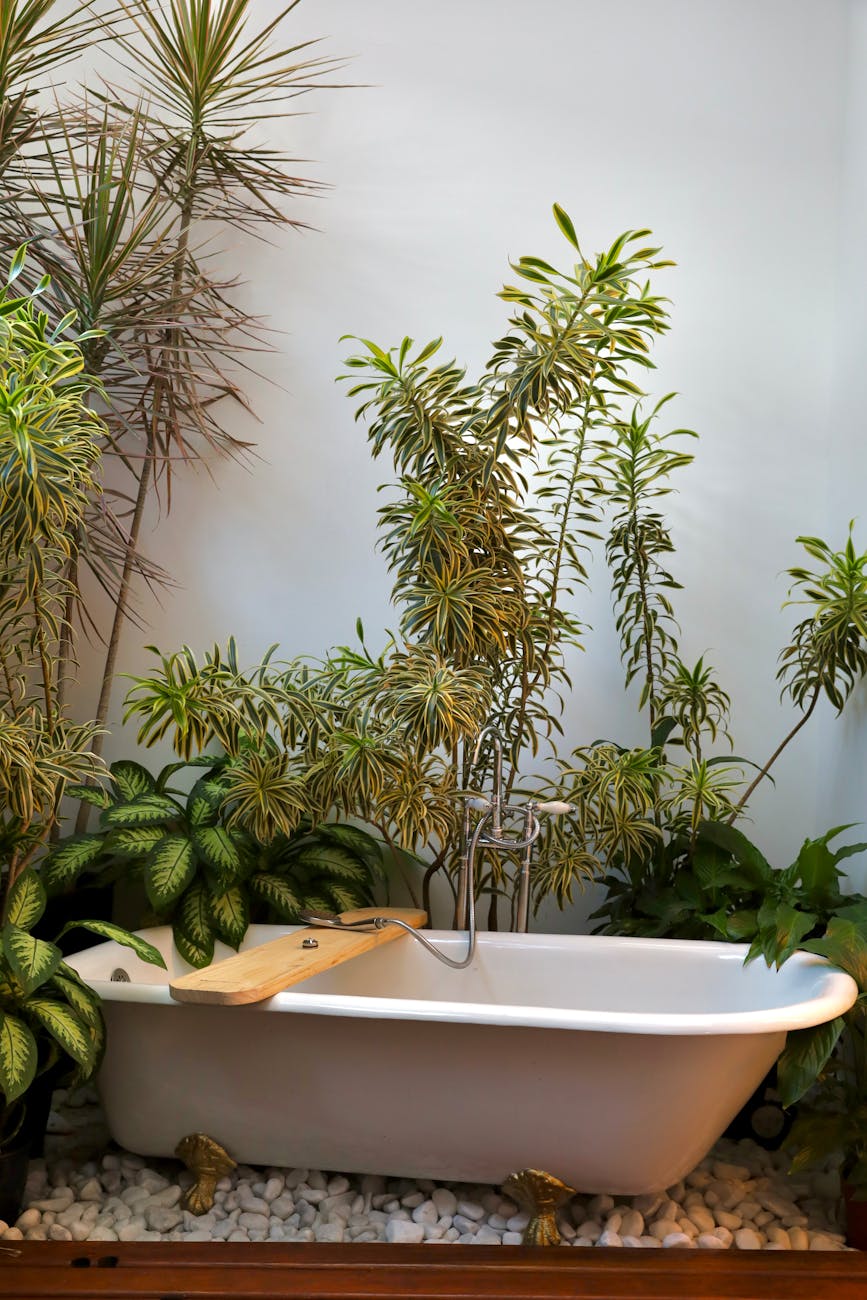
The connection to nature, or biophilia, is not merely a passing trend; it reflects an innate human programming toward natural systems. Incorporating living elements directly addresses this psychological need. Introducing greenery into the bathroom environment actively lowers physiological stress markers. Plants introduce living, breathing patterns that engage the visual processing centers of the brain in a calming manner.
We analyze how plant placement impacts ambiance. Placing larger, leafy plants near windows maximizes light diffusion and introduces an element of the outdoors directly into the enclosed space. Smaller succulents or trailing vines can be integrated into shelving or planters, offering manageable doses of green without overwhelming the aesthetic. This process engages attentional focus in a non-demanding way. The visual complexity of foliage acts as a natural distraction from stressors, shifting cognitive load toward passive observation.
Mastering Light as an Atmospheric Regulator
Lighting is perhaps the most potent tool in manipulating mood within any interior space. In a spa setting, the goal is to eliminate harsh, high-intensity illumination in favor of warm, diffused light sources. We observe that the color temperature and intensity of light directly influence melatonin production and overall relaxation states.
Warm-toned lighting, typically in the 2700K to 3000K range, signals safety and comfort, whereas cooler, blue-toned light promotes alertness. Layering light sources is crucial for achieving this effect. Relying on a single overhead fixture results in unflattering shadows and harsh contrasts. Instead, we employ multiple, dimmer sources—ambient cove lighting, strategically placed sconces, and candles. This layering creates depth and allows occupants to select the precise intensity needed for their current emotional state. Consider how soft, flickering light interacts with natural textures; it amplifies the cozy effect exponentially. For evening rituals, pairing this approach with atmospheric elements like Cozy Kitchen Lighting: Candle Decor for Dining Moments (https://decorandliving.com/cozy-kitchen-lighting-candle-decor/) enhances the intentional mood setting.
Selecting a Harmonious Material Palette
The color palette selection dictates the emotional resonance of the entire space. For a spa aesthetic, we gravitate toward muted, earthy tones that echo natural landscapes. Whites are effective, but they must be warmed by undertones—creams, soft greys, and pale taupes perform better than stark, cold whites when paired with organic textures.
Consider the interplay between stone, wood, and metal finishes. Natural stone, such as travertine or slate, provides an inherent grounding quality. Pairing this with warm-toned wood tones introduces necessary organic warmth. Metallic accents should be used sparingly but deliberately; brushed brass or matte bronze introduce a subtle richness without introducing visual harshness. The selection process involves understanding how these materials reflect and absorb light, thereby influencing the perceived scale and mood of the room over time. We are aiming for an environment where materials feel integrated rather than imposed upon one another.
Integrating Sensory Elements Beyond Sight and Touch
A truly restorative space engages more than just sight and touch; it incorporates olfaction and auditory experience. The subtle introduction of natural scents can trigger memory associations linked to relaxation. Essential oils, diffused gently, work as a non-invasive method for olfactory stimulation. Scents like eucalyptus or lavender have demonstrable effects on the limbic system, influencing mood states directly.
Auditory elements require careful consideration too. Minimizing disruptive ambient noise allows the user’s internal state to dominate. If sound is present, it should be intentional: perhaps soft instrumental music or the gentle sounds of running water. The acoustic quality of the room itself matters; hard surfaces cause echoes that introduce auditory stress. Soft furnishings, thick rugs, and strategically placed textiles absorb sound energy, creating an acoustically calmer environment where tranquility can settle undisturbed.
Spatial Organization for Uncluttered Serenity
The visual flow within the bathroom must support the intended sense of calm. Clutter introduces cognitive friction; a visually dense space forces the brain to process unnecessary information, thereby increasing tension. Therefore, spatial design demands intentional emptiness. We analyze how negative space functions as an active element in relaxation.
Maintaining clear sightlines and ample open floor space allows the eye to rest. Storage solutions should be concealed or highly organized, preventing visual noise from accumulating on surfaces. Utilizing vertical space with thoughtfully placed shelving, rather than surface-level clutter, maintains an airy feel. This principle applies universally; every object present must serve a purpose or contribute positively to the atmosphere of serenity. The process of decluttering becomes part of the restorative ritual itself.
The design of **spa bathroom decor** is therefore an exercise in applied psychology and material science. It involves systematically engineering sensory inputs—light, texture, scent, and sound—to guide the occupant away from the high-arousal state toward a deeply relaxed equilibrium. The resulting space functions not merely as a functional area but as an active tool for mental restoration.
Tags: spa bathroom decor, bathroom design, natural bathroom, cozy home, bathroom inspiration, spa retreat, bathroom decor
Featured Image by Flávia Vicentini on Pexels.