
The Physics of Tranquility: Engineering a Spa Bathroom Sanctuary
We often approach bathroom design as a functional necessity; we manage plumbing, ventilation, and tile placement. Yet, true luxury resides in manipulating sensory input to elicit a specific psychological state. Creating a spa sanctuary requires an intentional layering of tactile, visual, and atmospheric elements, essentially engineering an environment where stress receptors are systematically downregulated. This is not mere decoration; it is applied sensory architecture.
The choice of materials directly impacts the perceived atmosphere. We observe that hard, cold surfaces—like highly polished granite or cold porcelain—transmit a sense of clinical detachment. Conversely, incorporating natural textures introduces stochastic variation and organic warmth that the human visual system processes as inherently comforting. Think about the interplay between smooth ceramic and rough linen; this friction creates a dynamic visual tension that prevents the space from feeling sterile.
Deconstructing Natural Textures for Sensory Engagement
The mechanism by which natural materials induce relaxation involves tactile feedback. When we touch something organic, our somatosensory cortex registers complex patterns that trigger primal relaxation responses. We are not just seeing wood grain or linen weave; we are engaging in a physical interaction with the material’s inherent imperfection and depth.
Stone, for instance, offers density and permanence. A large slab of slate, for example, absorbs sound and anchors the space with an undeniable, weighty calm. Contrast this with textiles. Using thick, hand-woven cotton or raw linen introduces necessary softness against the hard lines of the architecture. This juxtaposition forces the eye and the body to negotiate different sensory inputs simultaneously, resulting in a richer experience than monolithic design ever could achieve.
We see this principle extend beyond the walls into every fixture. Selecting matte finishes over high gloss reduces visual noise. Glossy surfaces reflect harsh light in sharp, unforgiving beams; matte surfaces diffuse light gently, softening shadows and eliminating irritating glare. This subtle manipulation of light diffusion is crucial for establishing an atmosphere of gentle repose.
Mastering the Palette: Earth Tones and Material Harmony
The color scheme in a spa environment should operate on principles of visual rest. We move away from high-saturation, stimulating colors that demand attention. Instead, we anchor the space in an earth-toned palette—soft sage greens, muted terracotta, warm taupes, and creamy off-whites. These hues are psychologically associated with nature and stability.
When integrating natural textures, maintaining color harmony is essential for preventing visual chaos. If you introduce rich, dark wood tones—perhaps a reclaimed oak vanity or shelving—these deep anchors provide necessary grounding against the lighter, softer textiles and muted wall colors. The contrast between the cool, smooth surfaces and the warm, porous elements creates depth without introducing jarring visual conflict.
Consider how this principle applies elsewhere in the home. Creating a cohesive sensory experience across different areas is key to holistic tranquility. If your bathroom employs these natural textures successfully, consider extending that aesthetic to adjacent spaces. For instance, when furnishing your living space, selecting materials that echo the bathroom’s textural vocabulary establishes an undeniable sense of continuity. This intentional connection between spaces enhances the overall effect of sanctuary design.
The Role of Illumination in Atmosphere Sculpting
Lighting is perhaps the most potent tool for manipulating mood within a spa setting. The intensity and color temperature of the light directly modulate the psychological state occupants experience. Harsh, cool, high-Kelvin lighting—the kind found in standard fluorescent fixtures—stimulates alertness, which is the opposite of relaxation.
We must prioritize warm-toned illumination, generally below 3000 Kelvin, to encourage melatonin production and signal safety. Layered lighting techniques are more effective than single overhead sources. We observe that employing dimmer switches allows occupants to manually control their level of immersion, shifting the space from bright functional mode to subdued meditative mode simply by adjusting a slider.
Introducing indirect light sources is paramount. Placing diffused light behind sheer linen curtains or utilizing recessed lighting aimed at textured walls creates soft pools of illumination rather than stark highlights. This technique softens architectural lines and emphasizes the tactile quality of the materials. The shadows cast become soft gradients, inviting introspection rather than demanding action.
Implementing Natural Elements Strategically
Integrating living elements transforms a mere decorated room into a breathing sanctuary. Introducing greenery acts as a biological reminder of the outside world, mitigating the feeling of being hermetically sealed indoors. Plants introduce organic movement and vital energy that counteracts the static nature of stone and tile.
Selecting appropriate foliage requires careful consideration of light exposure within the bathroom environment. Ferns, mosses, or trailing vines thrive in the humid microclimate often found near steam-filled areas. Placement should be deliberate; a lush arrangement on a shelf or a corner provides visual relief without overwhelming the carefully curated decor. This connection to living systems grounds the entire sensory experience.
We also look at functional items through this lens. Storage solutions, for example, must align with the aesthetic goal. Opting for woven baskets or wooden crates over stark plastic bins immediately shifts the perceived quality of the space. When functionality is clothed in natural materiality, it ceases to be an obstacle and becomes part of the soothing narrative. This focus on organic containment parallels the principle seen in designing functional spaces like a cozy kitchen storage solution for your dining space, where natural wood tones harmonize the activity around the table.
Material Selection: From Surface to Soul
The journey toward spa bathroom decor involves scrutinizing every surface interaction. We analyze how materials behave under the dual pressures of touch and light over time. Porous materials—like unsealed plaster or raw wood—allow light to interact in complex ways, emphasizing texture and depth. Dense, smooth materials absorb light and offer a sense of solid permanence.
We must resist the impulse toward perfect uniformity. The beauty resides in the subtle variance between elements. A slightly uneven tile pattern, the natural variation in the weave of a bath mat, or the subtle patina on a wooden fixture all contribute to an authentic narrative. This imperfection is what humanizes the space and deepens the sense of lived-in comfort.
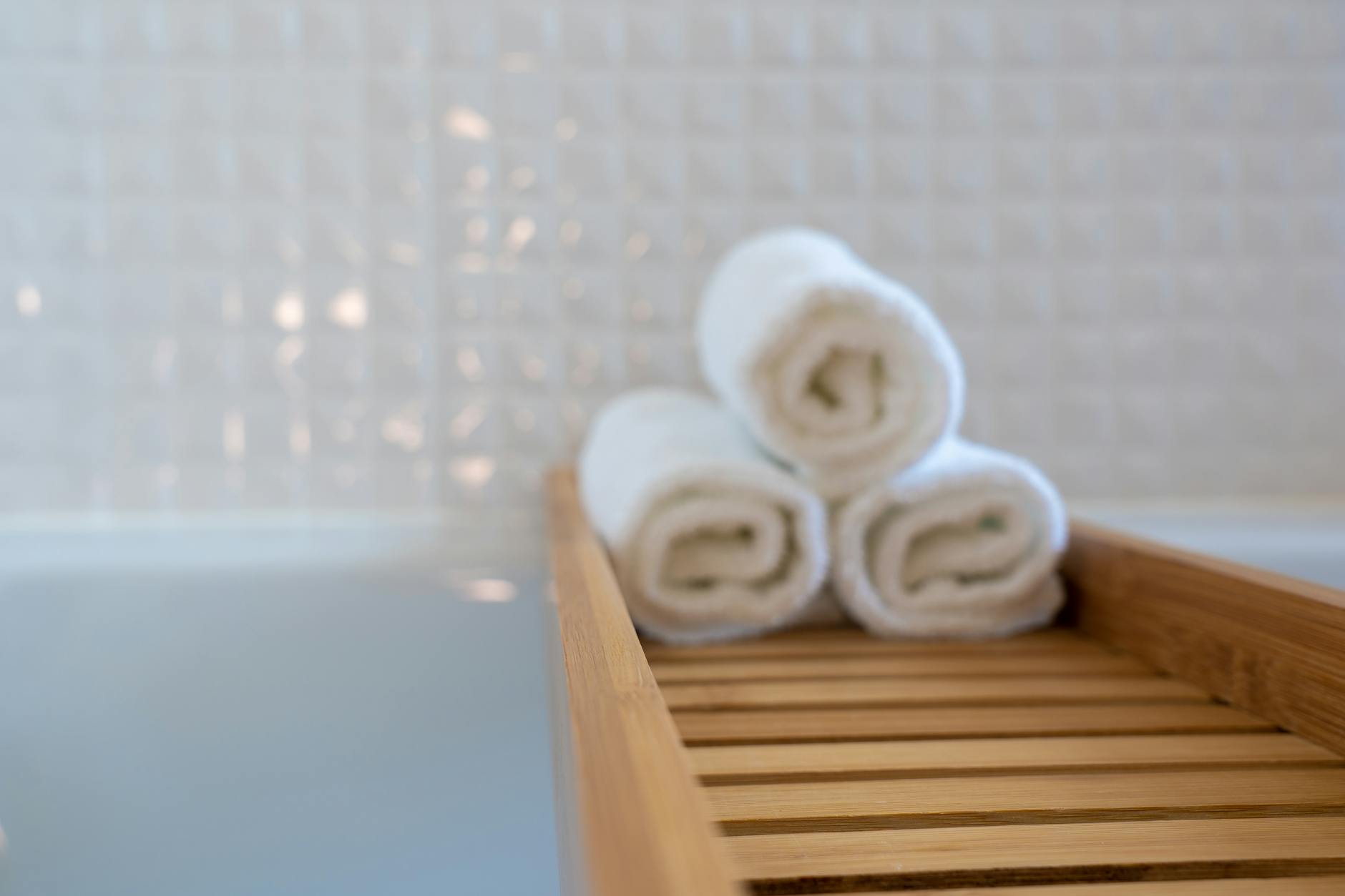
When selecting textiles for towels or bath mats, the focus must remain on fiber quality. High-quality, absorbent natural fibers—like Egyptian cotton or organic linen—provide superior tactile satisfaction compared to synthetic blends. This attention to the micro-details of touch directly correlates with the perceived level of luxury and relaxation achieved in the environment. Understanding how these small physical choices aggregate into a large-scale sensory effect is where true design mastery emerges.
Tags: spa bathroom decor, bathroom design, natural textures, relaxing home, soft lighting, bathroom inspiration, cozy decor
Featured Image by Castorly Stock on Pexels.