
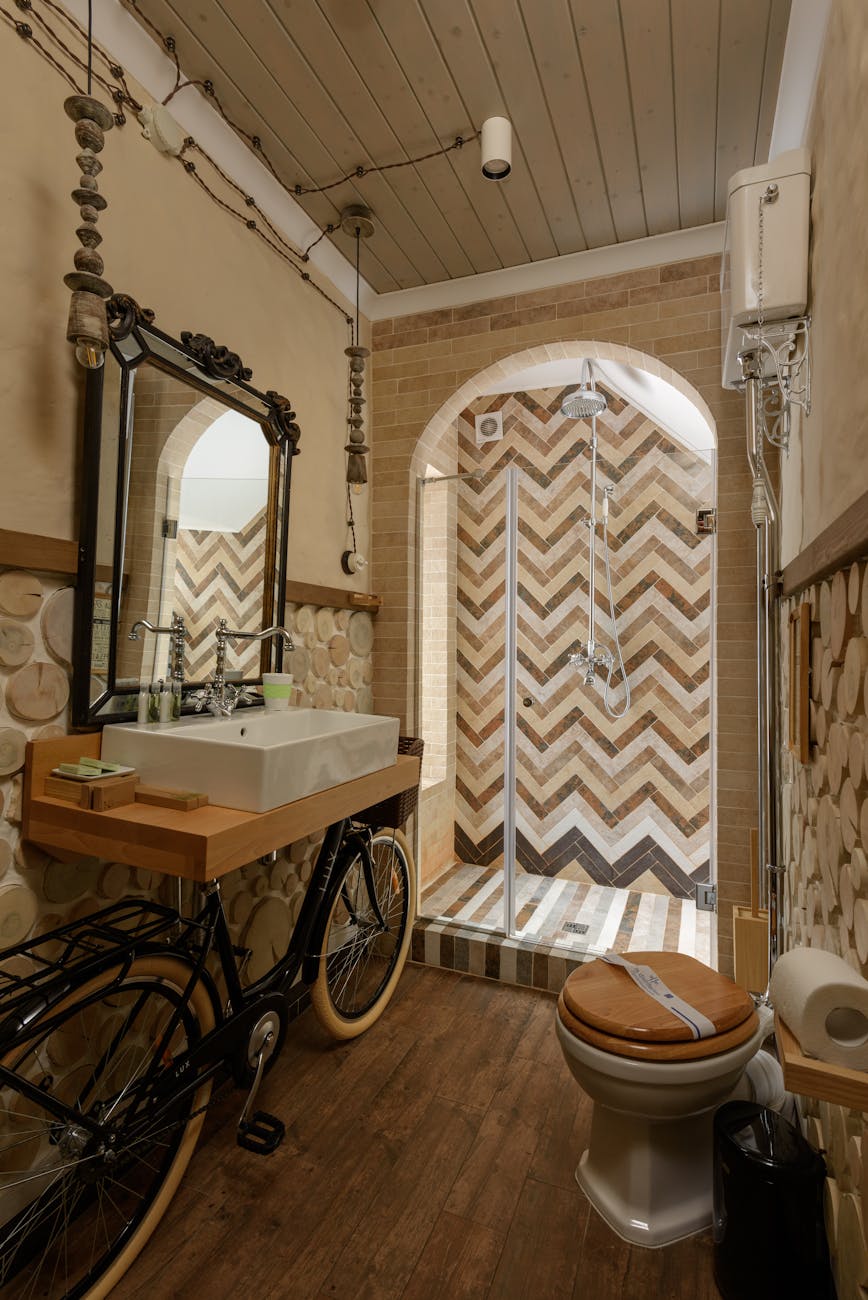
The Geometry of Earth: Integrating Wood and Stone into Bathroom Design
When we approach bathroom design through a rustic lens, we are not merely applying decorative elements; we are manipulating material properties to alter the sensory experience of the space. The integration of natural wood and stone achieves this by introducing inherent texture, organic warmth, and a sense of grounded permanence that manufactured materials often fail to replicate. We observe from the data that these raw materials possess specific thermal and visual qualities that directly influence perceived coziness.
The mechanism at play here involves tactile engagement. Wood, with its complex grain patterns and natural fissures, offers an immediate tactile contrast to the smooth, cool surfaces of porcelain or glass fixtures. Stone, whether rough-hewn slate or polished travertine, anchors the design by establishing a visual weight, suggesting longevity and natural provenance. Combining these elements creates a dynamic interplay where the eye is drawn to the subtle variations in tone and texture across the surfaces. This intentional layering moves the space away from sterile functionality toward an immersive, lived-in environment.
Selecting Wood for Rustic Bathroom Accents
The choice of wood dictates the entire thermal atmosphere of the room. We must consider not just the visual appeal but the material’s reaction to high humidity and temperature fluctuations inherent in a bathroom environment. Species selection is critical; woods like reclaimed oak or warm walnut introduce deep, rich tones that absorb light softly, contributing significantly to an enveloping feeling. Conversely, lighter woods might feel airy, yet darker, denser timbers offer a heavier, more established presence suitable for creating a cozy retreat.
The application of wood should focus on strategic placement rather than overwhelming surfaces. Consider using reclaimed wood planks for accent shelving or as unique vanity tops. This technique leverages the inherent character of the material; visible imperfections are not flaws but evidence of history, which aligns perfectly with the rustic aesthetic we are pursuing. We see that rough-sawn edges enhance the perceived authenticity of the design choice.
Utilizing Stone for Grounded Aesthetics
Stone introduces an element of cool, solid stability to the décor scheme. Marble, slate, and travertine offer surfaces that feel inherently luxurious yet remain deeply connected to the earth. The visual texture of stone plays a crucial role in defining the mood; its matte or subtly polished finish interacts differently with ambient light than high-gloss ceramic tile.
When incorporating stone, we focus on how the material mediates water and moisture. Natural stone naturally manages humidity better than some synthetic materials, which contributes to the long-term viability of the space while enhancing the earthy feel. Large slabs of natural stone used for shower walls or floor in a bathroom immediately elevate the perceived quality of the entire environment. This choice grounds the design, preventing the space from feeling ephemeral.
Designing with Natural Textural Touches
The true alchemy occurs when wood and stone are juxtaposed with other tactile elements. The contrast between the hard, cool materiality of stone and wood demands softening agents to achieve true coziness. We must introduce textiles to bridge this gap, introducing necessary softness that engages the sense of touch immediately. Think about layering: placing a thick, woven bath mat beside a rough-hewn wooden stool introduces an immediate sensory invitation.
Textural Touches: Soft Textiles for a Cozy Bathroom Vibe provides the mechanism for this transition beautifully. Introducing linen towels or chunky knit throws over seating areas softens harsh lines and absorbs sound, effectively mitigating the starkness that hard surfaces can impose. This interplay between roughness and softness is fundamental to achieving the desired rustic comfort.
Establishing the Rustic Bathroom Decor Narrative
The overall narrative of the space emerges from how these elements interact under specific lighting conditions. Warm, low-intensity lighting, perhaps utilizing amber tones, amplifies the warm undertones in the wood grain and enhances the deep, matte character of the stone. This strategic illumination causes shadows to play across the varied surfaces, deepening the sense of depth and intimacy.
We are constructing an experience where every surface contributes a story about natural sourcing and enduring craftsmanship. The rustic bathroom decor moves beyond simple decoration; it becomes an intentional statement about valuing organic materials within a functional space. Understanding this material psychology allows for design decisions that resonate deeply with the user’s desire for sanctuary.
Practical Application: From Concept to Execution
Implementing this vision requires attention to detail regarding material pairing. Avoid mixing disparate styles; maintain consistency in the level of finish. If using very rough, unfinished wood, pair it with matte, unpolished stone surfaces rather than highly reflective chrome fixtures. This coherence prevents the design from feeling cluttered or accidental.
Consider the vanity area as a focal point. A substantial piece of reclaimed wood for the vanity base anchors the space firmly to the rustic theme. Above it, a simple slab of natural stone acts as a grounding backdrop for the sink area. These placements establish an immediate sense of history and solidity.
The Psychological Impact of Natural Materials
Our analysis suggests that the psychological effect of incorporating raw, natural materials is significant. Exposure to organic patterns and textures triggers a primal sense of comfort and safety. When occupants interact with surfaces rich in wood grain or stone veining, the cognitive load associated with an unfamiliar, purely synthetic environment decreases. This creates an immediate feeling of belonging and tranquility.
The principle behind this effect relates directly to the concept of Hygge. The Art of Hygge: Simple Ways to Create Cozy Home Vibes relies on creating environments that feel safe, warm, and intentionally curated. By selecting wood and stone—materials inherently linked to nature—we are activating this primal comfort mechanism within the confines of a functional space. This is how we engineer a truly cozy retreat.
Maintenance and Longevity of Rustic Finishes
A key consideration in applying rustic decor involves long-term material management. Natural wood requires protection against excessive moisture cycling, especially in humid bathroom settings. Applying appropriate sealants and finishes ensures that the aesthetic remains intact while safeguarding the structural integrity of the wood. Stone also benefits from appropriate sealing treatments to resist staining and water penetration, preserving its earthy character over time.
The commitment to high-quality, durable materials means reduced need for frequent cosmetic interventions. This approach aligns with a deeper philosophy where investment in authentic, natural elements yields enduring aesthetic and sensory rewards. We are not just decorating; we are curating an experience built on the enduring qualities of wood and stone.
Tags: rustic bathroom decor, wood bathroom design, stone accents, natural bathroom, rustic decor, bathroom inspiration, cozy home
Featured Image by Max Vakhtbovych on Pexels.