
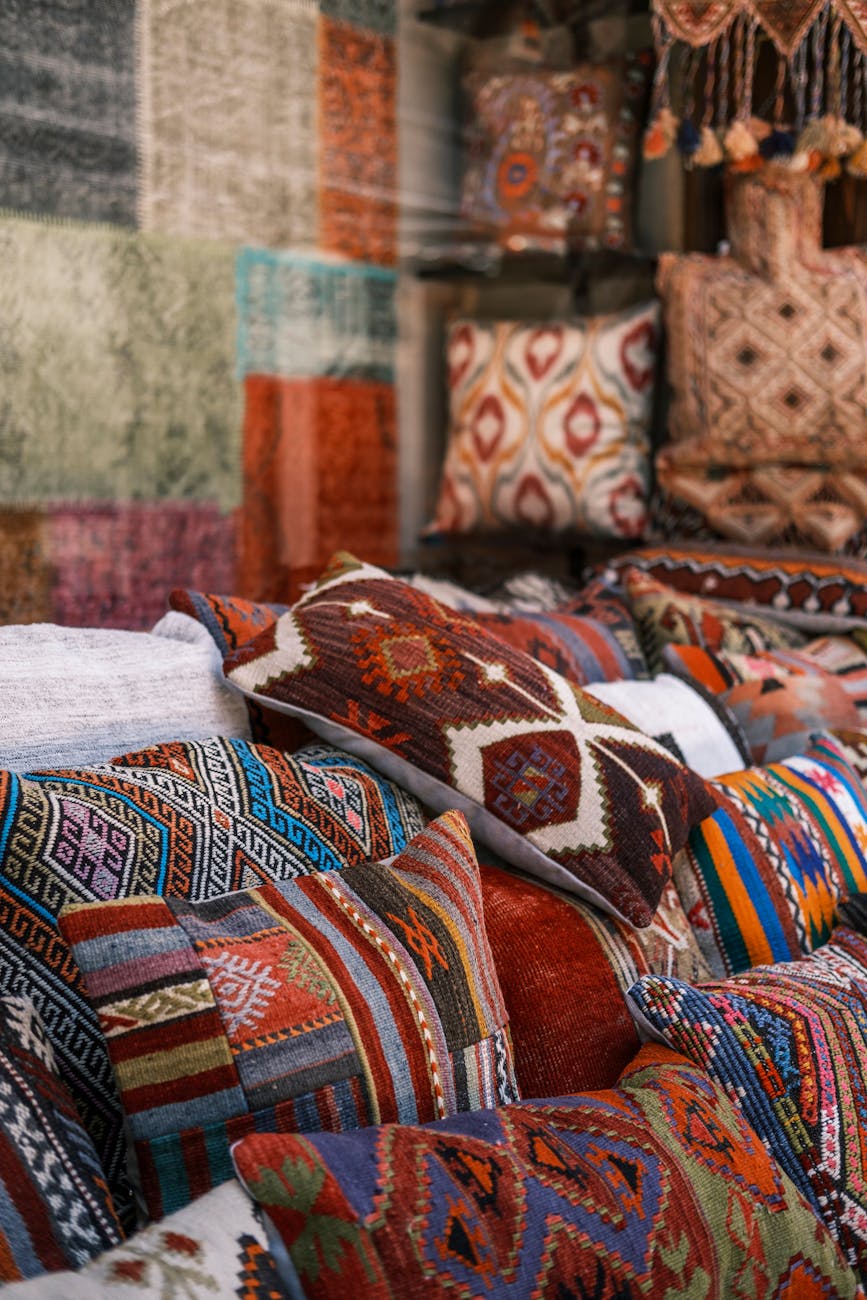
The Tactile Science of Layering Textiles for Deep Comfort
We seek coziness not as a feeling, but as a quantifiable sensory experience. This pursuit involves understanding the physical interaction between different materials—the way light diffuses, how sound is absorbed, and how touch registers against the skin. Mastering the art of **mixing fabrics for cozy home decor** means moving beyond simple pattern matching; it requires an understanding of textile physics and visual psychology. We are manipulating surface texture to dictate the ambient atmosphere within a space.
The foundation of rich coziness lies in tactile complexity. A single, monolithic fabric offers predictable sensory input. True depth emerges when we introduce deliberate material juxtaposition. Consider the interplay between materials with vastly different hand-feels: the coarse, nubby texture of raw wool against the smooth, yielding drape of velvet, or the soft, open weave of linen layered beneath a heavy, tightly-plied knit. This contrast forces the eye and the body to engage with the surface on multiple levels simultaneously. We observe that this textural friction prevents visual monotony, creating a dynamic environment where every glance reveals a new tactile opportunity.
Deconstructing Fabric Properties for Sensory Impact
When selecting materials for layering, we must analyze their inherent properties before considering aesthetic placement. We examine weave density, thread count, and fiber composition because these dictate thermal regulation and light reflection. Wool fibers possess excellent thermal inertia; they trap air pockets effectively, offering insulation that shifts based on the ambient temperature fluctuation. Conversely, synthetics or silks offer slickness and a specific visual sheen, reflecting light in ways that amplify perceived brightness or depth.
Velvet, for instance, functions through light absorption rather than reflection. Its dense pile traps photons, creating deep, saturated shadows when lit softly, which psychologically equates to a sense of enclosure and richness. Introducing this density next to a lighter material, such as a sheer cotton voile, creates an intentional visual hierarchy; the heavy velvet anchors the space, while the sheer fabric introduces an airy, permeable layer. This layering mechanism controls the perceived volume of the room without adding physical bulk.
Mastering the Blend: Knits, Velvets, and Wool
The strategic combination of these core textiles is where the true artistry of mixing fabrics for cozy home decor resides. Knits introduce necessary suppleness and an organic rhythm to a space. A chunky cable knit acts as a visual anchor, its raised stitches providing tactile topography that invites lingering. When pairing this with a smooth, matte velvet throw, the juxtaposition highlights the difference between structured form and yielding softness.
Wool, due to its natural crimp, inherently manages temperature well, making it essential for grounding a cozy scheme. We see wool excel when used in heavier weaves like tweed or chunky blankets, providing substantial visual weight that grounds lighter elements. This density is crucial when designing spaces that aim for deep comfort, especially when considering the principles detailed in [The Art of Hygge: Simple Ways to Create Cozy Home Vibes](https://decorandliving.com/art-hygge-cozy-home-vibes/).
Velvets and silks introduce a different dimension: luxurious surface quality and light play. They function by modulating how ambient light is perceived, deepening shadows and amplifying warmth. Mixing these with matte materials like raw linen achieves a sophisticated balance between opulent depth and understated ease. In practice, the goal is to avoid material competition; instead, seek complementary contrast. A highly reflective silk might work better when juxtaposed against a densely woven wool, allowing the matte texture of the wool to absorb the visual intensity of the silk.
The Mechanics of Visual Flow and Scale
Layering textiles is not just about texture; it is fundamentally about controlling visual flow across different scales. We must manage how these disparate surfaces interact spatially. A large, deep-pile rug establishes a base plane, dictating the thermal and tactile experience for the feet. Upon this foundation, smaller items—cushions, throws, and window treatments—are introduced to manipulate the immediate personal space.
When arranging textiles, we observe that scale dictates dominance. Oversized knits or floor-length drapes introduce expansive zones of comfort, immediately inviting the user into a more enveloping experience. Smaller accent pillows, conversely, provide focal points for intimate interaction. A successful arrangement involves establishing a visual hierarchy where textures move smoothly from large, enveloping surfaces down to intimate, hand-touching details. This progression guides the viewer’s eye and reinforces the intended feeling of sanctuary.
Integrating Light and Shadow Through Textile Choices
The way textiles interact with ambient light is perhaps the most profound element in creating cozy decor. Light penetration changes how a fabric appears, revealing its inherent qualities. A heavily textured wool blanket will cast deep, complex shadows where the fibers overlap, emphasizing depth. Smooth, reflective fabrics like satin or polished cotton will catch the light, creating brighter highlights that emphasize surface sheen.
We can leverage this principle when designing rooms. If the goal is to maximize a feeling of enveloping warmth, selecting materials with high light-absorption qualities—like heavy wools and deep velvets—will enhance the shadowed areas, increasing perceived coziness dramatically. For spaces where brightness is desired, incorporating sheer fabrics allows light to filter softly, softening sharp edges and creating diffused illumination across the surfaces. This interplay between absorption and reflection directly manipulates the room’s atmospheric density. We see this connection clearly when considering elements like [Beginner’s Guide to Layered Lighting for Cozy Homes](https://decorandliving.com/beginners-guide-layered-lighting/), where controlling light intensity sets the stage for textile richness.
Practical Application: Constructing a Cohesive Narrative
To successfully mix fabrics for cozy home decor, one must approach the design process as an exercise in material storytelling. We are not simply placing objects; we are constructing an environment where every surface contributes to the overall narrative of comfort. This requires establishing a core palette—perhaps grounding it in natural tones like cream, charcoal, and deep forest green—and then introducing textural variations within that framework.
For example, a room anchored by warm gray wool throws benefits from accent pieces featuring contrasting textures: a smooth, cool silk pillow juxtaposed against a nubby, hand-spun alpaca blanket. This approach avoids the trap of visual noise. The effect is sophisticated depth; the eye registers the richness of the texture interplay rather than being overwhelmed by competing patterns or colors.
The process demands iterative testing. We must observe how the chosen materials perform under various light conditions throughout the day. Does the velvet look too heavy in morning light? Does the linen pair well with the heavier wool base? This hands-on analysis replaces guesswork with empirical observation, refining the balance until the tactile experience aligns perfectly with the intended psychological state of coziness. Ultimately, the successful mixing of fabrics is the calculated orchestration of touch, sight, and shadow into a deeply comforting space.
Tags: fabric combinations, home textiles, cozy decor, texture layering, fabric design, velvet and wool, interior styling
Featured Image by Gül Işık on Pexels.