
The Physics of Comfort: Deconstructing Cozy Textiles for Optimal Living Room Design
We approach interior design not as mere aesthetic arrangement, but as the manipulation of sensory input. When we focus on creating a **cozy textiles living room**, we are engaging with the physical properties of materials—their weight, texture, drape, and thermal conductivity. These elements dictate how a space feels to the occupant long after the initial visual appeal has registered. The goal is to engineer an environment where tactile experience directly translates into psychological relaxation.
The selection process requires moving beyond simple visual preference toward material science. For instance, wool fibers possess superior thermal regulation capabilities compared to synthetic blends, managing ambient temperature fluctuations effectively. We observe that high-pile rugs, for example, absorb and diffuse sound waves, creating a sonic environment that feels muffled and intimate, which contributes significantly to the perception of coziness. This is not accidental; it is a direct result of material density interacting with acoustic properties.
Analyzing Material Properties: Weight, Hand, and Visual Depth
Understanding the interplay between fabric characteristics and spatial perception is fundamental when curating textiles for your space. Consider the difference between a smooth, tightly woven linen and a heavily textured bouclé. The former reflects light evenly and offers crisp visual lines; the latter introduces complex shadow play and tactile depth. This textural contrast prevents the room from feeling flat, introducing necessary visual interest through surface topography.
We analyze how different weaves manipulate light. Velvet, for instance, features a dense pile structure that traps light, yielding deep, saturated colors and rich shadows. This mechanism enhances the sense of enclosure and luxury. Conversely, a loosely woven knit allows light to penetrate and diffuse softly across the surface, promoting an airy, relaxed atmosphere. Mastering this contrast is how we achieve true sensory coziness rather than superficial decoration.
The Art of Layering: Building Thermal and Visual Depth
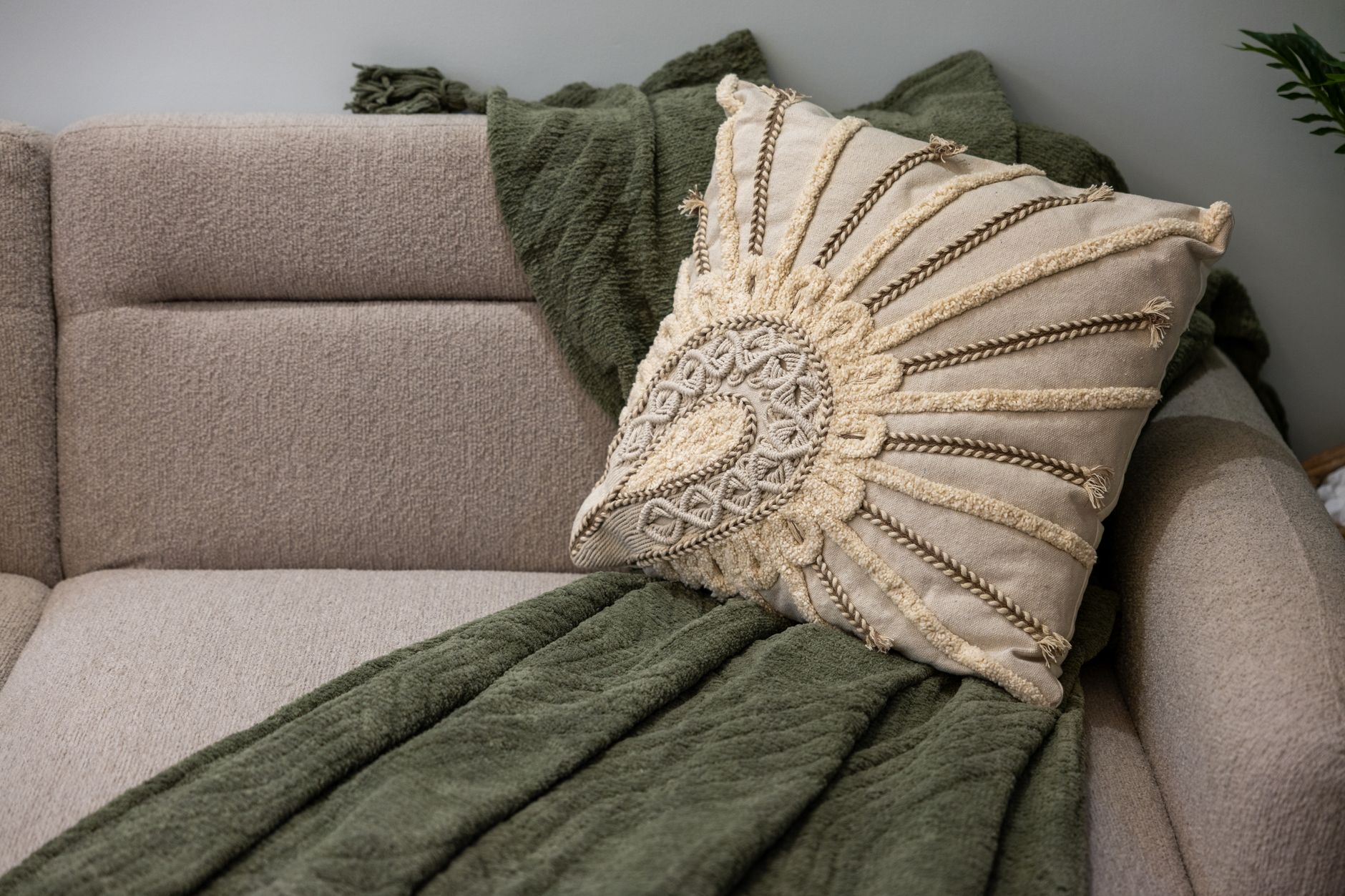
The concept of layering textiles moves beyond simply placing a throw blanket on a sofa; it involves constructing a multi-sensory envelope around the seating area. Effective layering addresses both thermal regulation and visual hierarchy simultaneously. A foundational element, such as a heavy wool throw or a substantial velvet cushion, establishes the base layer, providing necessary warmth and anchoring the space visually.
Over this foundation, lighter, contrasting textures are introduced. Think about draping a chunky knit blanket over the arm of a sofa or placing a sheepskin rug atop a larger area rug. This layering introduces varying levels of tactile engagement. The friction and softness encountered as one moves through the space engage different sensory pathways simultaneously, which is the mechanism behind deep comfort. We see this principle applied across the home; for example, integrating similar principles into spaces like spa bathrooms, where the goal shifts toward serene immersion rather than just warmth.
Selecting Fibers for Specific Environments
Different fibers perform specialized functions based on the intended use and climate of the living room. Wool remains a prime choice due to its natural insulation properties and excellent moisture-wicking capacity, making it resilient in varied indoor conditions. Synthetic materials offer durability and easy maintenance, yet their thermal performance requires careful consideration regarding breathability.
When designing for an environment that encourages deep relaxation, the material choice must support that intention. A heavy alpaca or cashmere throw communicates immediate tactile luxury. These fibers possess a high yarn count and soft handfeel, maximizing surface contact comfort. For areas requiring greater durability or easier cleaning, performance synthetics can be employed, provided their weave structure mimics the desired softness rather than emphasizing synthetic sheen.
Integrating Textiles with Ambient Lighting
The relationship between textiles and light sources is inseparable in defining ambiance. How light interacts with fabric surface dictates the perceived mood of the room. Direct, harsh lighting flattens texture, revealing only flat planes. Soft, indirect illumination, however, activates the material’s depth.
When pairing rich textures—like deep velvet and heavy wool—with warm-toned ambient lighting, the resulting effect is amplified. The shadows created by the pile of a rug or the subtle sheen on a velvet drape become dynamic elements within the scene. This interaction pulls the eye into the texture, enhancing the sense of enveloping warmth. We must consider how light interacts with your chosen fabrics to maximize the cozy textiles living room effect. For optimal relaxation, this interplay is crucial; one can explore complementary lighting strategies that support this textural richness, much like setting up a serene glow for sleep.
Establishing Visual Flow Through Pattern and Scale
Pattern introduces another layer of complexity into textile design. Large-scale patterns introduce visual momentum, drawing the eye across the space, whereas smaller, more intricate motifs foster a feeling of intimate detail and calm. The scale of the textile relative to the furniture dictates its impact on the overall spatial volume.
A large, bold geometric pattern on a sofa anchors the seating arrangement with undeniable presence. Smaller, repeating floral patterns, when used on accent pillows or throws, introduce complexity that invites closer inspection. We observe that balancing these scales prevents the room from feeling overwhelmingly busy. The successful execution of coziness relies on controlling visual noise; the textiles must feel inviting without overwhelming the sensory experience. Think about how this principle translates to creating a spa-inspired bathroom where patterns are used intentionally to suggest natural flow and tranquility.
Maintenance and Longevity: Practical Application
The perceived quality of cozy textiles is intrinsically linked to their longevity and care. Natural fibers require specific maintenance protocols, such as periodic brushing for wool to restore loft and manage static. Synthetic fabrics necessitate attention to washing temperatures to prevent fiber degradation and maintain their intended softness.
We must factor in the practical reality of textile management. A heavily used living room demands durable materials that can withstand repeated interaction while retaining their aesthetic appeal. Investing in high-quality, naturally resilient textiles often proves more economical in the long run than continuously replacing lower-grade items. This consideration grounds the entire design process; true coziness is sustainable comfort, not fleeting decoration.
Tags: cozy textiles, living room decor, textile layering, home textiles, cozy home, fabric textures, living room style
Featured Image by AJ Ahamad on Pexels.