
Deconstructing the Art of Textile Layering for Bedroom Ambiance
The goal when curating a truly cozy bedroom is not simply to select soft items; it involves manipulating tactile perception through strategic material juxtaposition. We observe from the data that the psychological impact of a space is heavily mediated by the sensory input we receive, and textiles are the primary mechanism for controlling this sensory experience. Mastering the art of layering textures allows one to achieve depth, visual interest, and, most importantly, deep comfort within the sleeping environment.
We are not just covering surfaces; we are engineering an atmosphere. Think about how light interacts with different fibers. A smooth, cool linen juxtaposed against a deeply piled velvet creates a dynamic tension that engages the eye immediately. This interaction is what translates into perceived warmth and invitation. Understanding this principle is the first step toward designing a truly restorative space.
The Physics of Tactile Perception in Bedroom Design
The way our brains process visual information is intrinsically linked to tactile memory. When we look at a collection of fabrics, our subconscious attempts to map those visual cues onto physical sensation. Knits offer a specific kind of soft elasticity; velvets possess a light-absorbing depth; and linen provides a crisp, breathable surface quality. Mixing these elements prevents the room from feeling monolithic or flat.
Consider the thermal properties involved. Heavy wool throws introduce significant thermal mass, creating pockets of enveloping warmth that signal security. Lighter fabrics, such as washed cotton or sheer silks, allow for greater air circulation while still offering a soft hand. The strategic placement of these materials dictates how we perceive temperature, even if the actual ambient temperature remains constant. This manipulation of perceived temperature is key to achieving that desired cozy state.
Selecting Your Core Textile Palette
Before layering begins, establishing a foundational palette is essential. This foundation should consist of textiles that harmonize in tone and texture, even when placed side-by-side. We typically work within a restricted spectrum—think muted earth tones, warm creams, deep charcoals, or dusty sage greens. Introducing too many disparate colors fractures the intended sense of calm.
We analyze color theory here: analogous colors create seamless transitions, which supports the feeling of unity necessary for rest. Deep jewel tones, like sapphire or emerald, absorb light and contribute to a mood of luxurious enclosure. Conversely, lighter neutrals reflect ambient light, making the space feel airy yet still grounded. This foundational selection dictates the overall emotional register before any layering occurs.
Mastering the Mix: Knits, Velvets, Linen, and Faux Fur
The true complexity emerges when integrating specific material types. We need to understand the functional role each fabric plays in the layered system.
Knits introduce an inherent, soft texture with visible stitch definition. A chunky cable knit throw, for instance, functions as a textural anchor, providing palpable depth. Velvet, with its dense pile and light-absorbing quality, serves to deepen the visual richness of any zone it occupies. Linen offers a breathability that prevents the layered look from becoming overly heavy or claustrophobic during warm nights. Faux fur introduces an element of exotic, deep softness, acting as a luxurious focal point against simpler textures.
In practice, we observe that balancing these elements is crucial for achieving equilibrium. If you employ several highly textured items, ensure at least one large, smooth surface exists nearby to allow the eye a resting place. This prevents sensory overload. We find that combining matte materials (like linen) with high-sheen or deep pile materials (like velvet) creates dynamic contrast rather than visual discord.
Strategic Placement for Maximum Impact
The placement of these textiles dictates the flow and intended function of the room. We must move beyond simple draping; we are creating zones of comfort.
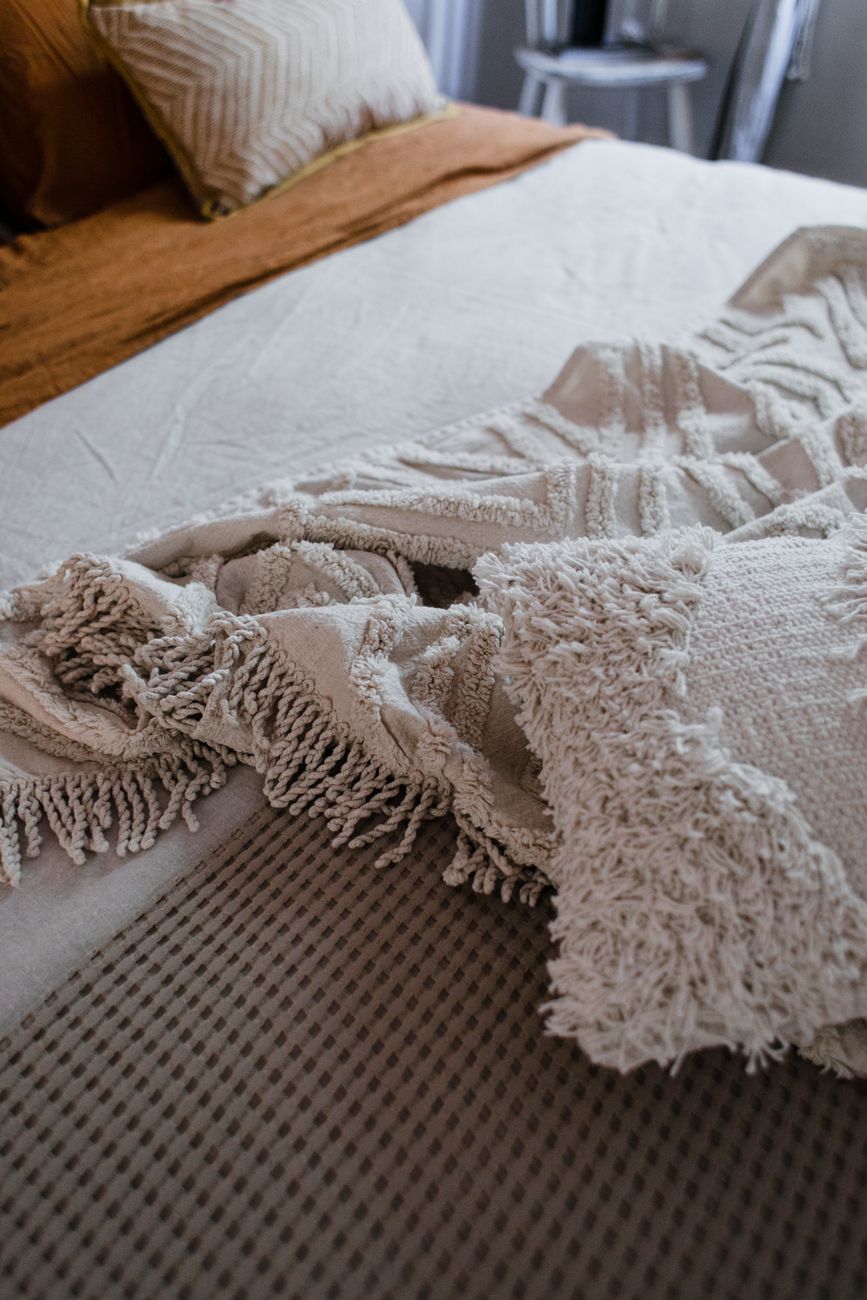
For instance, consider the bed itself as the central anchor. Layering begins with the foundation—the duvet or quilt—which should possess substantial weight and softness. Over this base, introduce textural contrast. Drape a heavier velvet throw across the foot of the bed to draw the eye downward. Then, layer a lighter linen sheet underneath, allowing its natural texture to peek through, providing a soft visual respite.
When designing areas beyond the sleeping space, such as reading zones, the textile strategy shifts slightly. If you are setting up an area for focused relaxation, consider using textiles that invite lingering. Designing cozy reading nooks for your bedroom involves selecting seating that invites sinking in, often requiring materials like deep-pile rugs and enveloping cushions.
Integrating Textiles with Architectural Elements
Textiles do not exist in isolation; they must interact with the fixed elements of the architecture—the walls, the wood floors, and the furniture silhouettes. This interaction determines whether a textile feels integrated or merely placed upon.
The visual weight of a heavy rug, for example, anchors the entire visual field. It grounds the lighter, airier textures above it, establishing a sense of secure enclosure below. When pairing textiles with natural wood tones, materials like raw linen harmonize beautifully because they echo the organic quality of the grain. Conversely, introducing highly manufactured synthetic fibers requires careful balancing; they should act as intentional accents rather than overwhelming masses.
When transitioning to other luxury areas within the home, maintain this textural dialogue. If you are designing a spa sanctuary, the tactile experience must flow seamlessly from the bedroom environment. The smooth, cool feel of stone or polished wood should be complemented by the enveloping softness found in bath linens. This continuity reinforces the overarching theme of luxurious, intentional comfort throughout the entire dwelling.
Achieving Sensory Depth Through Scale and Density
The perception of coziness is directly proportional to the density of the layering. A single, thin layer offers surface interest; a dense arrangement provides immersive depth. We analyze how scale influences this effect. Large-scale throws signal expansive comfort; they invite one to wrap up in the material. Smaller accent pillows or smaller woven blankets provide intimacy and personal touch against the larger backdrop.
We see that strategic density is more effective than sheer quantity. A room overloaded with small, disparate textures results in visual noise. Instead, focus on creating deliberate focal points where texture converges. Imagine a corner defined by a thick, oversized knit blanket, surrounded by pillows of varying weaves—a perfect convergence point for cozy bedroom textiles. This concentration of tactile information directs the observer’s attention and solidifies the feeling of enveloping warmth.
This process demands an iterative approach. Begin with your core color scheme. Select three contrasting textures you wish to explore. Then, experiment with placing them in different configurations on a sample bed or sofa. Observe how light shifts across the surfaces and how the psychological response changes with each rearrangement. This experimentation moves the design from theoretical concept to palpable reality. The resulting outcome is a personalized environment where every fiber contributes to the ultimate feeling of sanctuary.
Tags: bedroom textiles, textile layering, cozy decor, bedroom fabrics, home textiles, texture guide, bedroom design
Featured Image by Rachel Claire on Pexels.