
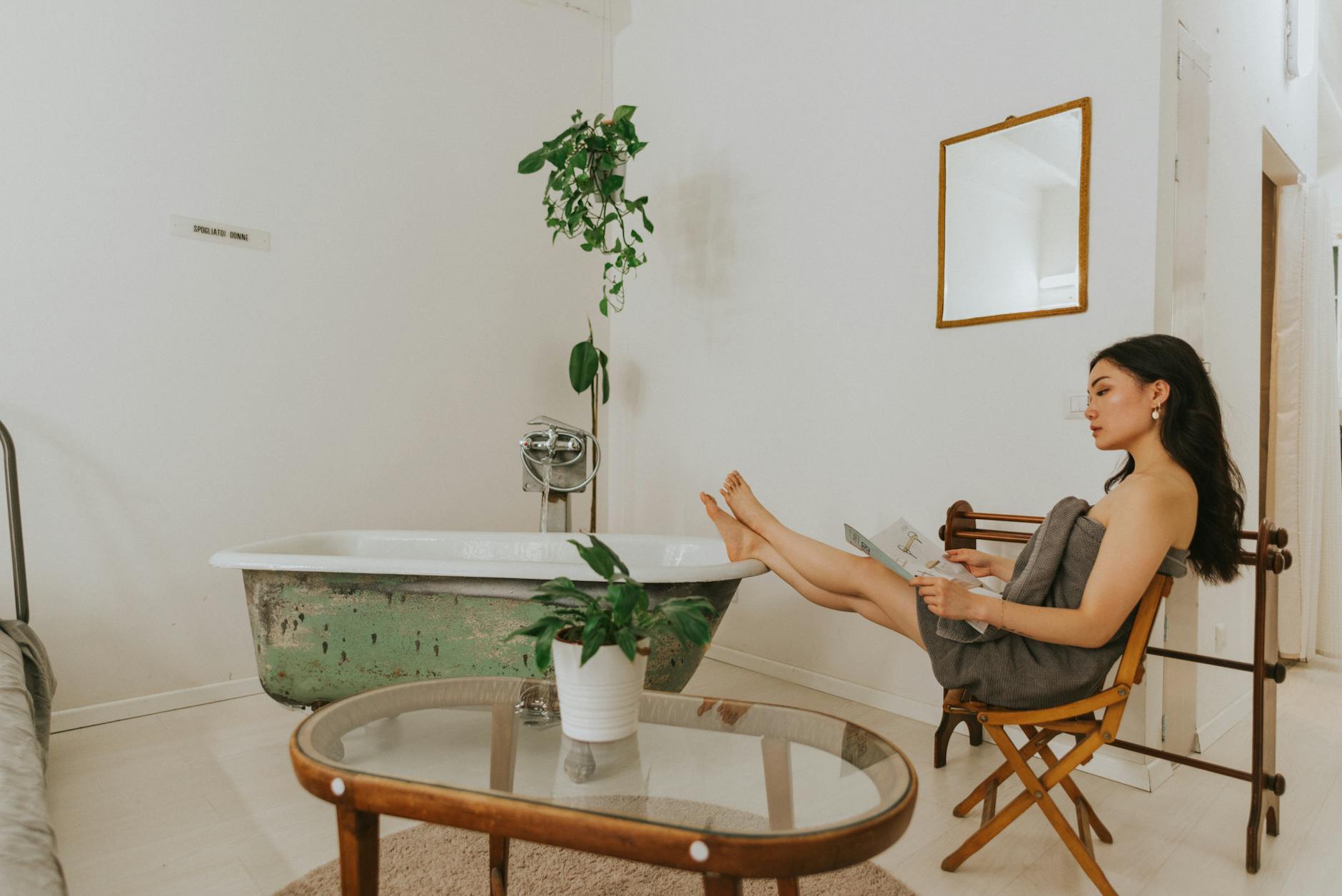
Engineering the Hygge Bathroom Reading Nook
The objective when designing a small bathroom space is not merely to fit fixtures but to engineer an atmosphere. We are aiming for hygge, which translates less into a specific product and more into a deliberate manipulation of sensory input—light, texture, and warmth—to induce a state of deep, comfortable contentment. Creating a hygge bathroom decor involves understanding how these elements interact to modulate psychological comfort within a confined architectural space. Observing the data on interior psychology suggests that reducing visual clutter while maximizing tactile richness is the most efficient pathway to achieving this effect in a small setting.
Optimizing Spatial Constraints for Reading Comfort
Small bathrooms present unique spatial constraints, forcing us to redefine function rather than simply adding more items. The reading nook must serve dual purposes: utility and sanctuary. We observe that integrating this function successfully requires careful assessment of vertical and horizontal real estate. If the space is severely limited, we focus on creating an intentional focal point where the sensory experience overrides the physical size. This necessitates selecting furniture pieces with minimal visual footprint yet maximum functional depth.
We must treat the area designated for reading not as an afterthought but as a primary zone. For instance, positioning a comfortable seat directly adjacent to a window maximizes natural light exposure, which is a powerful modulator of mood. Natural light penetration directly influences circadian rhythms and perceived warmth; a well-lit space feels inherently more welcoming than one relying solely on artificial sources. We see that using floor space efficiently allows the visual field to rest, preventing cognitive overload often experienced in cramped environments.
The Mechanics of Warm Lighting
Lighting is arguably the most potent tool for establishing a hygge atmosphere. We move away from harsh, high-Kelvin illumination, which triggers alertness, toward lower-temperature light sources that stimulate relaxation. The color temperature dictates the emotional resonance of a space; warm tones, typically below 3000 Kelvin, encourage melatonin production and signal safety to the visual cortex.
We implement layering in lighting design. Relying on a single overhead fixture introduces a monolithic quality that lacks intimacy. Instead, we deploy multiple sources positioned at varying heights. Ambient light should be diffused, perhaps emanating from indirect sources like sconces or dimmable lamps rather than direct overhead exposure. This creates pockets of soft illumination, drawing the eye to specific textures and objects within the nook. The mechanism here is controlling contrast; reducing harsh shadows allows softer surfaces—like knitted throws or matte ceramics—to absorb light gently, enhancing the overall sense of enveloping warmth.
Textural Strategy: Engaging the Sense of Touch
The tactile experience forms a crucial layer in the hygge equation. A visually harmonious space can still feel cold if it lacks physical invitation. Incorporating varied textures stimulates the sense of touch, engaging deeper sensory pathways that bypass purely visual processing. We need surfaces that invite lingering and tactile exploration.
We focus on introducing materials with inherent softness and depth into the bathroom setting. Think about textiles—velvet, boucle, or thick, brushed cotton. These materials absorb sound and light differently than smooth plastics or polished tile, immediately softening the aesthetic. When we select fabrics for a reading nook, the choice impacts how one physically settles in; the material should feel like an invitation to rest. Consider layering these elements thoughtfully. For instance, pairing a soft rug with a plush cushion creates a tangible boundary of coziness on the floor plane. This principle extends beyond just seating; consider how we approach other surfaces within the bathroom. Layering cozy textiles for a warm kitchen aesthetic demonstrates this principle in action, showing how density of texture builds an immersive environment.
Curating the Reading Nook Elements
To synthesize these principles, the execution phase involves selecting specific components that reinforce the desired mood. The reading nook should feel intentional, curated, and deeply personal rather than merely decorated.
Selecting Furniture for Intimacy
The seating element must prioritize comfort above all else. A deep, cushioned stool or a small armchair works better than a rigid bench because it encourages a posture conducive to relaxation. We assess the scale; oversized furniture will overwhelm the space instantly. The piece should feel nestled into the corner, creating an intimate enclosure around the reader. Functionality dictates form here; the object must support prolonged, comfortable repose without demanding excessive spatial volume.
Incorporating Natural and Organic Forms
Nature provides an innate framework for hygge. Introducing organic shapes—curved lines in shelving, wood tones, or ceramic textures—connects the interior space to the external world, reducing feelings of clinical sterility often associated with bathrooms. Natural wood tones, perhaps a light oak or warm walnut finish on a small shelf, introduce organic warmth that counters the hard geometry of tile and fixtures. This connection grounds the decor in natural, enduring comfort.
Managing Visual Density
Because space is limited, every item must justify its presence by contributing meaningfully to the atmosphere. We avoid the pitfall of excessive display. Instead of filling every surface, we select a few key, high-impact items. A beautifully designed, ambient lamp, a soft throw draped artfully, and perhaps a small stack of carefully chosen books serve as anchors. This intentional reduction prevents visual fragmentation, allowing the eye to settle on the areas where warmth is most concentrated.
The Role of Atmosphere in Personal Reflection
The ultimate function of this design is to facilitate personal reflection. A space designed with hygge principles becomes a sanctuary, a place where external pressures recede, and internal focus can deepen. When the sensory inputs—soft light, warm textures, comfortable seating—are perfectly calibrated, the mind naturally shifts into a more receptive state. We are engineering an environment that signals safety and invitation to pause.
We observe that when individuals engage with these curated spaces, the memory associations become potent. The bathroom transforms from a necessary utility space into a personalized retreat. This psychological shift is achieved not through ostentatious display, but through meticulous attention to the subtle mechanisms of sensory experience. Creating this hygge bathroom decor is about implementing intentional design strategies that facilitate profound, everyday comfort.
Tags: hygge bathroom decor, bathroom design, cozy home, small bathroom decor, hygge style, reading nook, bathroom inspiration
Featured Image by Matteo Badini on Pexels.