Mastering the Art of DIY Chunky Knit Blankets
Creating a chunky knit blanket is more than just following a pattern; it involves manipulating yarn tension, stitch density, and fiber choice to achieve a specific tactile outcome. We observe that the resulting texture directly correlates with perceived coziness. When crafting your own piece, you are not simply producing an item; you are engineering a sensory experience tailored precisely to your aesthetic needs. This process shifts the focus from passive consumption to active creation, yielding results far superior to mass-produced textiles.
The appeal of the DIY approach lies in the granular control over material science. Understanding how different yarn weights interact with specific needle sizes allows the crafter to manipulate the gauge effectively. For instance, using a thicker, roving yarn necessitates larger needles and looser tension to prevent the fabric from becoming overly dense and stiff during the knitting process. This mechanical adjustment is crucial for achieving that desirable, open, airy texture characteristic of chunky knits.
Selecting the Optimal Yarn for Maximum Snuggle Factor
The foundation of any successful chunky knit blanket rests entirely on the yarn selection. The fiber content dictates the final drape, warmth-to-weight ratio, and longevity of the finished piece. Wool fibers, particularly those with high micron counts, possess natural crimp that traps air, which is a primary mechanism for insulation. When we analyze thermal performance, we see that wool excels because its fibrous structure creates countless tiny pockets of trapped air, effectively insulating against temperature fluctuations.
Alternatively, synthetic blends offer durability and easier care, though the thermal properties differ significantly from natural fibers. For maximum snuggle factor, we recommend focusing on natural wools like alpaca or chunky merino wool. These materials provide unparalleled softness and excellent thermal retention. We see that the loftiness achieved by these yarns is directly proportional to the blanket’s ability to mitigate cold, making them superior for true cozy living.
When planning your project, consider the yarn weight—this dictates the final scale of the blanket. A heavier weight yarn inherently creates a bolder texture and substantial drape. This decision impacts how the finished item will sit on furniture and how it interacts with light in the room. Experimenting with different gauges ensures the intended visual and physical outcome is met before committing to the final sequence of stitches.
Technical Execution: Achieving Consistent Stitch Density
The mechanics of knitting itself demand precision. In chunky knits, stitch density is the single most influential variable determining the blanket’s hand-feel and overall appearance. A looser stitch pattern results in larger, more pronounced stitches, creating that signature open, dramatic texture we seek. Conversely, increasing the stitch density through tighter tension compresses the yarn fibers, resulting in a denser, more solid fabric.
When working with bulky yarns, maintaining even tension across every row is the most challenging aspect of the process. In practice, beginners often introduce inconsistencies, leading to areas that are too tight while others remain loose. To mitigate this, one must establish a consistent workflow where the yarn is smoothly fed from the ball to the needle, ensuring equal yarn consumption per stitch across the entire surface area. This systematic approach prevents unevenness and ensures a uniform distribution of warmth.
We observe that manipulating the gauge requires iterative adjustments during the project. If a section feels too dense, the solution involves either increasing the needle size for the next row or slightly relaxing the tension applied to the yarn feed. This feedback loop—knit, feel, adjust—is central to mastering this craft. The goal is to consciously control the interplay between the physical forces of the knitting action and the material properties of the chosen fiber.
Design Considerations for Custom Comfort
Once the technical execution is under control, the design phase allows for personalization based on spatial constraints and desired ambiance. Think about how the finished blanket will interact with your living space. In smaller living areas or those requiring a more minimalist aesthetic, a single, richly textured chunky knit piece can anchor the decor beautifully without overwhelming the visual field. Conversely, in larger spaces, an expansive blanket functions as a statement piece, inviting deeper immersion into the tactile environment.
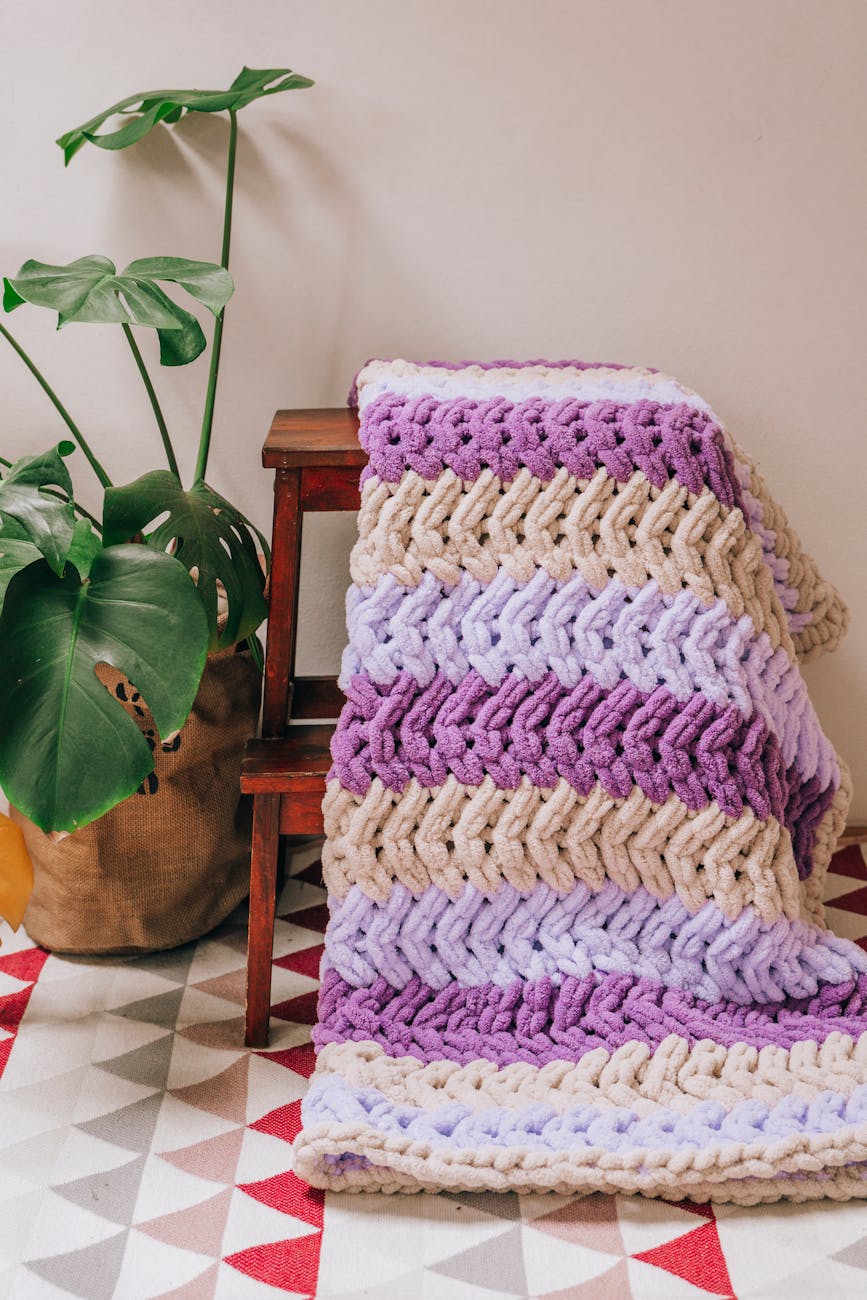
We see that texture plays a powerful role in visual depth. A heavily textured item introduces shadow and light variations across its surface, adding dynamic visual interest to any room setup. This effect enhances the feeling of coziness far beyond mere warmth; it creates an invitation to settle in. When designing your pattern, consider incorporating intentional variations in stitch size or introducing contrasting yarn colors to heighten this effect.
For those managing limited square footage, integrating cozy elements requires strategic placement. If you are working within a small apartment, focusing on high-impact textures can make the space feel intentionally curated rather than cluttered. Exploring solutions for making your space feel bigger often involves layering textiles; a beautifully crafted blanket serves as an excellent anchor piece in this strategy.
Integrating Knitted Comfort into Home Decor Strategy
The role of a handmade item extends beyond simple utility; it functions as a deliberate design choice that enhances the overall environment. When you engage in the process of making your own DIY chunky knit blankets, you are integrating a narrative of care and personal investment directly into your home décor. This intentionality elevates the object from mere functional textile to an artifact imbued with personal history.
This approach aligns perfectly with broader trends favoring artisanal goods. Consumers are increasingly seeking authenticity and a connection to the origin and process behind their possessions. A handcrafted item carries this weight inherently, suggesting hours of focused attention rather than automated production lines. This resonates deeply with those prioritizing quality over quantity in their interior selections.
To maximize the therapeutic effect of these textiles, consider how they integrate into your overall textile environment. Curating your collection thoughtfully enhances the experience of using the items daily. For instance, pairing a heavy knit blanket with soft, high-thread-count sheets creates a layered sensory experience that maximizes comfort. We suggest exploring curated collections designed for this purpose, recognizing the psychological benefit of surrounding oneself with tactile softness.
Understanding the relationship between texture and well-being is also vital. The physical act of engaging with a soft, warm surface triggers physiological responses associated with relaxation. This link between physical sensation and mental state confirms why high-quality, tactile furnishings are so sought after in modern home design. When you create your own blanket, you are actively engineering this positive feedback loop for yourself.
Maintenance and Longevity of Knitted Textiles
The durability of a chunky knit blanket depends heavily on the materials used and the care taken during washing. Because these items are subjected to significant physical stress—repeated stretching, folding, and friction—the longevity is directly tied to the yarn quality. Wool requires gentle washing and air drying; harsh agitation can disrupt the delicate structure formed by the stitches, causing potential unraveling or distortion of the gauge.
We advise against high-heat drying, as this process can cause fibers to contract unevenly, leading to shrinkage and loss of the desired loft. Proper maintenance involves hand-washing in cool water and allowing the blanket to air dry completely away from direct heat sources. This gentle treatment preserves the integrity of the stitch work and maintains the intended cozy dimension for years to come.
By understanding the physical mechanics behind the creation process and the material science involved, the resulting DIY chunky knit blankets become more than just warm coverings. They transform into tangible expressions of skill, comfort engineering, and intentional interior design choices. The opportunity lies in leveraging this knowledge to craft pieces that are both aesthetically stunning and deeply comforting.
Tags: chunky knit, knitting tutorial, handmade blankets, DIY home decor, yarn crafts, cozy living
Featured Image by Alina Vilchenko on Pexels.