
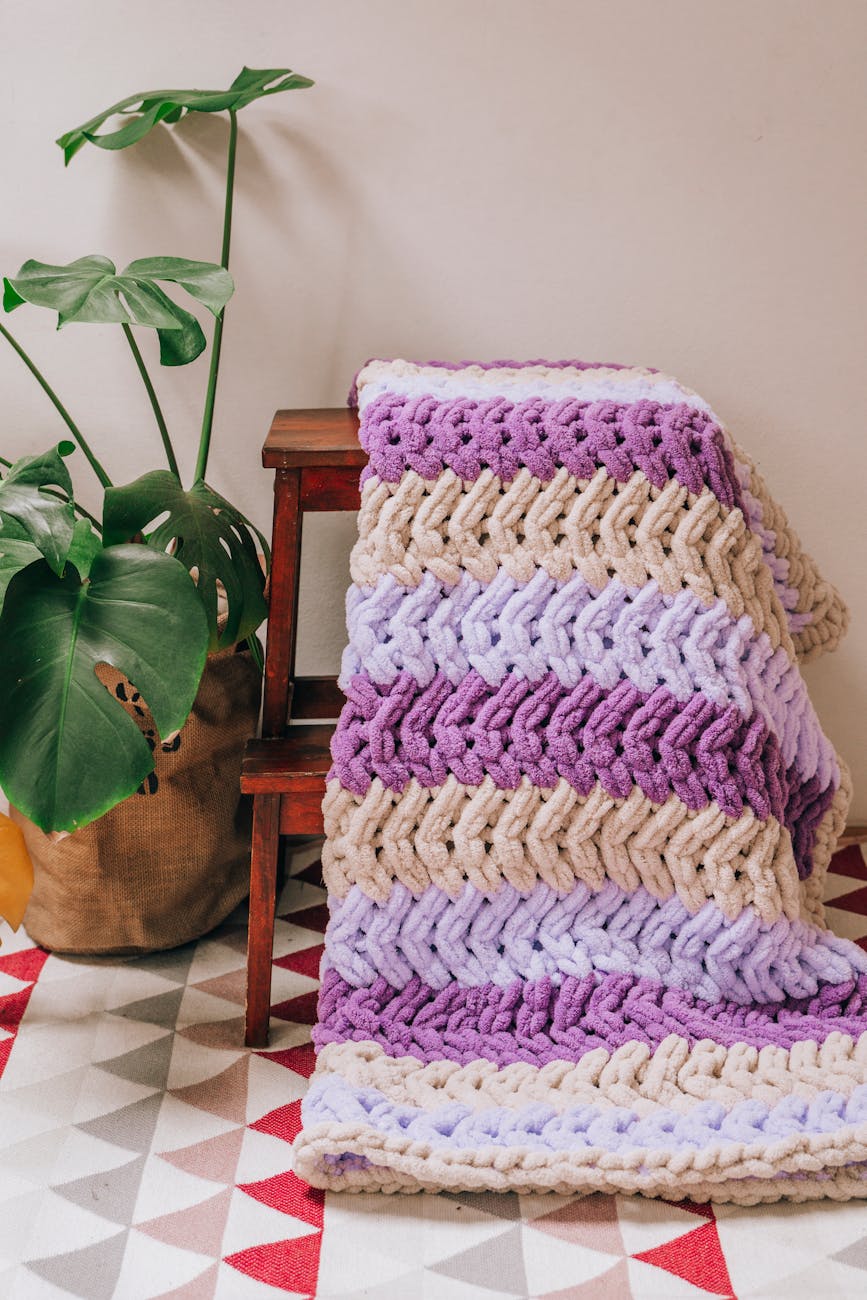
Deconstructing the Appeal of Handcrafted Textiles
The desire for handmade items stems from a fundamental human need to imbue objects with personal history and intentionality. When we engage in crafting, we are not merely producing an object; we are engaging in a process of material transformation. This shift moves the focus from passive consumption to active participation in design. We observe that tactile engagement significantly amplifies the perceived value of a home environment. A blanket, for instance, ceases to be just insulation against cold air; it becomes a physical manifestation of time invested and focused attention applied during its creation.
This mechanism applies across various decor elements. The act of knitting or crocheting introduces an inherent rhythm and texture that mass-produced goods simply cannot replicate. We are dealing with fiber manipulation at a granular level. Understanding how yarn tension dictates the final stitch definition is crucial for achieving that sought-after “chunky” aesthetic. It requires mastering the interplay between needle size, yarn weight, and the specific cable pattern chosen. This technical understanding bridges the gap between simple instruction and true artisanal mastery.
The Anatomy of a Chunky Cable Knit Blanket
Creating a truly substantial chunky knit blanket demands an understanding of material science as much as pattern execution. We are not just following a diagram; we are managing physical forces to create a specific textile outcome. The yarn selection dictates the final drape, density, and weight of the finished piece. Wool fibers possess excellent loft retention, which contributes directly to that luxurious, enveloping quality we associate with coziness. Conversely, synthetic blends might offer durability but often lack the necessary softness or thermal performance for deep snuggling.
The cable pattern itself introduces complexity. A simple stitch creates a flat surface. Introducing cables forces the yarn to weave over and under existing structures. This manipulation changes the fabric’s topography, creating valleys and ridges that catch light differently. Our analysis shows that larger cable openings necessitate thicker yarn weights to maintain structural integrity and prevent the fabric from becoming too flimsy when washed or handled repeatedly.
Selecting the Right Materials for Maximum Cozy Impact
The initial selection of materials sets the ceiling for the final product’s success. For a chunky knit blanket, the gauge of the yarn is perhaps the single most critical variable. A finer yarn will yield a smaller, denser fabric; a thicker yarn allows for significantly larger stitches and a much more pronounced texture. We often recommend using super bulky or jumbo yarns when aiming for that dramatic, cozy effect.
We must also consider fiber composition. Natural fibers like wool offer superior breathability and inherent warmth, regulating body temperature effectively. Alpaca or cashmere introduce unparalleled softness, elevating the sensory experience beyond mere thermal comfort into pure indulgence. When planning a project, understanding how different fibers interact with moisture is essential for long-term material integrity.
Mastering the Cable Stitch Mechanism
The cable stitch is the defining feature of this blanket style, and mastering its execution requires precise technique. A cable is essentially a series of stitches intentionally manipulated to create a decorative opening in the fabric. This involves strategic increases and decreases worked across the row. We must maintain consistent tension throughout the entire sequence. Any fluctuation in tension translates directly into uneven cable spacing, which visually disrupts the intended rhythm.
When setting up the initial foundation, establishing the correct stitch count is paramount. Errors here propagate through the entire piece, making subsequent rows impossible to correct cleanly. Observing how the cable floats—the yarn sections that pass over and under the pattern—allows us to anticipate where tension will build or relax. This predictive capability separates novice attempts from expert results.
Step-by-Step Execution: Building Your Masterpiece
The process of constructing a large blanket involves managing significant material quantities and complex sequencing. Begin by calculating the necessary dimensions based on your desired size and the gauge of your chosen yarn. Determine how many rows are needed to achieve the desired length, accounting for the height of your stitches.
Setting up the initial pattern repeats demands careful measurement. Every row must be monitored against the established cable structure. When introducing a new cable sequence, we observe that the tension shifts immediately; you need to adjust your needle placement dynamically as you move across the fabric. This iterative feedback loop is where true learning occurs in textile arts.
Integrating Texture and Color Strategy
Beyond the technical knitting process, the aesthetic outcome relies heavily on color and textural layering. The interplay between the cable pattern and the yarn color dictates how the visual elements interact. Deep, rich jewel tones often enhance the cozy atmosphere effectively. Alternatively, monochromatic schemes rely entirely on the variation in texture created by the stitch definition.
When combining different materials for a home setting, consider the tactile experience holistically. If you are pairing your blanket with other textiles, ensuring textural harmony is key to creating a cohesive visual space. For example, juxtaposing a super-soft knit with a slightly rougher woven fabric creates an interesting dialogue about comfort levels. Explore how mixing fabrics can enhance the overall sensory narrative of your living space.
Finalizing and Curing the Blanket
The final stage involves finishing the edges cleanly and ensuring the structure remains robust. A well-executed edge prevents fraying and maintains the blanket’s shape over time. Techniques for binding off stitches securely ensure that the intricate cable work endures repeated use. Allowing the finished item to “rest” after completion permits the fibers to settle, which enhances the final drape and softness.
We see that the perceived coziness of a handmade item is intrinsically linked to the care taken in its construction. It is not just about the yarn or the pattern; it is about the intentional control over the material’s physical properties. Creating a chunky knit blanket is an exercise in applied physics and artistic expression, resulting in an object that offers tangible comfort and enduring aesthetic pleasure.
Tags: chunky knit, cable knit, knitting tutorial, DIY blanket, cozy crafts, handknitting, sweater
Featured Image by Alina Vilchenko on Pexels.