
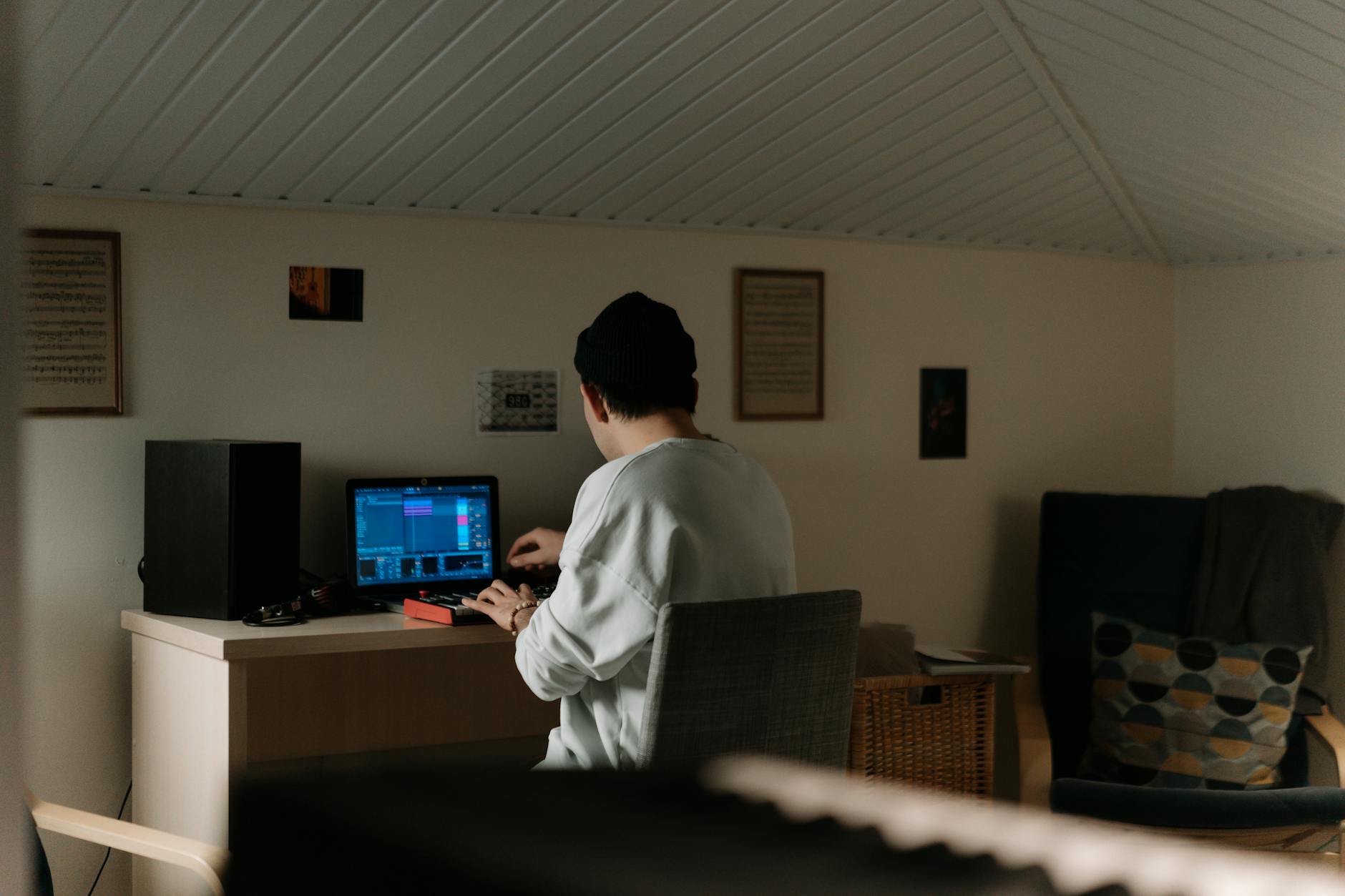
Engineering Acoustic Comfort for Peak Productivity
The objective of designing a truly functional workspace moves beyond mere aesthetics; it involves manipulating the acoustic environment to directly influence cognitive performance. We observe from the data that ambient sound profiles dictate attention span and stress response far more profoundly than visual cues alone. Creating a **cozy home office sound** environment is not about layering soft blankets; it is about employing specific frequency modulation and noise masking techniques to optimize the brain’s ability to filter distractions.
This process requires understanding how external auditory stimuli interface with our neural pathways. When the auditory input is unpredictable or excessively sharp, the prefrontal cortex expends unnecessary energy on filtering irrelevant data, thereby degrading focus. Conversely, a carefully calibrated soundscape provides predictable sonic anchors, allowing cognitive resources to be redirected toward complex tasks. We are essentially engineering an internal sensory filter.
The Physics of Sound in Workspace Design
Understanding how sound travels within a physical space is the first step in intentional design. Room acoustics involve reflections, absorption, and reverberation, all of which shape the perceived quality of the sound. Hard, flat surfaces—like bare drywall or glass—excite sound waves, causing echoes that introduce unwanted noise interference into concentration. We must actively mitigate these reflections to achieve a tranquil setting.
Absorption materials work by converting acoustic energy into thermal energy, preventing sound from bouncing indiscriminately. Introducing textiles, thick rugs, and acoustic panels effectively dampens mid-to-high frequency reflections. This reduction in echo density lowers the overall background noise floor, which is crucial when attempting deep concentration. We are seeking to minimize the room’s natural propensity to create auditory chaos.
Implementing Sound Strategies for Focus Enhancement
The goal of sonic design in a workspace is twofold: to eliminate disruptive noises and to introduce beneficial auditory anchors. Disruptive sounds, such as street traffic or household chatter, operate as persistent cognitive load generators. Masking these intrusions requires introducing carefully selected background noise. This technique leverages psychoacoustics, where a steady, low-level sound can effectively mask intermittent, irritating sounds by raising the ambient noise floor to a level that overwhelms the distracting signals without being consciously perceived as intrusive.
For many users seeking a **cozy home office sound**, binaural beats or isochronic tones offer specific frequency patterns designed to synchronize brainwave states. Research suggests that alpha and theta wave states correlate with relaxed focus and creativity, respectively. Experimentation reveals that consistent exposure to these modulated frequencies can help the brain settle into a state conducive to sustained, deep work. This moves beyond simple ambient music; it becomes an intentional tool for neurological steering.
Curating the Auditory Environment: Beyond Simple Music Playback
Simply playing instrumental music rarely achieves the desired effect because the melodic and rhythmic complexity often demands conscious attention, pulling focus away from the primary task. Effective sound design involves creating a layered auditory environment where sound serves a functional purpose rather than being an object of contemplation itself. We need to establish distinct acoustic zones within the office space.
One effective method is employing white or pink noise generators. White noise, which contains equal energy across all audible frequencies, functions by providing a consistent, non-varying signal that effectively masks erratic speech and transient noises. Pink noise, conversely, has lower energy in the higher frequencies, creating a deeper, more enveloping sound that many find more soothing for sustained concentration. Testing these different spectral densities reveals which profile best suits an individual’s tolerance level.
Integrating Soft Furnishings and Visual Comfort
The physical arrangement of objects directly impacts the sensory experience of coziness. Cozy is not an abstract concept; it is a measurable outcome derived from tactile and visual input. Incorporating natural textures, such as wool throws, linen curtains, and wooden accents, introduces organic materiality that signals safety and comfort to the nervous system. This tactile engagement reduces physiological stress markers associated with high-pressure environments.
Consider the vertical dimension of your space. Utilizing clever storage solutions, like maximizing vertical surfaces through well-designed shelving, helps declutter the visual field. When physical clutter is minimized, the cognitive load decreases, which allows auditory input to be processed more efficiently. We see this principle apply across various decor choices; for instance, optimizing storage in a living area requires similar spatial efficiency as designing a functional workspace. Think about how carefully you organize items, whether it’s books or decorative objects on a shelf, because visual order supports mental order.
Designing the Perfect Sound Sanctuary Blueprint
The construction of an ideal **cozy home office sound** sanctuary requires integrating these physical and sonic principles into a cohesive system. Start by assessing noise ingress. Seal gaps around windows and doors; this addresses external interference immediately. Next, address internal reflections by strategically placing soft furnishings against large, flat surfaces. Consider using fabric-covered partitions if necessary to control echo patterns effectively.
When selecting sound equipment, prioritize clarity over sheer volume. High-fidelity speakers or high-quality noise machines provide superior signal integrity compared to cheap, distorted alternatives. The system must operate silently in the background; its presence should be felt as a gentle support, not as an active element demanding attention. We are aiming for sonic neutrality that supports work without becoming a distraction.
The synergy between visual coziness and acoustic control is where true ergonomic design resides. A visually soft room feels inherently safer, which permits a more relaxed state for auditory processing. When you invest in materials that feel good against the skin and ears, you are actively engineering an environment conducive to flow states. This deliberate curation transforms a mere room into a high-performance zone.
Tags: home office design, soundproofing, focus and productivity, cozy decor, workspace ambiance, noise reduction, cozy living
Featured Image by cottonbro studio on Pexels.