
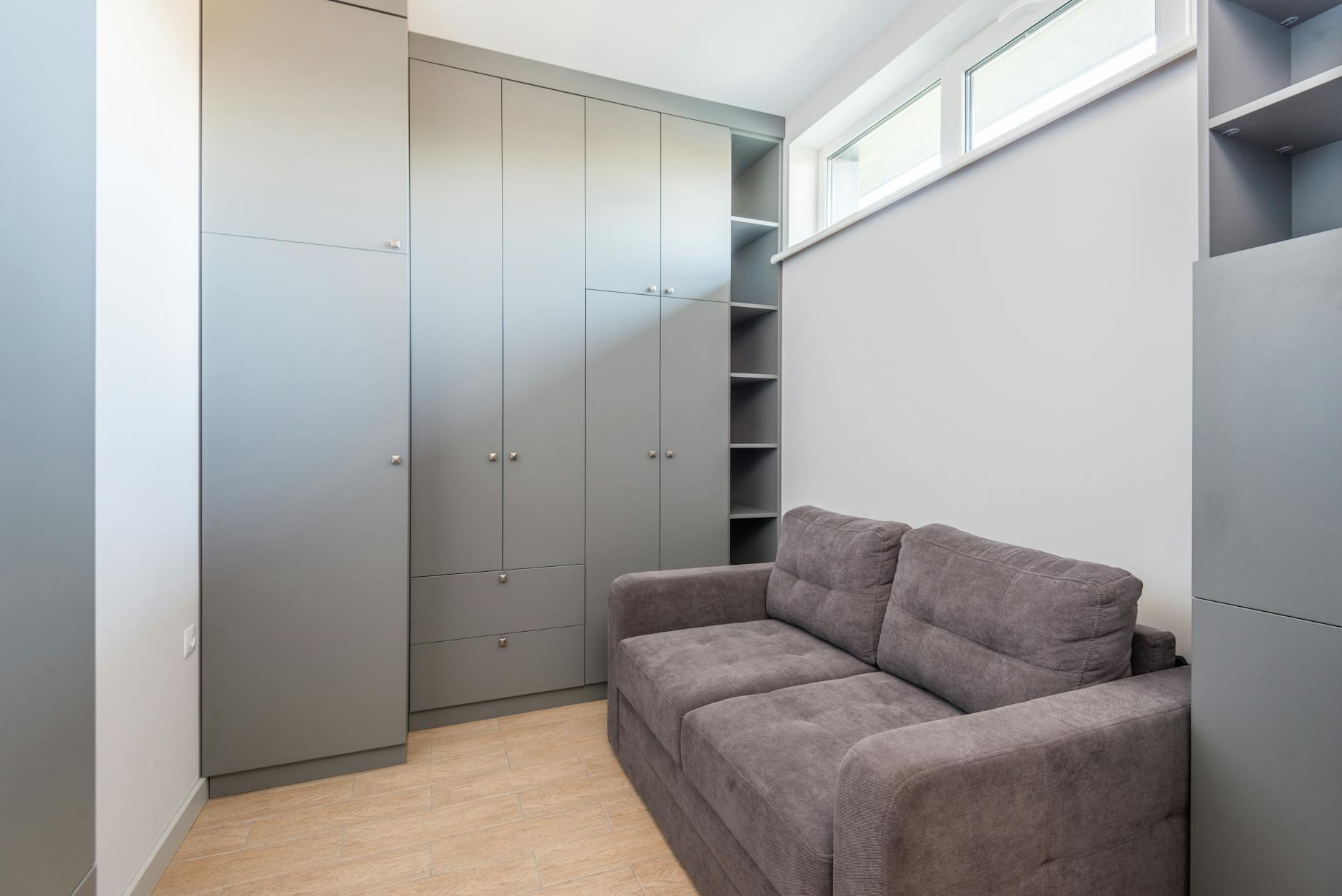
Vertical Magic: Storage & Ambiance in Tiny Living Rooms
The constraint of limited square footage often forces a fundamental shift in how we perceive interior design. When space contracts, the traditional horizontal plane becomes insufficient for accommodating necessary functional objects, creating a bottleneck where clutter accumulates and the sense of spaciousness diminishes. We observe that designers working within these spatial limitations must pivot their focus from surface area to volume. This necessitates an intensive exploration of vertical real estate as a primary organizational strategy. Mastering **small space vertical storage** is not merely about stacking items; it involves engineering a system that maximizes usable cubic space while simultaneously manipulating the visual perception of the room.
Deconstructing Spatial Constraints in Modern Living
The challenge in a small living room stems from the interplay between fixed architectural elements and movable furnishings. Walls, which are typically treated as static boundaries, possess an untapped dimension when viewed through a functional lens. We need to move beyond viewing walls simply as planes for decoration and recognize them as potential organizational infrastructure. The goal is to implement systems that draw the eye upward, thereby mitigating the feeling of confinement.
The Psychology of Vertical Organization
Human visual perception responds strongly to ascending lines; verticality naturally suggests height and openness. When objects are placed on the floor or low horizontal surfaces, they anchor the space downward, making the room feel heavier and more enclosed. Conversely, utilizing vertical storage systems redirects this visual energy upward, creating an illusion of greater ceiling height and significantly increasing the perceived volume of the room. This manipulation of optical illusion is a core mechanism in transforming restrictive environments into inviting spaces.
We see this effect across various design disciplines. Consider how light interacts with vertical shelving versus horizontal surfaces; the latter tends to absorb light and create visual weight, whereas well-utilized vertical systems allow light to penetrate deeper into the space. This process directly impacts ambiance.
Material Science of Vertical Solutions
Selecting the right materials for vertical storage is as crucial as selecting the arrangement itself. We must consider load-bearing capacity, material density, and aesthetic integration simultaneously. Open shelving, for instance, requires careful consideration regarding the weight distribution; heavy books or dense decorative items placed high up must be supported by robust anchoring systems to prevent structural failure.
Closed cabinetry offers superior concealment, hiding visual clutter behind seamless surfaces. When implementing **small space vertical storage**, materials like matte-finish wood veneers or sleek metal frames provide a contemporary, clean aesthetic that does not introduce unnecessary visual noise. The material choice dictates whether the storage system functions as an object or as an integrated architectural feature.
Implementing High-Impact Vertical Storage Strategies
Effective vertical organization requires deploying specific systems tailored to the unique dimensions and functions of a living room. We are seeking solutions that provide maximum density without sacrificing accessibility.
Customizing Wall Space with Shelving Systems
Wall shelving is arguably the most direct application of vertical storage principles. Instead of relying on freestanding furniture that consumes floor space, integrating shelving directly into the wall maximizes the footprint efficiency. We analyze several approaches here: floating shelves offer a minimalist aesthetic by appearing to float above the surface, which subtly enhances the sense of airy volume.
However, for deeper storage requirements, modular systems prove highly effective. These interlocking units allow users to customize the depth and configuration precisely to fit existing wall dimensions. When designing these placements, we must calculate the required clearance for airflow and access; an improperly spaced shelf can impede the flow of light and create awkward dead zones. Think about how naturally organized textiles influence the overall atmosphere; similar principles apply when arranging visual elements on a vertical plane.
Maximizing Hidden Volume with Vertical Cabinetry
When aesthetics demand complete concealment, built-in or floor-to-ceiling cabinetry becomes the superior mechanism. These systems transform unused wall space into functional storage banks. The key here is thoughtful planning regarding access points and door mechanisms. Poorly designed doors can introduce visual clutter; therefore, hardware selection—smooth, handleless designs—is paramount to maintaining that sleek, uninterrupted vertical line.
This approach addresses the density issue while maintaining the intended cozy aesthetic. We are not just storing objects; we are engineering an environment where necessary items recede into the structure, leaving only curated beauty exposed. This strategy works exceptionally well when balancing functional necessities with the desire for a serene atmosphere, much like the meticulous layering required in spa-inspired decor: Spa Bathroom Decor: Create Your Serene Sanctuary.
Integrating Vertical Elements with Textile Trends
The texture and placement of textiles profoundly influence how vertical space is experienced. Incorporating textiles into vertical storage introduces softness, counteracting the hardness often associated with rigid shelving or metal frames. Using woven baskets or fabric-lined bins on open shelves introduces tactile warmth that immediately enhances the cozy factor. This interaction between hard structural elements and soft textiles creates a dynamic sensory experience within the room.
When considering seasonal shifts, the textile choices evolve to reflect mood. For instance, embracing the rich textures seen in Cozy Autumn Harvest: Fall Textile Trends for Warm Home Decor can be mirrored in your vertical storage choices. Heavy, textured throws placed over high shelves add visual weight and tactile invitation, anchoring the display while simultaneously softening the architectural lines of the room.
The Ambiance Effect: Storage as Atmosphere
The ultimate objective when utilizing **small space vertical storage** is not just capacity; it is the manipulation of ambiance. A well-organized room feels inherently calmer and more intentional. Clutter introduces cognitive load; organized systems reduce this mental friction.
Light Flow and Visual Breathing Room
Vertical arrangements manage light distribution effectively. By keeping horizontal surfaces clear, light can travel unimpeded across the floor plane. When storage is vertically deployed, attention is drawn to the height of the room itself. This vertical emphasis encourages a feeling of expansive breathing room, even when physical dimensions remain constrained. We observe that rooms utilizing strong vertical lines feel taller and inherently more sophisticated than those dominated by low-slung furniture.
Curating Display for Serenity
Every item displayed in a vertical space functions as a curated focal point. We must treat the vertical surface as an art gallery, not merely a repository. Grouping items by color, texture, or theme establishes visual rhythm. This curatorial approach ensures that the storage system actively contributes to the desired cozy atmosphere rather than acting as an unavoidable source of visual noise. The deliberate placement of objects—a stack of books next to a woven basket, for example—establishes a narrative that enhances the living experience.
By treating vertical space as a design medium, we transition from simply solving a storage problem to actively constructing an environment where organization and aesthetic pleasure coexist seamlessly. This shift unlocks the potential inherent in even the most compact living areas.
Tags: vertical storage, small space design, living room decor, space saving, tiny home decor, wall shelving, cozy living
Featured Image by Max Vakhtbovych on Pexels.