
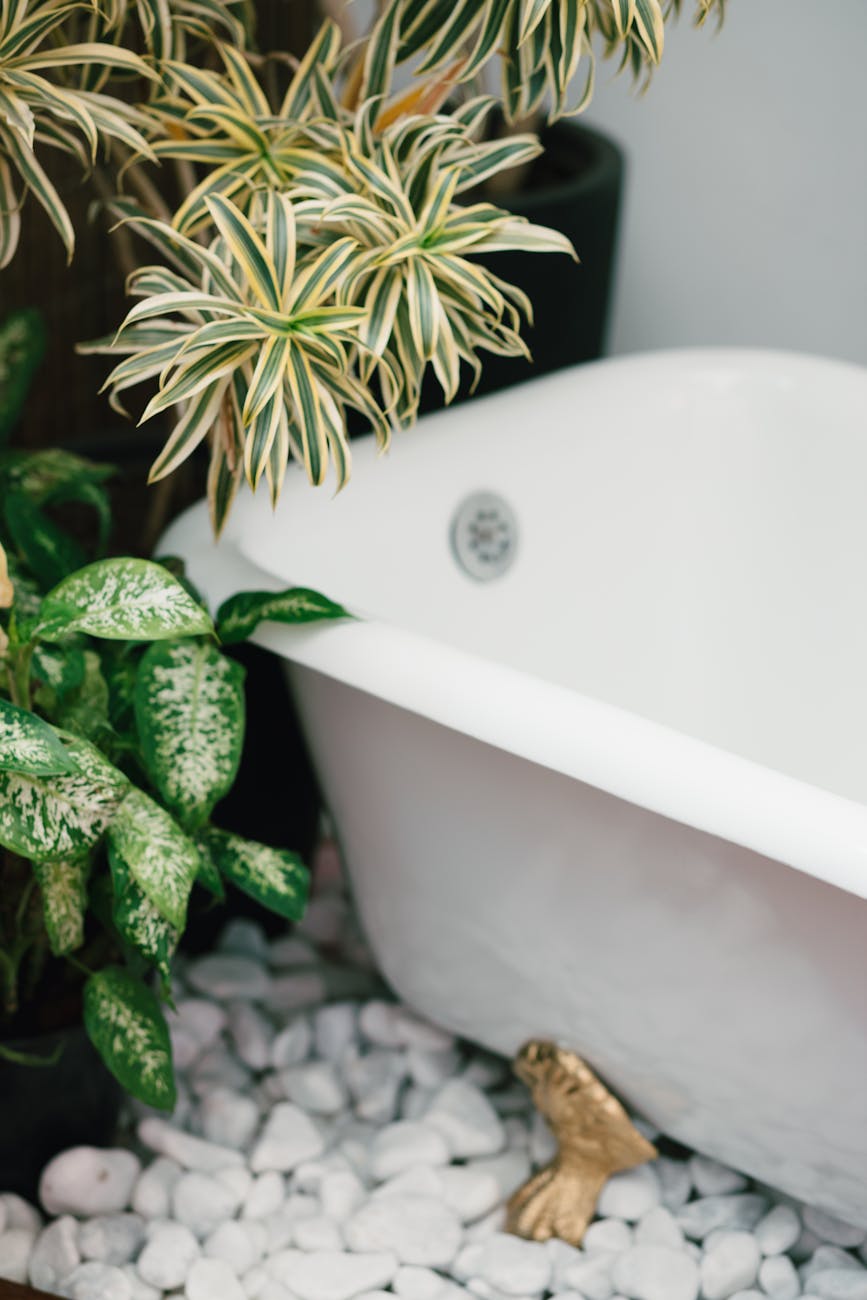
The Therapeutic Geometry of Natural Stone Bathroom Decor
When designing a bathroom, the objective shifts from mere functional space to creating an immersive sensory environment. We move beyond simple tiling and fixture placement; we begin manipulating tactile experience and visual perception. This is where incorporating natural stone bathroom decor becomes a deliberate architectural choice rather than just surface dressing. The inherent properties of materials like marble, slate, or travertine dictate how light refracts, how temperature is perceived, and ultimately, the psychological state induced within the room. We observe that the cool, smooth surface of stone engages the sense of touch immediately, establishing an immediate tactile connection for the occupant.
The mechanism at play here involves thermal regulation. Stone possesses high thermal mass. This means it absorbs ambient heat slowly and releases it slowly. In a bathroom setting, this contributes to a feeling of grounded tranquility, buffering against the rapid temperature fluctuations often experienced in modern settings. This slow thermal response contrasts sharply with the fast-changing visual stimuli we encounter elsewhere in the home. We are essentially designing for a state of calm equilibrium.
Analyzing Material Selection for Spa Aesthetics
Selecting the correct stone involves understanding its geological provenance and its surface treatment. For a true spa aesthetic, the material must convey an organic, unforced luxury. Highly veined marble, for instance, carries inherent narrative lines across the surface, suggesting deep time and natural artistry. Conversely, slate offers a moodier, more rugged texture, appealing to a retreat feeling that leans into the elemental.
We look at the porosity of the stone; this directly impacts maintenance and perceived quality. Highly porous stones require specific sealing protocols to prevent moisture penetration, which is critical in a humid environment like a bathroom. Proper sealing preserves the natural texture while mitigating water damage risks. Our analysis suggests that the visual richness derived from natural veining is maximized when the surface finish—honed versus polished—is chosen carefully. A honed finish offers a softer, more inviting tactile experience than a high-gloss polish, which can introduce distracting reflections under harsh bathroom lighting.
Integrating Botanical Elements for Sensory Depth
The introduction of botanical accents moves the design from purely architectural to deeply experiential. Plants are not mere decoration; they are living systems that modulate air quality and visual complexity. Placing lush greenery against the cool backdrop of natural stone creates a dynamic tension that enhances the sense of an outdoor, secluded sanctuary. This juxtaposition is highly effective in achieving the desired spa-like atmosphere.
We must consider the scale and placement of these organic forms relative to the stone surfaces. Large, architectural plants anchor the space, connecting the interior environment to the exterior world. Smaller arrangements introduce delicate visual textures near bathing areas, softening hard edges. Consider how this interplay affects ambient light. Shadows cast by foliage play across the stone planes, creating shifting patterns throughout the day—a subtle, natural kinetic element that prevents the space from feeling static or sterile. This interaction is vital for achieving true sensory immersion.
Engineering Serenity: Lighting and Texture Protocols
The success of a spa-like bathroom hinges significantly on the controlled manipulation of light and surface texture. These elements function as the primary conduits through which psychological comfort is delivered to the user. We are designing a system where illumination and tactile input work in concert to induce relaxation.
The Mechanics of Layered Illumination
Standard overhead lighting operates by providing uniform, often harsh, illumination. For a spa environment, this mechanism must be replaced with layered lighting strategies. We employ dimmable sources strategically placed to emphasize material qualities rather than simply flood the room. Indirect lighting, achieved through strategically positioned cove lighting or concealed LED strips behind stone features, allows light to graze the textured surfaces. This grazing effect accentuates the depth of the veining in the stone and reveals the subtle topography of the botanical arrangements.
The color temperature itself plays a crucial role. Warm-toned bulbs, typically below 3000 Kelvin, signal warmth and intimacy. This contrasts effectively with cooler tones used in other areas of the home, helping to define the bathroom as an intimate retreat separate from the rest of the dwelling. We observe that manipulating light intensity allows the user to transition seamlessly between functional use and meditative repose simply by adjusting the ambient level.
Textural Dynamics: Beyond Smoothness
The tactile experience of a high-end bathroom relies on varied texture play, even when using monolithic materials like stone. While the stone itself provides the foundational coolness, introducing contrasting textures prevents visual monotony. Consider mixing smooth, polished stone surfaces with rougher, matte-finished accents in fixtures or accessories. This textural variation stimulates different sensory receptors simultaneously.
When incorporating elements from other areas of the home, such as textiles, this principle extends naturally. The juxtaposition of cool, hard stone against soft, absorbent textiles introduces a necessary counterpoint to the environment’s rigidity. For instance, pairing cool travertine with thick, organic linen towels creates an invitation to touch and rest. This layered approach ensures that the space remains visually rich and physically comforting, moving beyond mere aesthetic appeal toward functional sensory design.
Achieving Cohesion in the Sanctuary Design
The challenge in executing this vision lies in maintaining cohesive visual language across all incorporated elements. Natural stone provides the essential, enduring foundation, but it requires thoughtful integration with other decorative choices to avoid a disjointed appearance. The goal is not simply placing beautiful objects; it is engineering an integrated environment where every material supports the overarching theme of serene luxury.
The connection between the bathroom and the rest of the living space is vital for holistic comfort. If the stone aesthetic is rooted in earthy, organic tones, these palettes should resonate with adjacent areas. This principle extends to interior design generally; understanding how textures interact across different rooms informs a more sophisticated approach to decoration everywhere. For instance, appreciating the interplay between materials in the kitchen—the warmth of wood juxtaposed against the coolness of stone surfaces—helps establish a consistent tactile dialogue throughout the home. We see that this cross-contextual awareness elevates the entire spatial experience.
When moving into related design concepts, understanding how different material systems interact is essential for scaling the concept effectively. For example, transitioning to elements found in outdoor settings, like incorporating wood textures reminiscent of natural landscapes, enhances the connection to organic forms already established by the stone. This creates a unified narrative where the bathroom functions as an extension of an outdoor sanctuary, maximizing the sense of escape. The careful orchestration of these physical and visual properties results in a space that performs its intended function: creating a truly restorative environment.
Tags: bathroom design, spa bathroom, natural stone, botanical decor, luxury bathroom, home spa, bathroom trends
Featured Image by Elizabeth Ferreira on Pexels.