
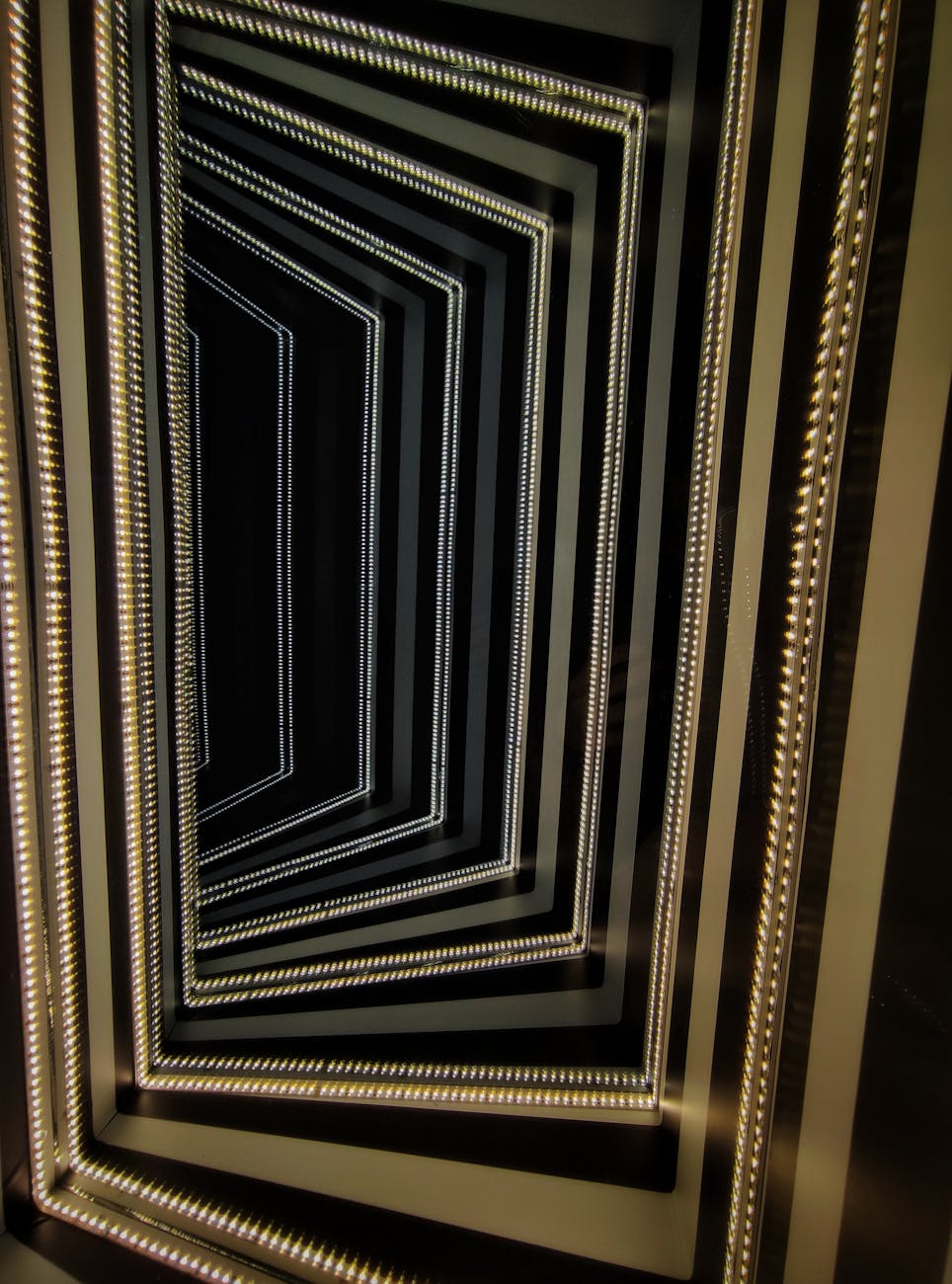
The Physics of Perception: Manipulating Space Through Illumination
When we consider decorating a small room, we are not simply rearranging furniture; we are engaging with the fundamental physics of light and visual perception. Our brains process visual information to create a sense of depth and scale, and by manipulating how light interacts with surfaces, we can effectively trick the eye into perceiving an expanded volume. This concept forms the core mechanism behind successful small space lighting tricks. We observe that shadow density and reflectivity dictate perceived size; bright, even illumination tends to flatten boundaries, while strategic placement of light sources creates focal points that direct visual flow across the area.
The interplay between ambient light and reflective surfaces is crucial here. A poorly lit room feels cramped because shadows pool in corners, defining hard, restrictive boundaries. Conversely, introducing strategically placed light can redistribute these perceived boundaries, making the space feel more open and voluminous. We are essentially controlling how the eye maps the available three-dimensional space onto a two-dimensional plane.
Leveraging Reflectivity: The Mirror Mechanism
Mirrors operate on a straightforward principle of reflection, but their application in spatial design is far more sophisticated. A mirror does not add actual square footage to a room; instead, it replicates existing visual information and light sources, effectively doubling the perceived depth. When positioned correctly, a reflective surface captures ambient light from one area and projects that illumination across an otherwise dark expanse, immediately increasing the perceived brightness of that space.
We see this effect most strongly when dealing with narrow corridors or small alcoves. Placing a large mirror directly opposite a window achieves a demonstrable expansion of the visual field. The reflected light bounces back into the room, reducing the dominance of any single light source and creating an overall sense of diffused luminosity. This technique works because the brain interprets the reflected image as an extension of the physical space beyond the immediate walls.
Consider the practical application: instead of relying solely on adding bulky furniture, which consumes actual floor space, we utilize reflective surfaces to manipulate perception. This is a more efficient method for maximizing the functional utility of confined areas. We must calculate the reflection angles relative to the primary light source; an angle that maximizes the visual path across the room yields the greatest spatial gain.
Strategic Light Placement: Controlling Shadow and Depth
Beyond simple reflection, manipulating the directionality of light fundamentally alters the texture and perceived depth of a space. Hard shadows create visual weight and emphasize the boundaries of objects, making spaces feel heavier and more constrained. Soft, diffused lighting, however, allows the eye to travel more freely across surfaces, softening edges and suggesting greater openness.
The placement of artificial light sources becomes an architectural tool in itself. Direct overhead lighting tends to flatten the space, emphasizing the ceiling plane. To introduce dimension, we must employ layered lighting strategies. Use wall sconces or floor lamps aimed at vertical planes to create pools of light that draw attention to specific textural elements, thereby adding layers of visual interest without adding physical objects. This layering prevents the room from feeling like a single, flat plane.
When designing cozy environments, this principle becomes even more pronounced. Imagine creating an intimate reading nook. A single overhead light is insufficient. Instead, we deploy accent lighting—perhaps a dim table lamp casting a warm glow on a textured wall or illuminating a stack of books. This selective illumination creates pockets of intimacy within the larger volume, enhancing the sense of cozy enclosure rather than confinement.
Integrating Light with Decor for Maximum Effect
The choice of material interacts intrinsically with the light it receives. Highly reflective surfaces amplify the effect of the lighting strategy we have established. Matte finishes absorb light, grounding the space and allowing softer transitions between illuminated areas. We observe that mixing these textures prevents the room from feeling artificially bright or cold.
When employing small space lighting tricks, the color temperature of the bulbs is as important as their intensity. Warmer tones, typically below 3000 Kelvin, induce a sense of warmth and intimacy, which is essential for cozy decor. Cooler, bluer light enhances clarity but can make small spaces feel sterile and cold. We use this chromatic control to modulate the emotional response elicited by the lighting scheme.
For example, when setting up an area for relaxation, integrating natural textures—like soft textiles or woven rugs—absorbs some of the harsh reflected light, introducing a tactile softness that complements the visual expansion achieved by the mirrors and strategic lamps. This combination ensures the illusion of space is felt as comfortable rather than just optically perceived.
Beyond the Walls: Extending the Visual Horizon
The concept of expanding a small room involves manipulating the viewer’s focus away from the physical constraints and toward an imagined, larger environment. Mirrors are the most direct tool for this psychological shift; they serve as visual portals to another space. However, lighting works in tandem with mirrors to complete this effect. If the light source itself is positioned to suggest depth—perhaps a strong beam angling across the floor toward a reflective surface—the resulting visual narrative of expansive space becomes far more compelling.
This manipulation extends beyond simple room size into functional design. When designing compact areas, such as a home office nook, the lighting must support the intended function. Our analysis suggests that ergonomic comfort is directly tied to illumination quality; poor light strains the eyes and increases perceived cognitive load. Therefore, designing an ergonomic space requires optimizing light exposure to reduce visual strain while maintaining focus. One might analyze how different light setups affect concentration when working in a confined area, seeing how focused illumination supports task orientation better than generalized ambient light.
The intentional use of layered light guides the eye through the room’s potential, suggesting pathways and opportunities for exploration rather than simply defining static boundaries. This active visual guidance is what transforms a small, enclosed space into an engaging, multi-dimensional environment. Mastering these small space lighting tricks means understanding that decoration is not about adding mass but about managing the flow of light to redefine the perceived volume.
Tags: small space decor, light tricks, mirror decor, room design, making rooms bigger, small room hacks, lighting design
Featured Image by Natia on Pexels.