
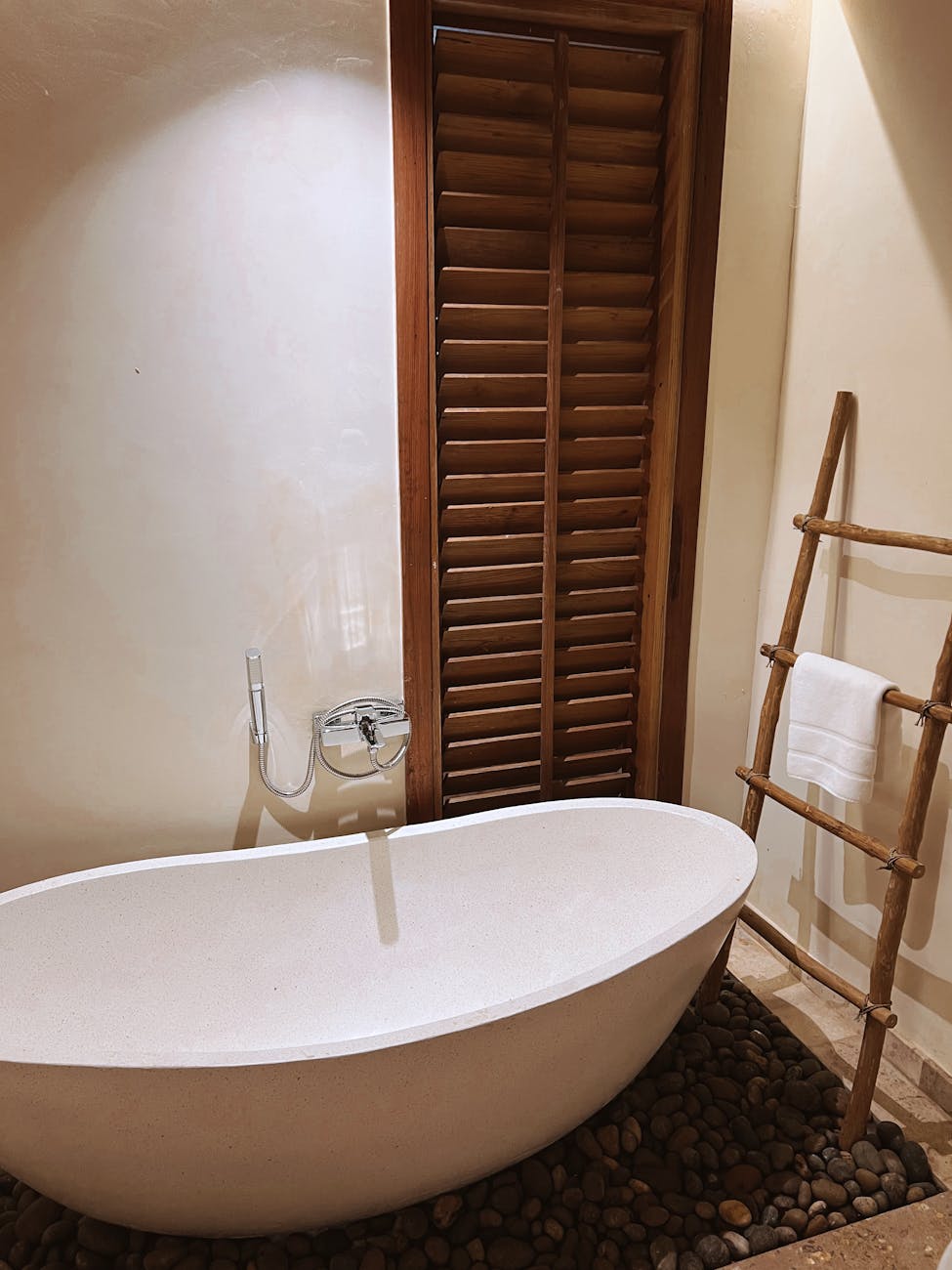
Crafting a Sensory Overload: The Science of Bathroom Sanctuary Design
We approach bathroom design not merely as an aesthetic choice, but as an exercise in sensory engineering. The goal is to manipulate light, texture, and scent to induce a state of deep relaxation, transforming a utilitarian space into a personal spa sanctuary. Achieving this level of immersive comfort requires understanding how natural materials interact with human physiology. When we consider the concept of Luxury Bathroom Decor, we are essentially designing an environment that signals safety and indulgence simultaneously. This involves calibrating the visual and tactile experience to engage multiple sensory pathways simultaneously, moving beyond simple surface decoration into experiential architecture.
The Material Science of Stone and Texture
The selection of materials in a bathroom dictates its entire atmospheric response. Natural stone, for instance, possesses inherent thermal properties that influence perceived temperature; cool marble or granite offers a refreshing sensation when touched, which is conducive to unwinding. We observe from the data that the visual complexity introduced by veining in natural stone provides an organic focal point, distracting the eye from the rigid geometry of the room and anchoring it in nature.
When integrating stone elements, we must consider the porosity and maintenance requirements. Polished stones reflect light differently depending on their finish—a high-gloss polish maximizes the reflective quality, amplifying the sense of spaciousness, whereas a honed or matte finish absorbs light, creating a moodier, more intimate atmosphere. The textural contrast between cool, smooth stone and rougher elements introduces necessary tactile variation; this juxtaposition prevents the space from feeling sterile. We are designing an experience where every surface invites interaction, encouraging a slower pace of occupancy.
Botanical accents introduce the vital organic counterpoint to the hard lines of tile and stone. Introducing living or high-quality faux botanicals directly addresses the psychological need for connection to the external world. The visual input from green foliage triggers parasympathetic responses, which actively downregulate the stress response system. We see this effect consistently; the presence of natural elements lowers cortisol levels, promoting a state of calm that is essential for true relaxation within this private space.
Architectural Flow and Spatial Perception
The arrangement of fixtures and materials fundamentally alters how a user perceives the bathroom’s dimensions. A poorly planned layout can induce feelings of confinement, regardless of the high-end finishes employed. We must engineer flow so that movement through the space feels deliberate and unhurried. This involves strategic placement of features—ensuring adequate clearance around bathing areas and establishing visual sightlines that lead the eye toward intentional focal points, like a beautifully arranged stone vanity or a feature shower niche.
Consider how vertical space can be managed, particularly in smaller residential settings where maximizing utility is paramount. Implementing smart storage solutions becomes critical when dealing with high-end décor; visible clutter immediately erodes the feeling of luxury and calm we are striving to achieve. Utilizing vertical magic in storage allows for the systematic containment of necessities, ensuring that the visual field remains uncluttered and serene. If storage is managed efficiently, the aesthetic impact of the stone and botanical elements is amplified because the environment feels intentionally curated rather than merely decorated.
Illuminating the Sanctuary: Mastering Light Dynamics
Lighting is perhaps the most potent tool in establishing a spa atmosphere. Harsh, cool-toned artificial light immediately signals an institutional or clinical space, counteracting any attempt at luxury. We need layered lighting systems that mimic natural daylight cycles and offer tunable warmth. Warm color temperatures, ideally below 3000 Kelvin, stimulate melatonin production, signaling the body that it is time to rest.
Layering involves integrating ambient light with task lighting and accent illumination. Soft, diffused light reflecting off the polished stone surfaces creates a gentle luminosity throughout the room. Strategic placement of indirect lighting behind mirrors or within recessed niches highlights the texture of the stone and the organic form of the greenery. This technique manipulates shadow play, which adds depth and drama without introducing harsh contrasts. The interplay between light and shadow becomes an active component of the decor itself, shifting the perception from a mere room to an immersive retreat.
Curating the Botanical Narrative
The integration of plants moves beyond simple decoration; it establishes a living narrative within the space. The choice of botanicals must align with the desired sensory input. Lush ferns or trailing vines introduce movement and an element of uncontrolled, organic growth, which contrasts beautifully with the static permanence of stone. We analyze how plant life functions as a bio-feedback mechanism for relaxation.
We observe that specific plant types influence air quality and humidity, subtly affecting the atmospheric feel of the room. Selecting plants that thrive in the bathroom’s ambient moisture level ensures their vitality, reinforcing the commitment to natural immersion. This process requires an analytical approach: mapping the desired mood onto the biological response elicited by living elements. The result is a space where decoration serves the function of deep, restorative rest. Designing this kind of Luxury Bathroom Decor necessitates treating every element—stone, light, and life—as interconnected variables in a single, harmonious system.
Tags: Luxury Bathroom Decor, Spa Bathroom Design, Natural Stone, Botanical Accents, Luxury Bathrooms, Home Spa, Bathroom Renovation
Featured Image by Vincent Rivaud on Pexels.