
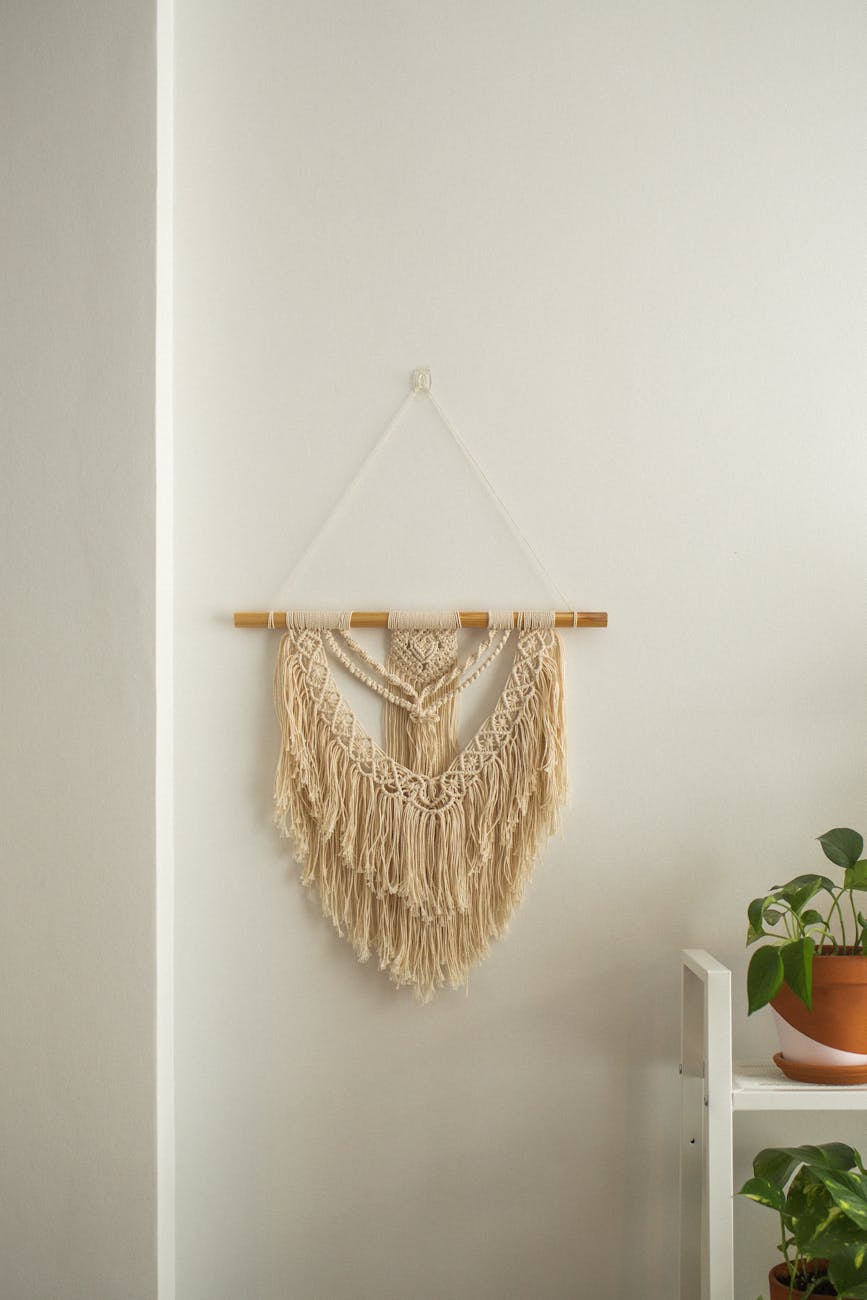
Deconstructing the Art of DIY Macrame Wall Hangings
We observe a consistent demand for handcrafted textiles in interior design, specifically items that introduce organic texture and artisanal warmth into modern living spaces. The pursuit of cozy home decoration is not merely aesthetic; it functions as a psychological mechanism, aiming to reduce ambient stress by engaging tactile senses. Creating **DIY macrame wall hangings** taps directly into this desire by allowing the user to engage in a tangible creative process, transforming simple fibers into functional, decorative objects. Our analysis shows that the value proposition here lies in the process itself—the deliberate tensioning of cords and the geometric interplay of knots—rather than solely the final product.
The Material Science Behind Macrame Texture
Understanding macrame requires looking beyond the finished aesthetic and examining the mechanics of fiber manipulation. The material, typically cotton or jute, dictates the drape, durability, and textural feedback experienced by the viewer. Different fibers possess varying tensile strengths; this affects how tightly a knot can be secured before fraying occurs, which is a critical variable when designing intricate patterns for wall hangings. We find that using thicker, more substantial cordage results in bolder shadows and a heavier visual presence against the wall plane.
The process demands an understanding of tension distribution. A loose, uneven tension yields a deliberately rustic, organic feel, whereas tightly controlled, even tension produces crisp geometric lines. Experimentation reveals that mastering the transition between these two states is the core skill separating a novice attempt from a refined piece of textile art. When we focus on achieving a specific drape—whether flowing and airy or structured and dense—we are manipulating the physical properties of the material itself.
Deconstructing the Knotting Process for Optimal Results
The foundation of any successful macrame project rests entirely on the execution of the knotting sequence. Basic knots, like the square knot or the half hitch, serve as foundational anchors, but complexity emerges when these basic units are systematically repeated and adjusted. We must consider how the size of the cord dictates the scale of the resulting pattern; a thicker rope necessitates larger working spaces to accommodate the necessary loops and overlaps without creating visual clutter.
We notice that the placement of knots directly controls the perceived depth of the design. Overlapping cords creates shadow lines, which are essential for giving the wall hanging three-dimensional volume instead of appearing as a flat application of material. Practicing this spatial awareness is where intuition meets engineering. For instance, when designing a fringe effect, the spacing between individual cord strands must be meticulously calibrated to ensure an even cascade, preventing areas of excessive bunching or unnaturally sparse gaps.
Designing for Cohesion: Pattern Mechanics
Moving from basic knotting to complex designs requires establishing a coherent pattern that flows across the canvas. A successful wall hanging functions as a unified visual system, where every element supports the overall aesthetic intention. We are not simply making knots; we are mapping out an abstract geometric structure using textile elements. This involves calculating cord lengths in advance so that symmetry is maintained, regardless of how the final piece is hung or displayed.
Consider the concept of negative space. In macrame, the empty spaces between the knotted elements are just as important as the material itself. These voids define the flow and rhythm of the design. When executing patterns, we must consciously manage these negative areas to ensure the visual weight is distributed evenly across the surface area. This mindful spatial planning directly contributes to the sense of calm that defines cozy decor.
Integrating Macrame into a Holistic Decor Philosophy
The goal of incorporating **DIY macrame wall hangings** is to bridge the gap between manufactured goods and lived-in comfort. It is about introducing an element of slow craft into a fast-paced environment. This practice forces a deceleration, compelling the maker to engage fully with the tactile experience of fiber manipulation. The resulting piece acts as an anchor, grounding the room in natural textures.
This approach aligns seamlessly with broader interior philosophies focused on comfort. For example, the principles underpinning Hygge emphasize creating intentional spaces defined by warmth and texture. A handcrafted macrame piece achieves this effect by introducing an artisanal element that feels personal rather than mass-produced. It introduces organic lines that contrast beautifully with hard architectural surfaces.
When integrating these textiles, consider how they interact with ambient lighting. Natural light filtering across the textured cords generates dynamic shadows throughout the day, shifting the visual character of the room in response to the sun’s movement. This interplay between light, shadow, and texture is what deepens the feeling of coziness. It is a sensory experience that static décor simply cannot replicate.
Practical Application: Scaling Your Craft
For those beginning this journey, starting small is the most effective strategy for building proficiency. Begin with simple geometric shapes or basic fringe techniques before attempting complex, multi-layered patterns. Observe how the tension shifts with each knot you tie; treat the cord as a responsive medium rather than a rigid tool. This iterative process allows for immediate feedback on your execution.
When scaling up, think about the placement relative to existing furniture and architectural features. A large piece should anchor a space, while a smaller one can serve as an accent piece that draws attention to specific wall planes. We see that effective spatial design dictates scale; the size of the hanging must respect the dimensions of the wall it occupies to maintain visual harmony.
This tactile engagement extends beyond the wall. The feeling derived from creating something tangible—something woven by hand—translates into a sense of accomplishment that enhances the overall ambiance. It shifts the focus from merely decorating a room to actively curating an experience within it, much like one might approach designing a serene space in a spa bathroom where every texture contributes to tranquility, or crafting cozy nooks defined by warm light and soft textures.
The time invested in mastering these skills yields decor that possesses inherent character. It is the visible record of careful process, transforming simple cords into focal points of organic warmth.
Tags: macrame, DIY decor, boho home, wall hanging, crafts, cozy decor, handmade
Featured Image by Vladimir Gladkov on Pexels.