
The Science of Light: Engineering Your Living Room Atmosphere
We often associate coziness with soft textures and plush throws, but the true architectural component dictating a space’s emotional temperature is light. Specifically, mastering **ambient lighting living room** involves manipulating the spectral composition and intensity of illumination to influence mood and perceived space size. It is not simply about turning a switch on; it is about designing a dynamic light ecosystem.
The mechanism at play here relies on the relationship between color temperature (measured in Kelvin) and human physiology. Warm light, typically below 3000K, stimulates melatonin production, promoting relaxation and a sense of enclosure, which directly contributes to that desired cozy feeling we seek in our living spaces. Conversely, cooler light above 4000K tends to induce alertness, making the space feel more open and energetic. Understanding this spectral shift allows us to intentionally program the environment for specific behavioral outcomes.
Deconstructing Color Temperature for Comfort
When we examine existing interior designs, we observe that rooms relying solely on harsh, single-source lighting fail to achieve true comfort. A flat, bright white light acts as a visual disruptor, creating sharp shadows and an uncomfortable contrast ratio. To counteract this, successful atmospheric design necessitates layering light sources, each operating on its own carefully calibrated spectrum.
We start by establishing a warm baseline. Think about the color temperature of your primary overhead fixtures; aiming for 2700K to 3000K sets the foundational tone for relaxation. This warmth interacts with materials—wood tones absorb and reflect this light differently than stark white surfaces do. The interplay between reflected and direct light creates depth, preventing the space from feeling flat or institutional.
Implementing Layering: A Multi-Dimensional Approach
True ambiance emerges when you move beyond simple on/off switches and implement distinct layers of illumination. This layering technique allows occupants to modulate the environment according to activity, shifting effortlessly between focused work, casual conversation, or deep relaxation. This modulation is the essence of sophisticated **ambient lighting living room** design.
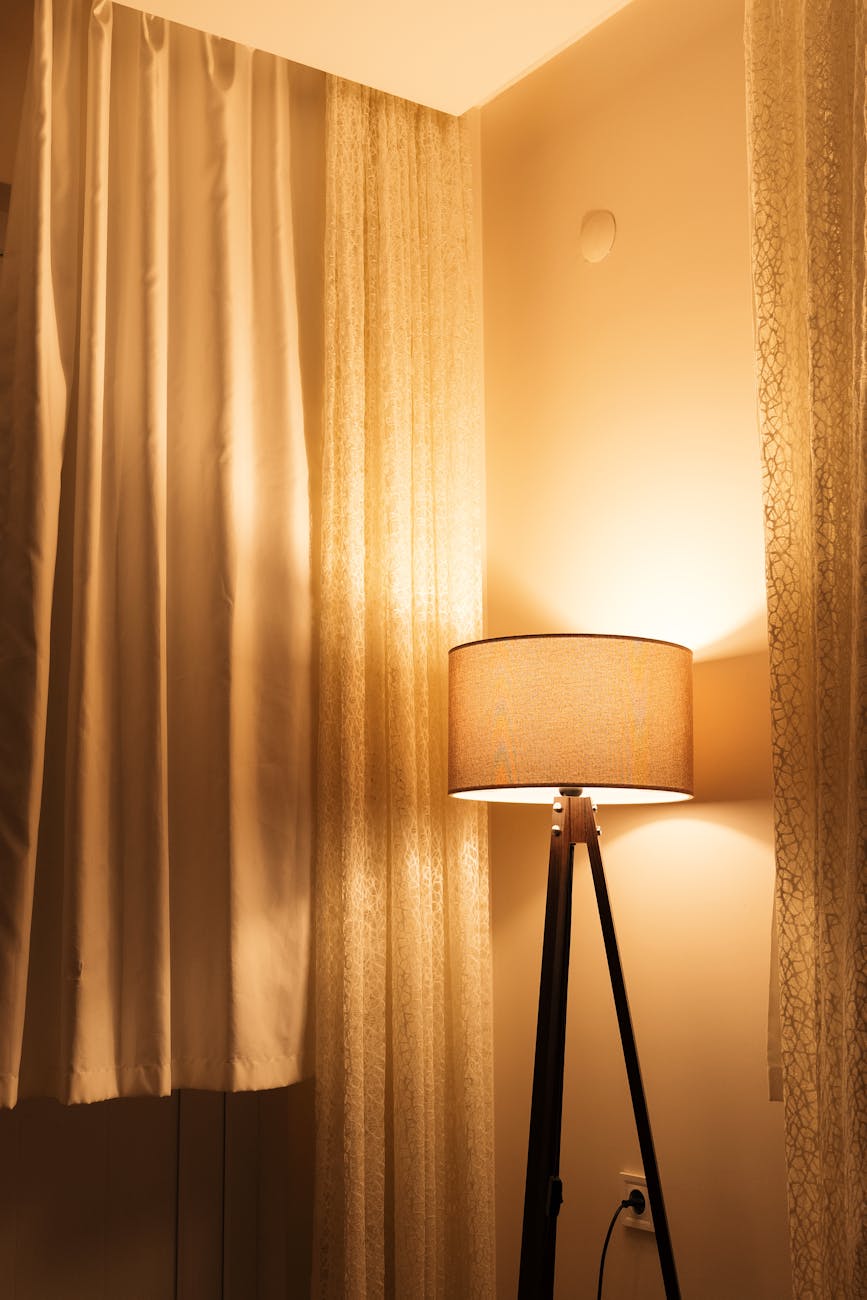
The first layer involves general illumination. This is your foundational ambient light, often provided by recessed fixtures or dimmers that control the overall scene. It sets the baseline mood for the entire area. Next, introduce task lighting. This targets specific activities, such as reading on a sofa or performing a craft project. A strategically placed floor lamp with a warm bulb serves this function perfectly, drawing attention to an object while maintaining intimacy in the immediate vicinity.
The Impact of Accent Lighting
Accent lighting performs a crucial role in defining spatial hierarchy and highlighting architectural features. By directing light specifically onto art, textured walls, or unique furniture pieces, we manipulate visual focus. Imagine highlighting a beautifully textured wall with carefully angled light; this accentuates the tactile quality of the surface, making it an active element of the décor rather than just a passive backdrop.
When considering decorative elements, texture becomes paramount. For instance, when incorporating textiles, whether through soft rugs or woven wall hangings, the way light catches these surfaces reveals their depth and softness. We see this principle applied when exploring tactile décor options; for example, investigating **DIY Macrame Wall Hangings: Boho Texture for Cozy Walls** shows how textural elements interact profoundly with layered light to enhance sensory experience. The shadows cast by a macrame piece, for instance, add dynamic visual interest that flat lighting cannot achieve.
Integrating Natural and Artificial Light Sources
The interaction between natural daylight and indoor illumination requires careful management. During the day, maximizing exposure to natural light is beneficial for well-being. However, when the external conditions shift or during evening hours, artificial sources must compensate seamlessly.
We observe that minimizing harsh glare from direct sunlight is essential for maintaining comfort. Strategically placed sheer curtains or light-filtering window treatments diffuse intense daylight into a softer, more usable ambient glow. This diffused natural light integrates beautifully with warm indoor lamps, creating a continuous flow rather than an abrupt transition between light sources.
Creating Zones Within the Space
A living room should not be treated as a monolithic space; it functions best when divided into distinct zones, each with its own tailored lighting profile. We can carve out a reading nook, a conversation area, and a relaxation zone, each defined by its specific lighting strategy. This intentional segmentation enhances the feeling of spaciousness while deepening the sense of personalized comfort.
Consider how you manage storage. If you utilize vertical space effectively, perhaps employing shelving units or custom cabinetry, the light strategy can follow suit. When organizing items vertically, ensuring adequate illumination at various levels prevents deep shadows from accumulating in corners. This spatial awareness extends to how we allocate visual focus; for example, when maximizing storage in smaller spaces, utilizing **Vertical Magic: Cozy Storage for Tiny Apartments** demonstrates how thoughtful vertical organization supports a lighter, more airy feeling, which is inherently linked to good lighting design.
Advanced Techniques in Light Manipulation
Moving beyond basic layering involves understanding the physics of light reflection and absorption within the room’s materials. Darker, matte surfaces absorb light, creating pockets of shadow that enhance intimacy, whereas highly reflective, glossy surfaces bounce light around, increasing perceived brightness but potentially sacrificing coziness.
The strategic use of dimmer switches is the most powerful tool for dynamic control. Instead of selecting a single bright setting, you should program scenes. A “Movie Night” scene might involve dimming all overheads to 10% and activating only warm, indirect accent lighting near seating. This programmatic approach allows the environment to respond fluidly to the occupants’ immediate needs without conscious adjustment.
We are constantly calibrating these settings based on observation. We notice that introducing a subtle pool of light—perhaps a low-level lamp illuminating a stack of books or a textural wall piece—shifts the perceived volume of the room inward, creating a sense of enveloping warmth. This is how we engineer deep comfort. The goal is to eliminate harsh boundaries between light and shadow, allowing the visual field to flow continuously.
The careful orchestration of light ensures that your living room transitions from merely being a collection of furniture into an immersive sanctuary. It moves the experience from passive occupancy to active, deeply comfortable engagement.
Tags: ambient lighting living room, cozy home decor, living room lighting, mood lighting, warm light, home atmosphere, interior design
Featured Image by Orhan Pergel on Pexels.