
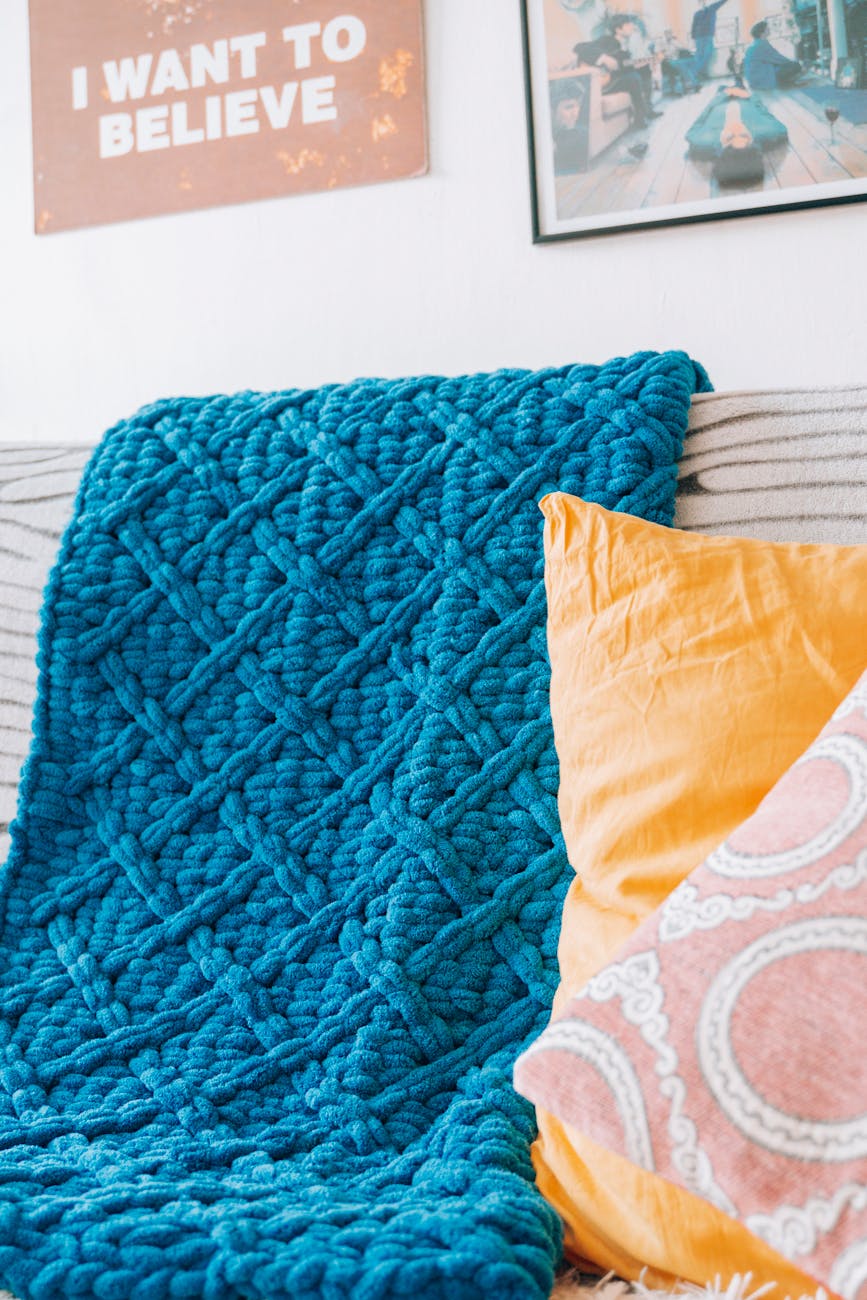
Deconstructing Texture: The Science Behind Handmade Knit Throws
The pursuit of a truly cozy interior is less about surface aesthetics and more about tactile experience. We observe that the sensory engagement provided by handmade textiles significantly alters the perceived warmth of a space, a phenomenon rooted in how our brains process texture and depth. When we discuss **DIY knit throw blankets**, we are not simply discussing a craft project; we are engaging with material science applied to domestic comfort. The specific interplay of yarn weight, stitch density, and fiber composition dictates the resulting hand-feel, which directly influences thermal regulation and psychological ambiance.
We start by examining the physical mechanics of knitting itself. Each loop and stitch creates a unique topographical map across the fabric surface. A densely packed stitch pattern, like a tight stockinette or garter stitch, minimizes air pockets between the fibers, creating a denser, more insulating surface. This density traps heat efficiently, meaning that a heavy, well-executed knit throw blanket acts as an effective thermal barrier against ambient coolness. Conversely, looser stitches allow for greater air circulation, which might be desirable in a warmer climate, but for achieving true cozy insulation, we aim for maximal fiber contact.
Yarn Selection: The Foundation of Thermal Performance
The choice of yarn material dictates the entire performance envelope of the final product. We see a clear correlation between fiber type and thermal retention. Wool fibers, for instance, possess a naturally crimped structure that traps air pockets even when the weave is relatively open; this trapped air is what provides superior insulation against temperature fluctuations. Cotton, while soft and breathable, tends to wick moisture and offer less sustained thermal resistance unless blended with heavier materials.
When planning your **DIY knit throw blankets**, understanding fiber content becomes a crucial analytical step. Merino wool offers exceptional warmth-to-weight ratios, making it ideal for luxurious yet manageable throws. Alpaca blends introduce an additional layer of softness and loft while maintaining excellent insulating properties. Synthetic yarns offer durability and cost-effectiveness but require careful consideration regarding breathability and long-term thermal performance when used for high-contact items like sofa coverings. We must calculate the required yarn weight based on the desired coverage area to ensure adequate thermal mass is achieved across the entire surface of the seating area.
Mastering Stitch Patterns for Depth and Drape
The pattern chosen is where the visual and tactile complexity emerges. Simple patterns provide a uniform texture, but complex stitch manipulations introduce visual interest and dimensional variation that elevates the piece from mere textile to sculptural decor. For maximizing cozy texture, we look beyond basic stockinette. Incorporating cables, seed stitches, or intentional increases manipulates how light interacts with the fabric, creating shadows and highlights across the surface.
Consider the impact of stitch density on drape. A very dense knit retains its shape firmly, offering a substantial, weighty presence perfect for anchoring a large sofa. A looser pattern allows the material to flow more freely, resulting in a softer, more fluid drape that invites casual interaction. We observe that the way a blanket drapes over furniture is intrinsically linked to the tension applied during the knitting process; this dictates whether the throw sits flat or folds with rich, cascading pleats.
Integrating Handmade Textiles into Interior Design Strategy
A beautiful handmade item only achieves its full potential when integrated thoughtfully into the existing interior ecosystem. The goal is not simply to add an object, but to establish a cohesive sensory narrative within the room. A knitted throw blanket acts as a focal point, injecting warmth and personality where neutrality might otherwise dominate.
Establishing Focal Points for Comfort Zones
We analyze how textiles define functional zones within a living space. Placing a richly textured knit on a sofa immediately signals that this area is designated for relaxation and deep comfort. This deliberate placement anchors the room’s mood. If you are curating your perfect reading nook, incorporating a substantial knit introduces an immediate sense of enclosure and invitation to settle in. Think about how the texture contrasts with the surrounding surfaces—smooth wood or cool stone—to enhance the tactile experience further.
This principle extends beyond seating. Textiles can redefine transitional spaces. A heavy throw draped over an armchair creates an inviting cocoon, encouraging prolonged sitting. When designing a space that encourages lingering, the material itself becomes an active component of the design strategy rather than a passive covering. We see this effect amplified when considering ambient elements; for example, pairing a soft knit with warm, diffused lighting enhances the sensory immersion dramatically.
The Synergy with Ambient Elements
The thermal and visual effects of handmade textiles interact powerfully with other sensory inputs. Imagine draping a thick, hand-knitted blanket over a sofa while utilizing warm, low-level illumination. This combination triggers a powerful psychological response associated with safety and deep relaxation. We are moving beyond mere decoration into environmental psychology.
This synergy is especially potent when considering related decor choices. If you establish a deeply comfortable seating arrangement using a luxurious **DIY knit throw blanket**, pairing it with ambient lighting becomes a deliberate act of creating an immersive experience. For dining moments, the tactile comfort provided by soft textiles complements the visual warmth generated by candlelight; consider how cozy kitchen lighting and candle decor for dining moments enhance the overall atmosphere established by your home furnishings. The intentional layering of sensory input creates a holistic feeling of sanctuary.
Practical Considerations for Longevity and Care
The investment in handmade items demands an understanding of material longevity. Because these pieces are often worked by hand, their care protocol is as important as their creation process. Proper washing techniques prevent fiber degradation and maintain the integrity of the stitch structure. Machine washing on high heat introduces mechanical stress that can weaken the yarn structure over time, leading to loss of loft and texture.
We observe that gentle laundering is paramount for maintaining the artisanal quality of a knit throw blanket. Air-drying minimizes stress on the fibers. Understanding these material constraints allows the maker to produce items that not only look beautiful but also maintain their intended functional performance across years of use. This analytical approach ensures that the cozy texture achieved through **DIY knit throw blankets** endures as a lasting element of home decor.
Tags: knit blankets, handmade decor, knitting tutorial, cozy home, DIY textiles, throw blankets, fiber art
Featured Image by Alina Vilchenko on Pexels.