
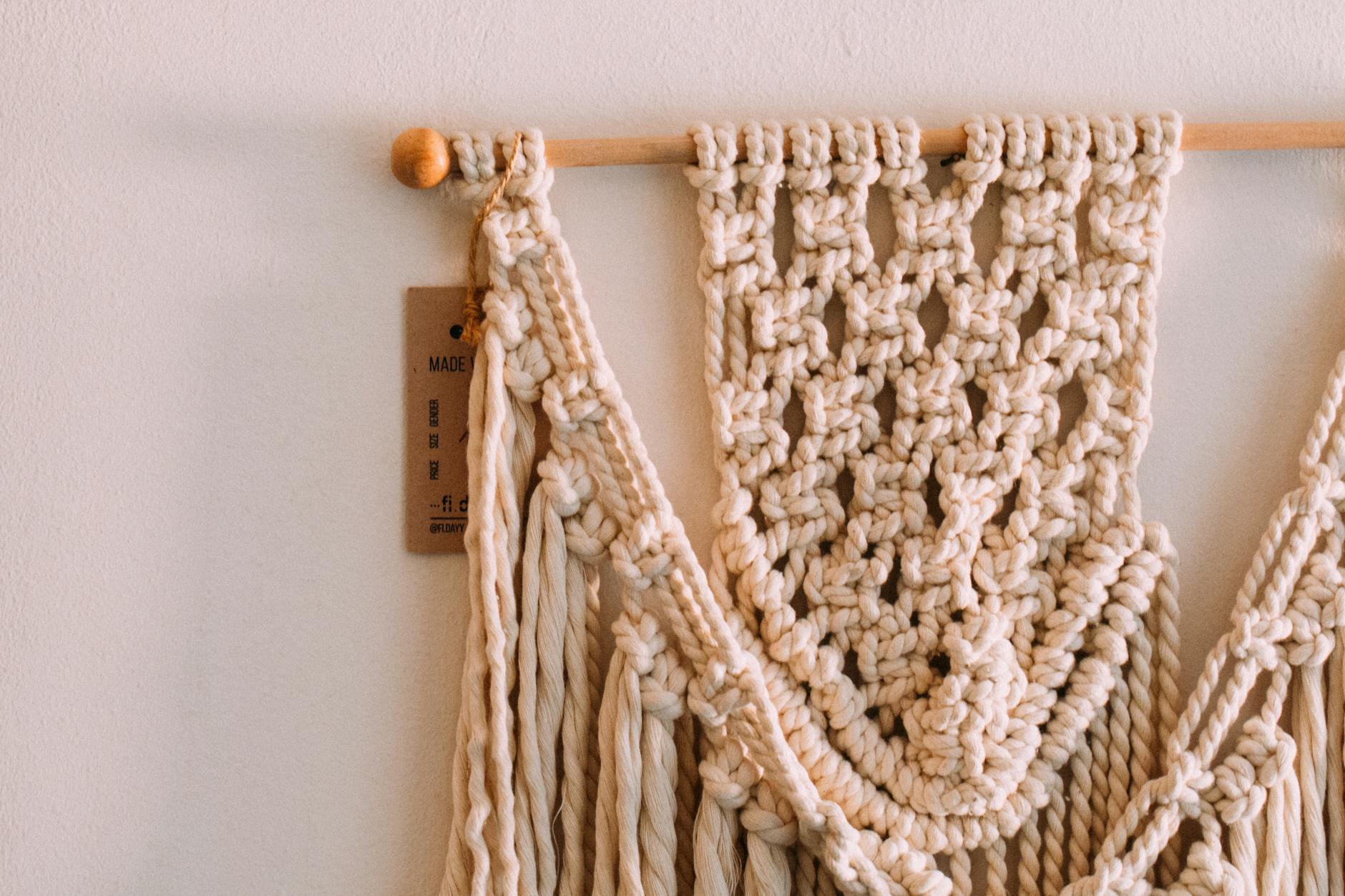
Deconstructing the Art of Macrame: A Practical Guide to DIY Wall Decor
Creating macrame wall hangings moves beyond simple crafting; it involves understanding tension, knot structure, and material physics. We are not just tying cords; we are engineering textile patterns that interact with light and space in a specific way. Observing successful bohemian decor, we see that the aesthetic appeal stems directly from the tactile nature of the handmade object. This process allows the creator to manipulate thread thickness and knot density to dictate the visual texture, transforming simple fibers into intricate architectural elements for a room.
The decision to undertake a **Macrame wall hanging DIY** project requires an initial calibration of intent. Before cutting any thread, one must map out the desired geometric outcome. Do you aim for a dense, textured tapestry or an open, airy fringe? The resulting pattern is entirely dependent on the sequence of knotting and the management of material flow across the frame. We observe that beginners often struggle because they focus solely on the final look rather than the underlying mechanical principles governing the drape and stability. Mastering this requires understanding how tension dictates the final form.
Understanding the Material Science of Macrame Fibers
The choice of cord material profoundly impacts the finished piece’s longevity and visual quality. Cotton, for instance, offers a soft hand and excellent dye uptake, which is beneficial for achieving those muted, earthy tones characteristic of the boho style. You must consider the thread’s weight; thicker cotton ropes provide more structural integrity for larger pieces, whereas finer threads allow for intricate, delicate detailing.
The knot itself acts as the primary structural element. A simple overhand knot creates a basic connection, but complex patterns demand specific, repeated tension applications. We find that manipulating the tension on each strand as you work is crucial; inconsistent pulling results in uneven spacing and a visually chaotic outcome. Think of it as weaving a textile where every loop contributes to the overall warp and weft structure simultaneously.
Essential Knot Techniques for Structural Integrity
To achieve professional-grade macrame, specific knotting techniques must be internalized. The foundation lies in mastering fundamental knots that allow for repeatable patterns without structural collapse. For instance, the square knot provides excellent foundational stability when securing cords to a central dowel or frame. Subsequent knots build upon this base by managing the crossover points effectively.
When constructing larger pieces, the management of vertical tension becomes paramount. If the top section sags unevenly, it suggests that the initial anchoring points were not sufficiently taut, leading to gravitational pull distorting the intended symmetry. We see many practitioners correct this by ensuring all primary cords are anchored firmly before proceeding with intricate weaving patterns. This attention to foundational physics prevents frustration later in the process.
Designing Your Pattern: From Concept to Execution
The visual design phase requires translating abstract bohemian concepts into concrete cord arrangements. Bohemian aesthetics favor organic, flowing lines rather than rigid geometric shapes. This translates practically into designs that incorporate varied cord thicknesses and asymmetrical draping. Experimentation here is key; try starting with simple patterns before attempting complex geometric motifs.
Consider how the wall space interacts with the hanging element. If you are working in a smaller area, employing lighter knots and allowing more negative space will prevent the piece from overwhelming the visual field. Conversely, for larger installations, utilizing thicker cords allows the texture to register more deeply against the backdrop. We can draw parallels to how light interacts with surfaces; minimizing dense areas and maximizing open space enhances the perceived lightness of the entire arrangement. If you are working in a confined space, understanding principles like how to maximize small room space with light illusion tricks (see maximizing small room space with light illusion tricks) informs how much visual density is appropriate for the wall treatment.
Integrating Texture and Light: The Final Presentation
Once the knots are complete, the final step involves assessing the piece in relation to its environment. Macrame inherently functions as a texture generator. The interplay between the shadows cast by the knotted cords and the ambient light determines the perceived depth of the work. Natural light filtering into a room interacts differently with a matte, fibrous textile than it does with smooth surfaces.
Ambient lighting plays a critical role in revealing the complexity you have woven. When using indirect light sources, the subtle variations in shadow created by the knots become highly visible, enhancing the three-dimensional quality of the wall hanging. Ambient Lighting: Creating a Cozy Home Sanctuary (Ambient Lighting: Creating a Cozy Home Sanctuary) demonstrates that soft illumination reveals texture far more effectively than harsh direct light. We observe that pieces utilizing varied thread thicknesses catch the light differently, creating dynamic focal points throughout the day.
Troubleshooting Common DIY Hurdles
When executing a **Macrame wall hanging DIY**, inevitable issues arise concerning knot consistency and material handling. A common pitfall involves knots becoming loose over time due to material fatigue or insufficient initial tension setting. If this occurs, the solution is often re-tensioning the primary anchor points and carefully tightening the adjacent knots to restore structural coherence.
Another frequent challenge relates to achieving smooth transitions between different cord thicknesses. If you attempt to blend a thin cord into a thick one, the visual effect can appear jarring if the transition is abrupt. In practice, designers often employ layering—using several strands of slightly varying thickness in adjacent sections—to create an organic, flowing gradient instead of a hard line separation. This layering technique mimics natural fiber variation and softens the overall appearance.
We see that patience during the weaving process directly correlates with the quality of the final outcome. Rushing the intricate work sacrifices the necessary time for material adjustment and pattern correction. Approach the creation not as a singular task, but as an iterative design process where you constantly test the tensile limits of your materials against your envisioned aesthetic structure. This methodical approach ensures that the resulting piece functions beautifully as both craft and decor.
Tags: macrame, DIY decor, boho home, wall hanging, crafts, bohemian decor, macrame tutorial
Featured Image by Maria Tyutina on Pexels.