
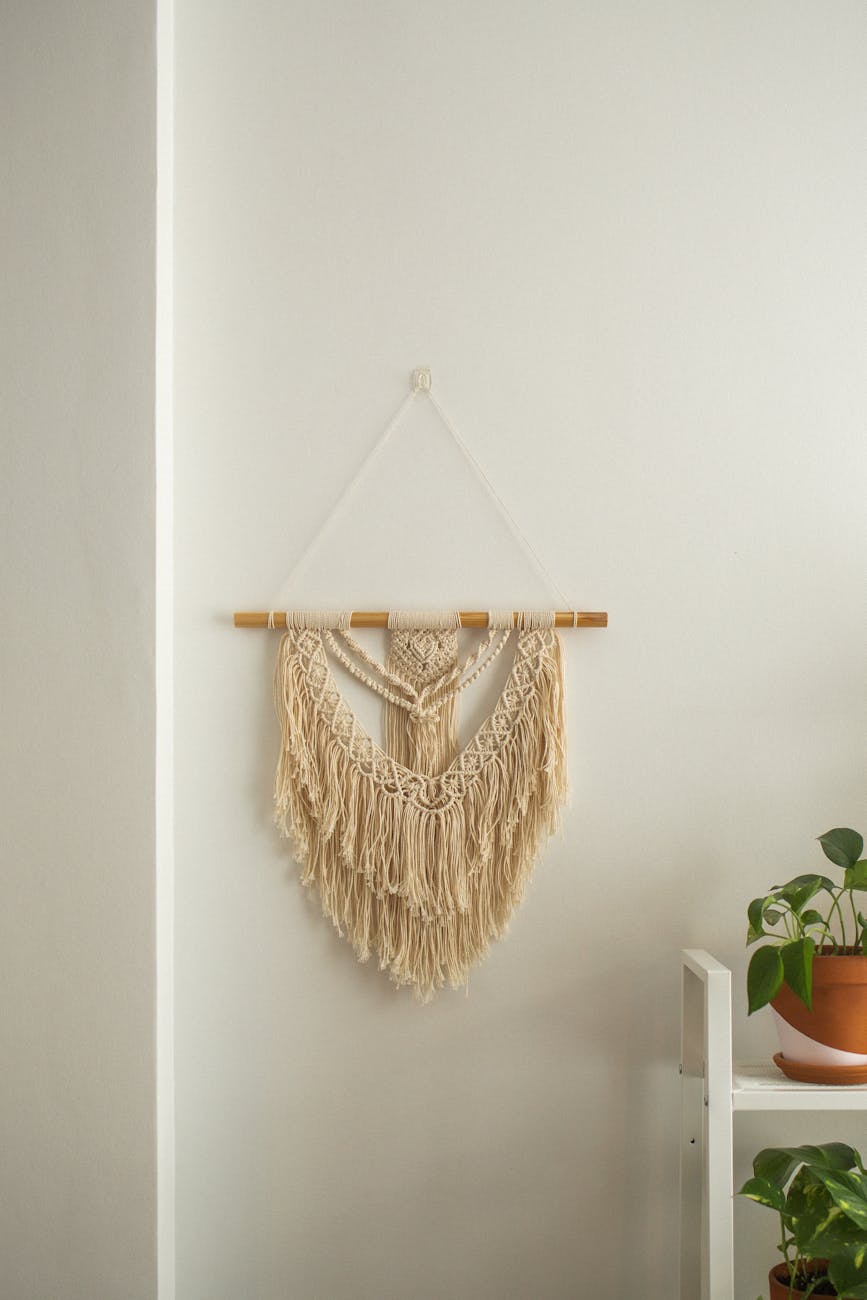
Deconstructing the Art of Macrame: Crafting Bohemian Textures at Home
We observe a persistent demand for interior design solutions that bridge handcrafted artistry with contemporary comfort. The bohemian aesthetic, characterized by its emphasis on natural materials and textural layering, provides fertile ground for decorative pursuits like macrame wall hangings. This practice is not merely about hanging ropes; it involves mastering fiber manipulation to generate visual depth and tactile warmth within a space. Understanding the mechanics behind this craft allows us to move beyond simple imitation and engage in genuine textile design.
The appeal of **Macrame wall hanging DIY** projects stems from their participatory nature. The process engages the maker directly in the material transformation, resulting in objects imbued with personal narrative. When executing these projects, the success hinges on understanding knot theory and tension distribution; these are the physical laws governing how the yarn will drape, resist gravity, and form complex geometric patterns.
Understanding the Foundation of Macrame Technique
To achieve those signature, intricate patterns, one must first grasp the fundamental mechanics of knotting. A simple overhand knot is the starting point, but true macrame artistry requires intentional manipulation of tension across successive loops. We are essentially translating three-dimensional space onto a two-dimensional plane using only cord and tension.
The choice of cord material significantly impacts the final aesthetic and structural integrity. Cotton offers a soft, matte finish, ideal for that organic, earthy bohemian feel we seek. Natural fibers absorb light softly, enhancing the cozy atmosphere. Conversely, thicker cotton or even jute introduces more rugged texture, appealing to a more rustic interpretation of the style. We see that the fiber’s weight directly influences the visual density of the finished piece.
When planning a large piece, calculating the required yarn length is a critical analytical step. We must account for the necessary overhang and the density of the pattern being established across the entire surface area. A common pitfall involves underestimating the material needed when dealing with complex fringe or dense knot work. This requires iterative testing during the design phase, observing how specific knots behave under anticipated tension loads.
Pattern Exploration: From Basic Knots to Complex Structures
The progression from simple foundational knots to complex designs dictates the level of skill required and the resulting visual impact. Beginner projects often focus on repetitive square or triangle patterns. These establish a baseline understanding of consistent spacing and symmetrical execution.
As proficiency increases, the focus shifts to manipulating the cord’s path to create flowing lines and organic shapes. Larger, more abstract forms require a deeper consideration of negative space. We learn that the tension applied at each intersection determines whether the pattern appears rigid or fluid. Imagine creating an asymmetrical design; this demands an intuitive understanding of where to introduce slack versus where to maintain tautness to achieve desired visual movement.
For those aiming for sophisticated results, exploring variations in cord thickness creates immediate textural contrast. Interlacing thicker cords with finer ones introduces dynamic visual tension that catches the light in complex ways. This layering effect is crucial; it prevents the wall hanging from appearing flat and enhances its three-dimensional presence. This principle of layered textiles directly mirrors the principles observed when layering fabrics for ultimate cozy ambiance, where varying weights create depth across a surface.
Material Selection: Fiber, Finish, and Durability
The material selection process moves beyond mere aesthetics; it involves engineering for longevity and tactile quality. Natural fibers inherently possess a unique character that synthetic materials often fail to replicate. Cotton, hemp, and jute are favored because their natural weave offers inherent softness. We analyze the tensile strength of these materials against the expected stress points of the design.
Durability is another key analytical consideration in DIY projects. A wall hanging must withstand fluctuations in humidity and physical handling over time. The knots themselves act as stress points; therefore, ensuring that the initial knotting process is secure prevents unraveling or structural failure down the line. We find that tightly secured, well-executed knots resist degradation far better than loosely tied loops.
The finishing touches also demand attention. How the ends are managed dictates the overall perception of quality. Whether leaving raw, frayed edges or carefully tying off the strands influences whether the final product leans toward rustic simplicity or refined elegance. Experimenting with fringe techniques allows the maker to control the visual flow at the boundaries of the design.
Integrating Macrame into Interior Design Narratives
A macrame piece functions as a focal point, an anchor for the room’s decorative theme. Its success in integration depends on how it interacts with the surrounding elements. The goal is to ensure the textile work complements the overall ambiance rather than competing with it.
When placing a large macrame piece, consider the scale relative to the wall space and the furniture arrangement. A sprawling, intricate design works best when it commands attention without overwhelming the visual field. Smaller, more delicate pieces serve as textural accents, tying together disparate decorative elements. This principle applies across all decor choices; every object must fulfill a specific functional or aesthetic role within the spatial context.
We see that texture plays an essential role in creating perceived coziness. Softness invites physical interaction, which is central to the bohemian philosophy. A hand-knotted piece engages the viewer through its palpable history and handmade quality. This contrasts sharply with mass-produced items; the imperfections inherent in the knotting process are precisely what imbue the work with authenticity.
Consider the juxtaposition of natural fibers against smooth surfaces. Placing a textured macrame near polished wood or crisp linen introduces a dynamic tension that enriches the visual experience. For instance, pairing an intricately knotted piece with elements found in spa-inspired bathroom decor creates an intentional contrast between organic warmth and clean, minimalist surfaces. This balancing act is fundamental to sophisticated layering.
Practical Steps for Executing Your Macrame Project
Starting the process requires methodical planning. First, sketch your desired pattern. Map out the major lines and the placement of focal points before touching the yarn. Second, select your material based on the desired texture—heavy cotton for structure, lighter threads for airiness. Third, calculate your required dimensions precisely. Measure the height and width you intend to cover.
When executing the knots, maintain a consistent rhythm. Slow down the process; rushing introduces tension errors that are difficult to correct later. Practice the basic knot sequence repeatedly until the motion becomes muscle memory. Observe how pulling each cord affects the subsequent loops immediately. This iterative feedback loop between action and visual result is where true learning occurs in fiber arts.
When you reach the final stage, review the entire composition. Check for any sagging areas or uneven tension across the piece. A critical assessment of the drape ensures that the intended aesthetic outcome is realized. The resulting wall hanging becomes a tangible representation of patience, technique, and the beauty inherent in slow craft. Embracing the process transforms the creation into an experience itself, yielding decor that feels deeply personal and authentically cozy.
Tags: macrame, DIY decor, bohemian, home decor, crafts, wall art, cozy home
Featured Image by Vladimir Gladkov on Pexels.