
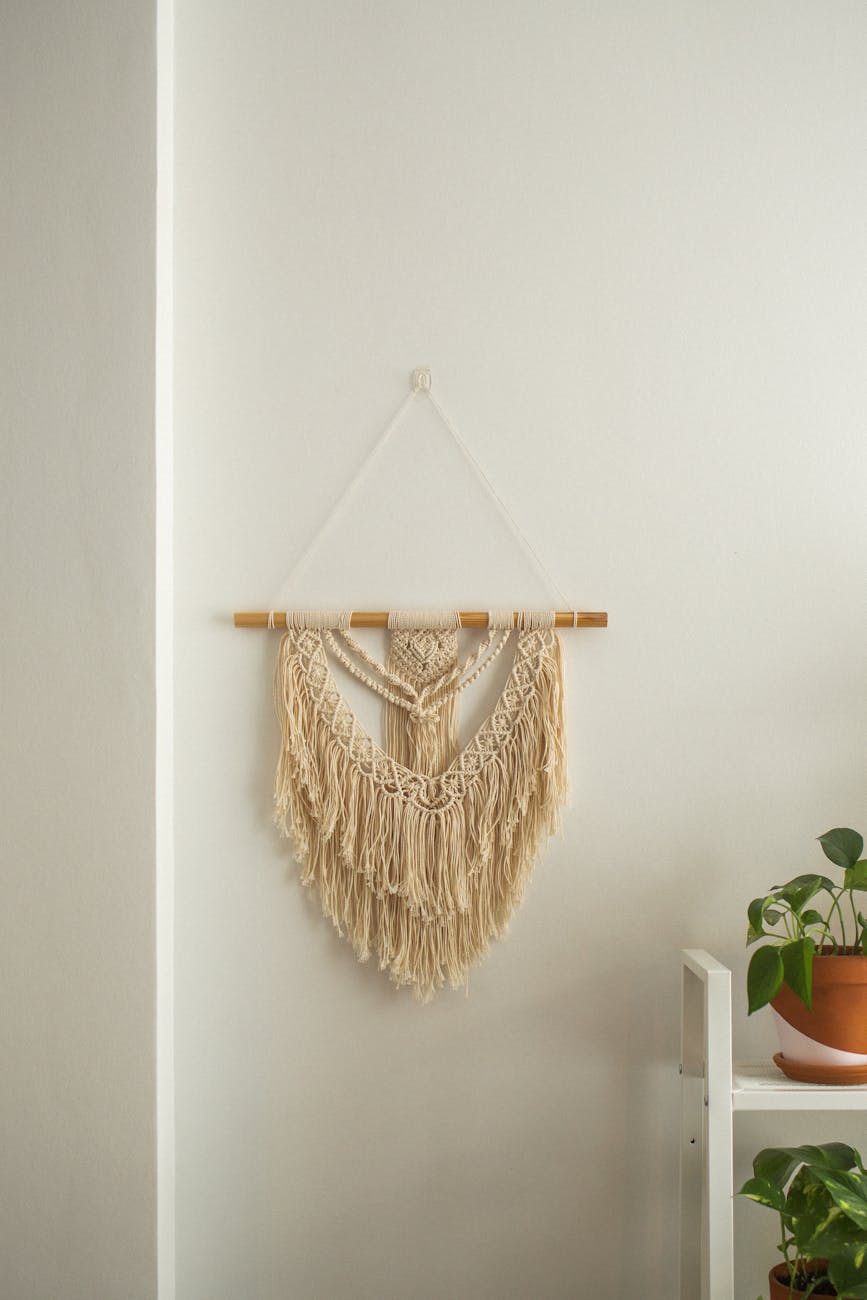
Deconstructing the Art of DIY Macrame Wall Hangings
The pursuit of authentic home aesthetics often leads us to explore handcrafted decor. Specifically, the process of creating **DIY macrame wall hangings** taps into a deep appreciation for tactile craftsmanship and bohemian design principles. We observe that these textile art forms function not merely as decorative objects but as tangible expressions of intentional space curation. When we engage in this activity, we are manipulating thread tension, knot geometry, and material choice to engineer a specific visual texture on a vertical surface.
The appeal lies in the direct correlation between the physical effort invested and the resulting aesthetic payoff. A wall hanging is more than just hanging rope; it is an architectural element defined by its interplay of negative space, woven patterns, and material depth. Understanding this mechanism allows us to move beyond simple instruction and engage with the design process as a form of applied spatial psychology.
The Anatomy of Macrame: Understanding the Knot Mechanics
To execute successful **DIY macrame wall hangings**, one must first grasp the underlying structural principles governing the knots. These are not arbitrary decorative choices; they are functional engineering techniques that dictate how the material will drape, hold tension, and interact with ambient light. We start with fundamental knots like the square knot and the half hitch, which establish the foundational tension points.
The process demands an understanding of fiber physics. Different cord thicknesses—whether cotton, jute, or cotton blends—possess varying tensile strengths and pliability. A novice often misjudges this variable, resulting in sagging or overly tight sections. Experienced makers learn to calibrate their knot size relative to the yarn gauge to ensure the pattern maintains its intended dimensionality throughout the piece. We see a direct relationship: precise tension control yields predictable, aesthetically pleasing results.
Material Selection: Setting the Foundation for Texture
The choice of fiber dictates the final character of the wall hanging. Natural fibers offer an inherent warmth that instantly aligns with the cozy aesthetic we seek to achieve in our living spaces. Jute provides a rustic, earthy foundation; its coarser texture emphasizes the raw, organic quality inherent in bohemian design. Conversely, softer cotton threads allow for finer detail and a more delicate, flowing appearance.
When selecting materials, we must consider the desired visual weight. A heavier cord will create bolder, more pronounced knots, lending themselves to larger, statement pieces. Lighter strands are ideal when aiming for airy, ethereal compositions. This material selection forms the initial constraint within which the creative process operates; it sets the parameters for the entire design structure before a single knot is tied. Think about how this textural awareness translates into other home elements; similar principles guide decisions regarding fabric layering, such as exploring **Textural Touches: Soft Textiles for a Cozy Bathroom Vibe**.
Designing for Flow: Mastering Pattern and Symmetry
The visual success of a macrame piece hinges on the rhythm established by the pattern. We are essentially creating a two-dimensional textile structure suspended in three dimensions. Symmetrical patterns, where elements mirror each other across a central axis, offer immediate visual balance. Asymmetrical designs allow for a more organic, flowing, and free-spirited interpretation of boho style.
We observe that alternating knot density—varying the tightness or spacing between knots—is crucial for generating dynamic visual flow. A uniform pattern creates a static effect; introducing deliberate variation allows the eye to travel across the piece in a guided, engaging manner. Experimenting with fringe placement and knot complexity directly manipulates the perceived movement of the textile against the wall plane. This is where intuition meets technical execution.
Practical Application: Step-by-Step Execution for Beginners
Starting the **DIY macrame wall hangings** journey requires a methodical approach to avoid frustration. Begin by determining the desired dimensions and selecting materials based on the aesthetic goal—large and airy, or dense and textural. Next, practice the foundational knots until muscle memory takes over. Focus intensely on the tension management during every pull.
For those new to the craft, starting small is the most effective strategy. A simple fringe or a small geometric shape allows for iterative error correction without committing to a large, complex project that might derail initial confidence. We see many beginners overlook the importance of establishing a consistent starting point; this consistency is what builds the illusion of effortless skill.
Integrating Macrame into Interior Spaces
Once the wall hanging is complete, its placement becomes an act of interior design. It should serve as a focal point, anchoring a room’s visual narrative. Placing it above a sofa or a reading nook immediately imbues that area with handcrafted warmth. The texture of the macrame interacts dynamically with surrounding elements—wood grain, soft rug fibers, and ambient lighting.
Consider how this tactile element complements other decor choices. A rough-hewn wooden frame enhances the organic feel of the rope beautifully. Conversely, placing a highly structured piece next to extremely soft furnishings requires careful balancing to avoid visual discord. The goal is integration; the wall hanging must function as an extension of the overall cozy environment rather than existing in isolation.
Advanced Considerations: Layering and Finishing Techniques
Moving beyond basic knotting involves exploring layering techniques to enhance depth. Introducing different cord thicknesses at various levels creates optical illusions of shadow and depth, making the piece appear more dimensional when viewed from different angles. We can use thicker cords for structural elements and thinner ones for delicate fringe details.
Finishing touches are what elevate a craft project into refined decor. Treating the raw ends—whether through careful weaving or intentional fringe creation—is essential. This attention to the periphery signals that the piece was intentionally constructed, not merely assembled. Mastering these subtle finishing techniques allows the viewer to perceive the craftsmanship embedded within the textile structure.
The process demands patience. We see that the time spent refining tension and observing light is just as critical as the time spent tying the knots themselves. Creating beautiful **DIY macrame wall hangings** is an exercise in translating abstract aesthetic desires into concrete, tangible physical forms. The resulting pieces possess a unique energy derived from the human touch embedded within the fiber.
Tags: macrame, boho decor, DIY crafts, wall hangings, home decor, knitting, crafting
Featured Image by Vladimir Gladkov on Pexels.