
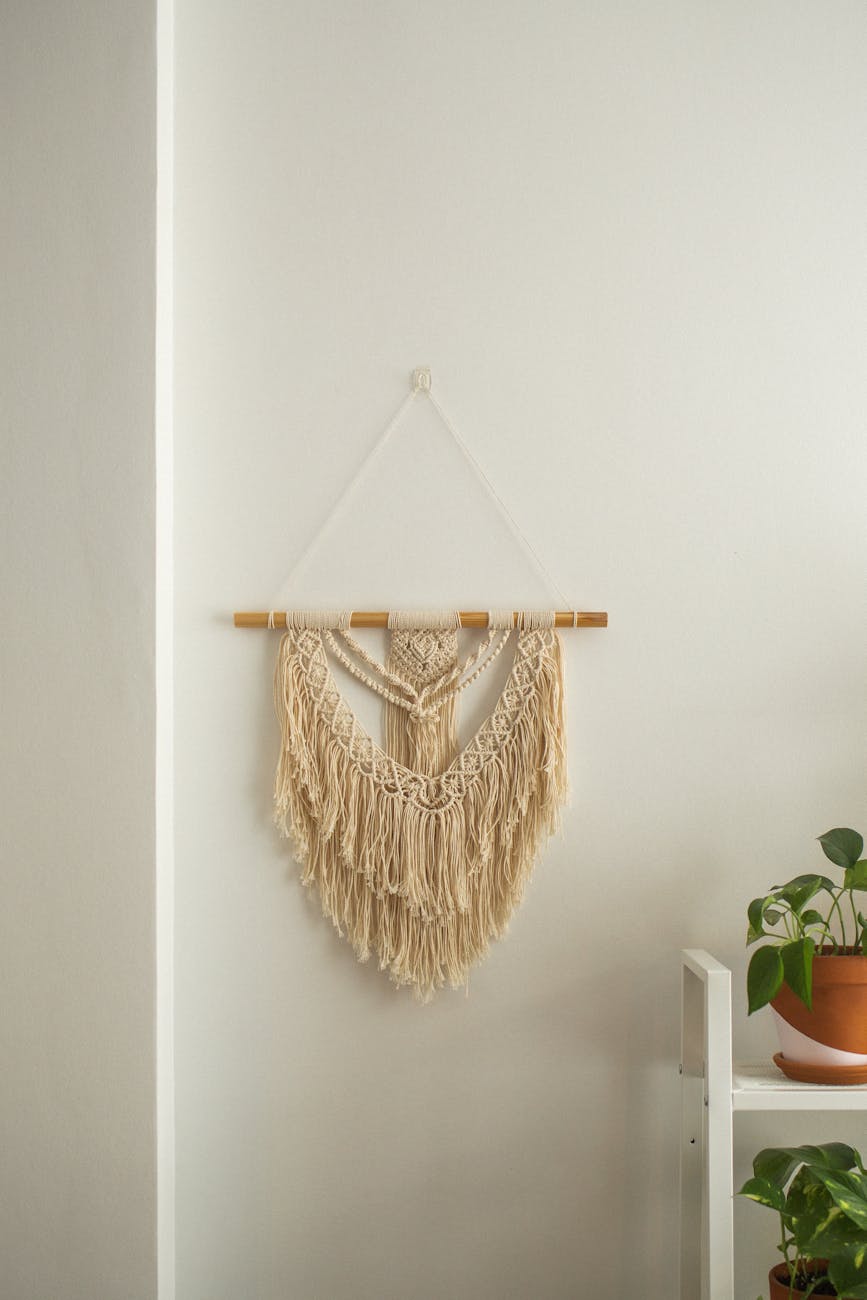
Deconstructing the Art of DIY Macrame Wall Hangings
Creating handmade textiles for home decor involves more than just following a pattern; it requires understanding the physics of fiber manipulation and the aesthetic principles underpinning bohemian design. When we approach **DIY macrame wall hangings**, we are engaging with a craft that bridges technical skill, material science, and interior psychology simultaneously. We observe that the resulting texture is not accidental; it emerges directly from the tension, knotting sequence, and the choice of cord material interacting with gravity.
The appeal lies in controlling these physical forces. A poorly executed knot will sag unevenly or appear sloppy, whereas a well-executed pattern demonstrates mastery over the material’s drape. This process allows the maker to dictate the visual weight and flow across a vertical plane. We are essentially manipulating tension into tangible, decorative form.
Understanding the Material Science of Macrame
The foundation of successful macrame rests on selecting appropriate cord. Natural fibers like cotton or jute exhibit specific tensile strengths and elasticity that dictate how the final piece will behave over time. For wall hangings intended to hold their shape against gravity, we must select materials with sufficient structural integrity. Synthetic cords offer resilience but lack the organic texture inherent in natural fibers.
We analyze the yarn gauge—the thickness of the cord—as a critical variable. Thicker cord allows for larger, more pronounced knots, resulting in bolder visual statements. Finer gauges permit intricate detailing and softer, more delicate textures. Experimentation with different materials changes the entire textural outcome; one might achieve a rustic, earthy feel with thick jute, while another achieves an airy, ethereal look with finer cotton threads. This material choice fundamentally alters the tactile experience of the finished decor item.
The Mechanics Behind Essential Knotting Techniques
The core mechanism of macrame involves creating interlocking loops that establish structural integrity. Simple knots like the square knot serve as the foundational building block for almost all designs. Mastering this fundamental step allows the artist to control the spacing and density of the resulting pattern.
When we move beyond the basic square knot, we introduce more complex nodes—such as the half-hitch or various fringe techniques. These secondary knots are what define the rhythm and complexity of the design. The way a knot sits relative to its neighbors dictates the overall visual flow across the textile plane. For instance, intentionally varying the length of the cords used in the pattern introduces dynamic movement, preventing the hanging from looking static or rigidly geometric. We see this principle mirrored when designing spaces for comfort; consider how thoughtfully arranged textiles influence the feeling of a room, similar to setting up a Hygge Bathroom Reading Nook: Cozy Decor Ideas.
Pattern Development: Translating Concept into Structure
Developing a design involves translating an abstract visual idea into a concrete sequence of knots. A popular approach involves starting with a central focal point and radiating outward, or building the structure from the top down. The choice of pattern dictates the final aesthetic impression. Geometric patterns emphasize balance and repetition, while organic patterns focus on flowing, asymmetrical lines that mimic natural growth.
We observe that balancing these elements is key to achieving true boho aesthetics. A design that relies solely on straight lines feels rigid; a design incorporating intentional asymmetry allows for a more lived-in, relaxed quality. When designing your **DIY macrame wall hangings**, consider the negative space as much as the knots themselves. The empty areas are just as important in defining the composition as the woven material.
Integrating Texture and Color Palettes
Color plays a crucial role in manipulating the perceived depth of the wall art. Monochromatic schemes create deep textural variation through differences in knot density rather than hue shifts. Conversely, using contrasting colors introduces visual excitement. For example, pairing natural beige or cream cord with deep terracotta or dusty sage tones establishes an immediate connection to earth-based decor trends.
The interplay between the texture and the color palette influences how light interacts with the piece. Knotted areas create shadows and highlights, adding a three-dimensional quality that flat fabric cannot achieve. This textural depth enhances the cozy atmosphere we aim to cultivate in our living spaces. We can link this tactile engagement to broader seasonal trends; observing Cozy Autumn Harvest: Fall Textile Trends for Warm Home Decor reveals an appreciation for rich, earthy tones that naturally complement woven crafts.
Practical Execution: Troubleshooting Common Issues
In practice, errors often occur at the stage of tension management or knot tightness. If the cords are not consistently held taut during the tying process, the final hanging will inevitably distort under its own weight, leading to uneven draping. We must ensure the initial setup accounts for the material’s inherent stretch before any knots are finalized.
One common pitfall involves inconsistent cord thickness throughout the project. This inconsistency breaks the visual rhythm we are trying to establish. A meticulous approach demands measuring and planning the flow of the material before committing the first knot. Understanding how gravity pulls on the fibers is essential for preventing sag and achieving that desired, intentional cascade effect. We see that patience in this physical process yields superior results compared to rushing through the sequence.
Scaling Up Your Craft: Advanced Considerations
Once the foundational skills are established, practitioners often explore scaling the complexity of their work. Larger pieces require a different approach to planning; managing the necessary cord length and ensuring even tension across a wider surface demands more precise measurement and foresight. The structural load on larger textiles necessitates stronger starting points and more robust knotting sequences.
When moving toward larger canvases, consider how the piece will interact with the surrounding architecture of the room. The scale must feel appropriate to the space; an oversized piece demands a substantial wall area to anchor its visual weight effectively. This consideration shifts the focus from mere crafting technique to spatial design integration. We are not just making knots; we are designing focal points that engage the entire visual field.
The ongoing exploration of these techniques reinforces the connection between mindful creation and interior harmony. Every knot ties back to a physical law, every color choice reflects an emotional response, and every draped thread contributes to the overall atmosphere of warmth and curated style. Mastering **DIY macrame wall hangings** is mastering the art of intentional, tactile decoration.
Tags: macrame, boho decor, DIY crafts, wall art, home decor, knitting, craft tutorial
Featured Image by Vladimir Gladkov on Pexels.