
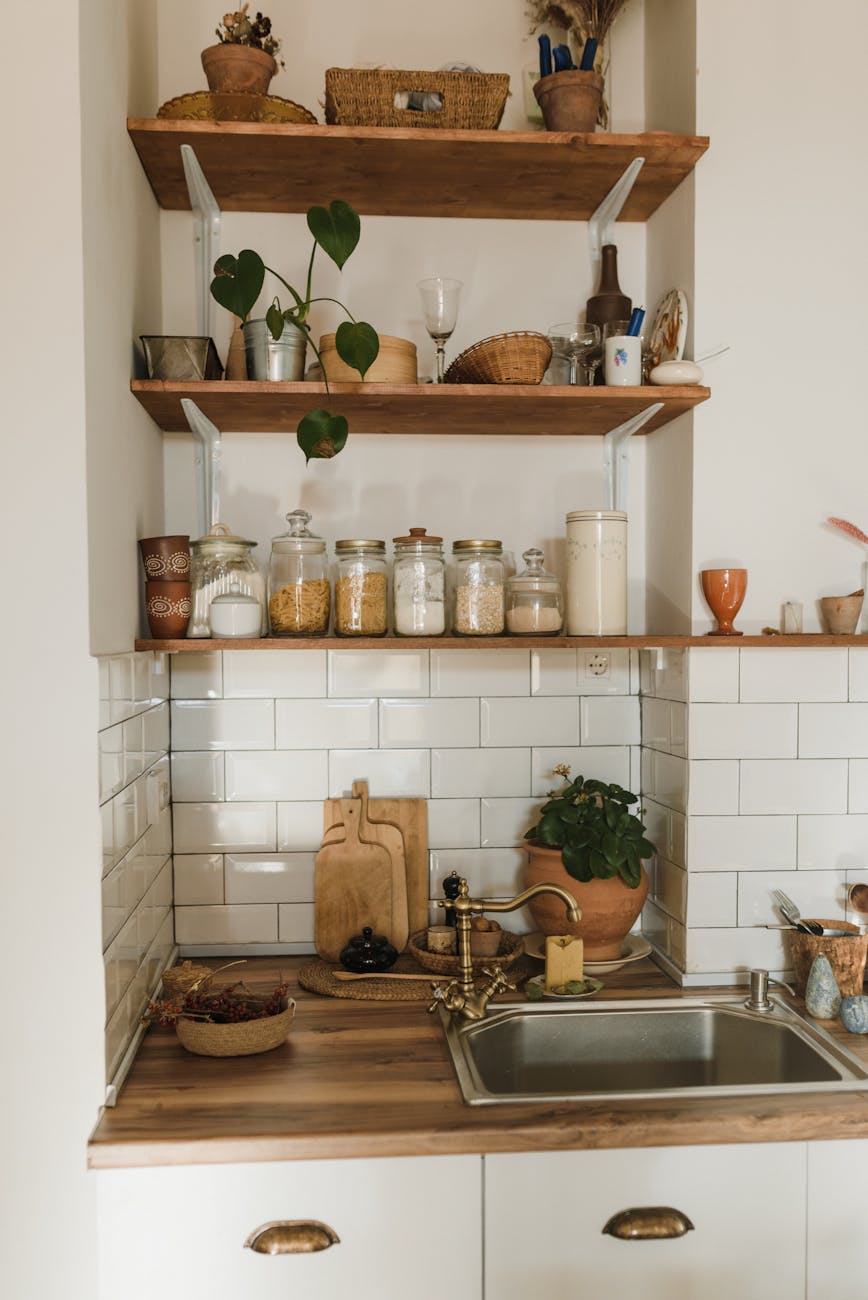
Optimizing Kitchen Layouts for Visual Comfort
When we approach kitchen design, the objective moves beyond mere functionality; we begin manipulating visual perception to achieve a specific atmospheric result. The spatial arrangement of storage profoundly dictates how inviting and functional a cooking space feels. We observe that cluttered countertops create cognitive friction, slowing down daily tasks because the visual field is overloaded with non-essential elements. Creating **cozy kitchen shelving decor** addresses this by introducing intentional organization alongside aesthetic appeal. This process involves understanding the relationship between vertical space utilization and perceived spaciousness.
The Mechanics of Vertical Storage in Kitchens
The most effective way to maximize storage capacity without sacrificing the feeling of openness is through intelligent vertical deployment. Standard lower cabinetry often maximizes floor space but restricts upper storage potential. Shelving solutions exploit the vertical plane, drawing the eye upward and making the room feel taller and more expansive. We must calculate the functional volume versus the aesthetic impact when selecting shelving units. A poorly placed shelf can actually introduce visual weight, making a small area feel cramped. Conversely, strategically placed open shelving allows light to penetrate deeper into the space, which contributes significantly to that desired sense of warmth.
Consider the material science aspect here. Choosing materials with warm tones, such as natural wood or matte finishes, immediately elevates the sensory experience of the space. This tactile quality anchors the design philosophy behind **cozy kitchen shelving decor**. The texture itself communicates comfort before any objects are even placed upon it. We see a strong correlation between the perceived softness of the décor and the psychological sense of coziness we seek to establish within the home environment.
Selecting Shelving Types Based on Functionality
Different shelving configurations serve distinct purposes depending on the specific needs of the kitchen workflow. Open shelving, for instance, functions as an immediate display and accessibility tool. It is excellent for showcasing attractive items like artisanal ceramics or cookbooks, integrating decor directly into the functional area. However, this method demands rigorous curation; empty shelves communicate a lack of care, which actively undermines coziness. The objects displayed must possess inherent visual appeal to justify their presence on the shelf.
Closed shelving systems offer superior containment capabilities, hiding the necessary but often visually intrusive items like bulk dry goods or small appliances. These systems allow for a streamlined appearance when the kitchen is in active use. When designing these structures, the depth and spacing between shelves become critical variables influencing both storage volume and visual rhythm. We calculate how many items can be efficiently stored while maintaining sufficient negative space around each object so the arrangement does not appear dense.
Integrating Texture and Warmth into Your Shelves
The transition from purely functional storage to decorative display hinges on layering tactile elements. Introducing textiles onto shelving units serves as a powerful mechanism for injecting warmth, directly engaging the sense of touch that defines coziness. For example, draping a softly woven linen runner across a wooden shelf introduces an organic texture that counters the hard, utilitarian surfaces typical of kitchen cabinetry. This technique blurs the line between storage and intentional design.
We see this principle extend beyond the kitchen into other living areas. The deliberate introduction of soft textiles plays a key role in establishing a sensory environment. Thinking about seasonal shifts, incorporating rich textures aligns perfectly with trends observed during periods like **cozy autumn harvest** when layering becomes paramount for insulation and comfort. This approach works because the human brain associates softness with safety and relaxation.
Organizing Pantry Elements with Intentional Display
The pantry is often the epicenter of kitchen organization challenges, demanding a specific approach to shelving design. When arranging food items on open shelves, the goal shifts from pure storage to curated presentation. We must analyze the visual flow across the shelf surface. Grouping similar items together creates visual cohesion, which inherently feels more organized and less chaotic to the observer.
For dry goods, utilizing uniform containers—such as matching ceramic canisters or simple wooden crates—helps standardize the visual texture of the shelving. This technique reduces visual noise while enhancing the overall aesthetic appeal of the **cozy kitchen shelving decor**. We are essentially using containment vessels as part of the design schema. Stacking items vertically requires careful consideration of weight distribution; heavier items should rest on stable supports to prevent potential structural stress or tipping, a crucial element in functional design.
Lighting and Atmosphere: The Final Layer of Coziness
The physical structure of the shelving is only one component in establishing the desired atmosphere. The illumination interacting with the displayed objects dramatically alters their perceived warmth and texture. Utilizing warm-toned LED strip lighting recessed behind shelves or strategically placed spotlights accentuates the rich tones of wood and metal, amplifying the inviting quality. This manipulation of light signals to the observer that the space is a retreat rather than just a workspace.
The interplay between shadow and light adds depth, preventing the shelving from appearing as a flat plane of storage. This dynamic effect enhances the feeling of intimacy. When you consider adjacent areas, like establishing a reading nook, this principle remains consistent; an environment designed for tactile comfort flows seamlessly into other curated spaces, such as exploring ideas found in **Hygge Bathroom Reading Nook: Cozy Decor Ideas**. The consistency across the home reinforces the overall theme of intentional coziness.
The process requires iterative adjustment. Observe how items shift; test different heights. Adjust the lighting temperature until the desired ambiance is achieved. This hands-on approach, combining structural arrangement with sensory input, transforms simple kitchen storage into a core element of a warm, functional living space.
Tags: kitchen decor, shelf styling, pantry organization, cozy home, kitchen design, storage solutions, home decor
Featured Image by Arina Krasnikova on Pexels.