
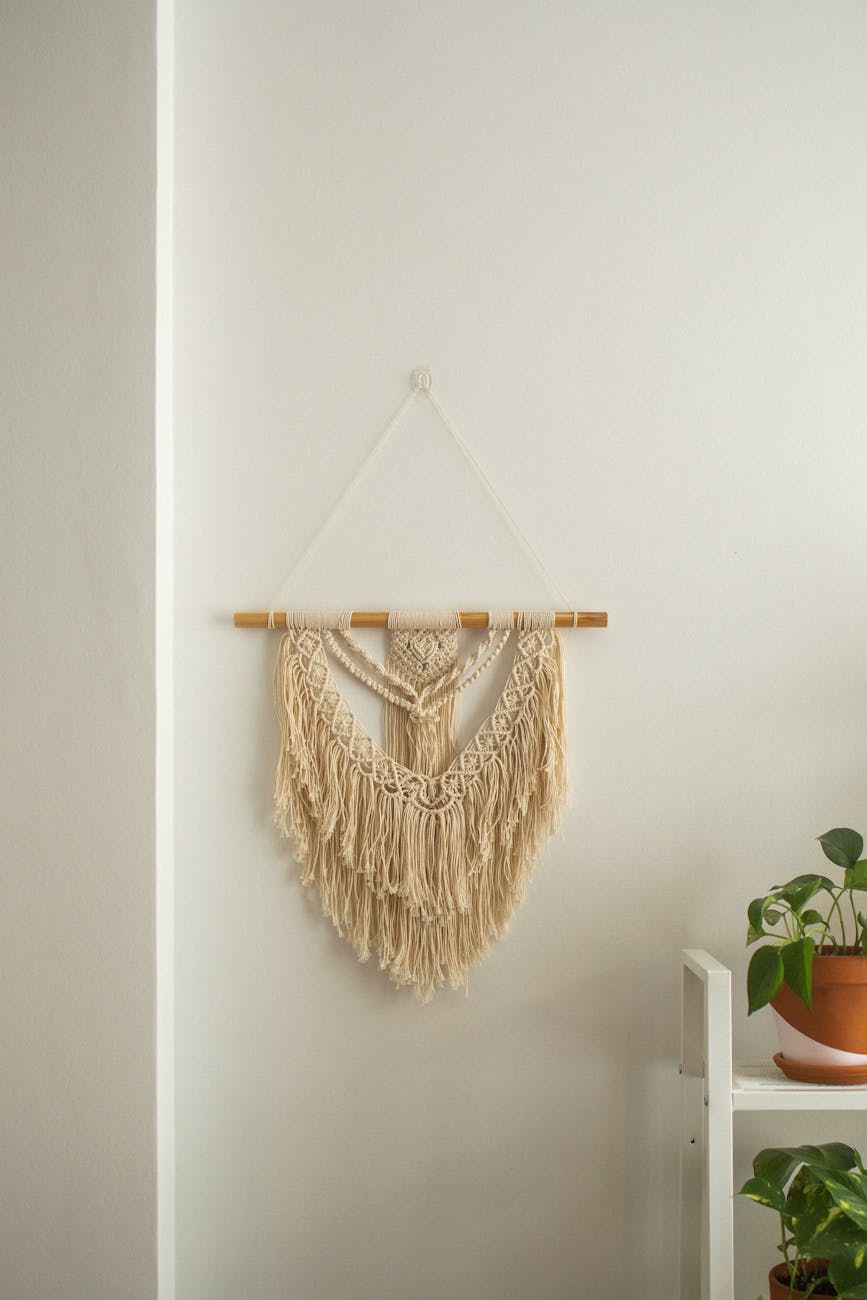
Deconstructing the Art of DIY Macrame Wall Hangings
The pursuit of a truly bohemian aesthetic often leads us toward handcrafted textiles. Specifically, creating **DIY macrame wall hangings** allows an individual to engage directly with the tactile process of fiber manipulation while yielding decor objects rich in organic texture and artisanal character. We observe that the appeal stems from bridging the gap between simple, accessible crafting techniques and the sophisticated visual impact of bohemian interior design. This practice moves beyond mere decoration; it involves mastering tension, knot geometry, and material interaction.
The mechanism behind macrame relies on the precise manipulation of cord to generate complex three-dimensional patterns. When you begin working with cotton or jute, you are not simply tying knots; you are establishing structural relationships between strands that dictate how the finished piece will drape, hold its shape, and interact with ambient light. A poorly executed knot results in sagging or uneven tension, whereas a correctly formed node creates intentional valleys and peaks, providing the characteristic texture that defines boho style. Our analysis suggests that understanding these foundational principles transforms an activity into a tangible skill.
Understanding the Raw Materials and Their Behavior
Before any cord is cut, one must understand the material science at play. The choice between cotton, jute, or hemp fundamentally alters the final aesthetic and structural integrity of the piece. Cotton offers a softer hand and excellent dye absorption capabilities, making it popular for intricate patterns where fine detail is necessary. Jute, conversely, provides a coarser, more rustic texture, emphasizing the raw, earthy quality central to bohemian design principles. Hemp introduces a unique stiffness and durability, offering a more architectural feel to larger installations.
We see that the material’s weight directly influences the required cord thickness and the overall scale of the artwork. A heavier fiber demands a thicker rope to prevent excessive stretching or deformation during the knotting process. In practice, if you attempt complex, dense patterns with very fine yarn, the inherent elasticity of the material will cause the structure to relax over time, demanding constant re-tensioning. This requires an understanding of material fatigue within the context of textile art.
Mastering the Core Knot Techniques
The entire aesthetic of macrame is built upon a vocabulary of knots. These are not random embellishments; they function as structural anchors that dictate the flow and density of the pattern. For beginners, focusing on foundational knots builds the necessary muscle memory for more complex designs. The square knot, the lark’s head knot, and the half hitch are essential starting points.
The complexity escalates when moving to fringe creation or intricate geometric patterns. For example, creating a fringe requires consistent spacing between knots to ensure the resulting tassels hang evenly. We must focus on the tension applied before each pass of the cord; this initial setting determines the final depth of the weave. A slight shift in tension during the formation of a central knot can cascade into noticeable asymmetry across the entire piece.
Designing for Impact: Pattern Selection
The visual success of **DIY macrame wall hangings** hinges on pattern selection that complements the desired space. Bohemian style thrives on organic, flowing lines rather than rigid geometric constraints. Consider patterns that emphasize verticality and open negative space. Large, airy structures allow the texture itself to become the focal point, inviting the eye to trace the interplay of shadow and light across the woven surface.
We find that asymmetrical designs often resonate more deeply with the boho sensibility because they mimic the organic, imperfect nature of natural fibers. When designing your piece, visualize how the finished hanging will interact with the existing decor. If you are pairing it with elements from rustic-farmhouse kitchen wood accents, for instance, the warm, earthy tones of jute and cotton harmonize seamlessly with natural wood grain. This synergy occurs when the textile acts as a textural bridge between different material types in the room.
The Process of Installation and Finishing
Creating the textile is only half the project; the installation technique completes the aesthetic statement. How you hang the piece dictates its perceived scale and presence within the room. Proper hanging methods ensure that the wall treatment achieves the desired visual effect without stressing the anchors or the material itself. We observe that hanging too high can make a large piece appear disconnected, whereas positioning it centrally allows the texture to anchor the visual field effectively.
Finishing involves managing the fringe and edges carefully. The way the ends are treated influences the overall feel—some prefer a tightly bound finish, while others embrace long, flowing tassels. This is where intentionality becomes paramount. Allowing the threads to cascade naturally introduces movement, which aligns perfectly with the free-spirited ethos of bohemian decor. Think about how natural light will interact with the shadows cast by your knots; this interplay of light and shadow is what truly brings the depth to the handcrafted work.
Practical Applications in Interior Styling
The versatility of macrame extends beyond simple wall art; these pieces serve as powerful textural anchors in various zones of the home. In a living area, a large hanging establishes an immediate focal point, drawing attention away from more structured elements and toward organic softness. It introduces an essential layer of tactile warmth that counters the coolness of hard surfaces.
When styling a space, consider how textiles interact with architectural elements. If you are working near natural wood features, like those found in rustic kitchen accents, the texture of the macrame reinforces the connection to natural materials throughout the environment. This creates a cohesive sensory experience rather than simply placing an object against a backdrop. For instance, when styling a cozy kitchen countertop, integrating soft textures enhances the feeling of warmth and approachability.
The process demands patience. The inherent slowness of fiber work forces a deceleration of pace, which is inherently therapeutic. We see that this meditative quality translates directly into the final product’s perceived value; the time invested is visible in the meticulous detail of the knots. Mastering **DIY macrame wall hangings** means mastering the relationship between intention, material physics, and visual outcome. You are not just making a hanging; you are engineering texture and atmosphere.
Tags: macrame, boho decor, DIY home decor, wall hangings, crafts, macrame tutorial, bohemian style
Featured Image by Vladimir Gladkov on Pexels.